
Health Canada GLP: 5 must have documents to prevent filing delays

In Canada, “Health Canada GLP” means OECD-based Good Laboratory Practice applied to non-clinical studies, and it requires evidence of facility recognition by the Standards Council of Canada (SCC) or an equivalent OECD-approved monitoring authority. Health Canada expects pivotal non-clinical studies behind pharmaceutical, biologic, and radiopharmaceutical submissions to follow OECD GLP principles. The immediate action for any sponsor assembling a submission is simple: confirm your testing facility’s SCC recognition, or equivalent evidence, is in hand before you file.
TL;DR:
- Confirm your testing facility’s recognition by the Standards Council of Canada or an equivalent OECD-approved authority before submitting non-clinical safety data.
- Recognized facilities are certified only for specific study types, so verify that your facility’s scope covers your planned studies, especially for toxicology or pharmacology.
- Pivotal GLP studies, including toxicity, genotoxicity, and carcinogenicity, require full compliance, while early exploratory or device studies often have exceptions; always cross-check relevant guidelines.
- Include the current SCC certificate, explicit GLP compliance statements, and raw data retention for at least 10 years with your submission to prove GLP adherence.
- Recognition timelines depend on routine inspections at roughly two-year intervals, so plan your study schedule early and verify recognition status before study initiation.
7ohyeaSource Consistent Research Materials7ohyea provides research-grade 7OH tablets and powders, domestically sourced in British Columbia for analytical laboratory use.
Visit 7ohyeaTable of Contents
- What GLP is and why Health Canada cares about OECD principles
- Who enforces GLP in Canada: Health Canada, SCC, and PMRA
- Which studies need GLP, and where exceptions apply
- What to include in your Canadian submission as GLP evidence
- How SCC recognition works: scope, inspections, and timelines
- A step-by-step checklist for becoming GLP-ready
- How to assess reference materials and suppliers in Canada
- Common inspection findings and the fixes that matter most
- Where to source research-grade reference materials in Canada
- FAQ
- Sources
What GLP is and why Health Canada cares about OECD principles
Good Laboratory Practice is a quality system, not a scientific method. It governs how non-clinical safety studies are planned, conducted, monitored, recorded, archived, and reported, so that the resulting data can be trusted by a regulator who never set foot in the lab that generated them. The OECD Principles of GLP set the baseline that most developed regulatory systems, including Canada’s, build on.
The principles cover a specific set of operational areas:
- Study planning and protocols: a written, dated protocol exists before testing begins, with defined objectives and methods.
- Personnel and organization: a management structure with a clearly identified study director and an independent quality assurance (QA) unit.
- Facilities and equipment: calibrated, qualified instruments and a controlled physical environment appropriate to the test system.
- Raw data handling and archiving: all observations are recorded contemporaneously and retained in a traceable, auditable archive.
- Reporting: final study reports accurately reflect the raw data, with any deviations documented.
One reason OECD alignment matters so much for Canadian sponsors is Mutual Acceptance of Data (MAD). Under MAD, a GLP study conducted in one OECD member country, or in a country that formally adheres to the Mutual Acceptance of Data arrangements, can be accepted by regulators in another member country without being repeated. That is what allows a toxicology study run in a recognized Canadian facility to support a submission reviewed by another jurisdiction’s regulator, and vice versa, without duplicating animal studies or analytical work.
Health Canada leans on this framework because it has to evaluate non-clinical safety data it did not generate and often cannot independently re-verify. For pharmaceuticals, biologics, radiopharmaceuticals, and many pest-control product submissions, the reliability of that data depends entirely on the integrity of the process that produced it. Requiring adherence to the OECD Principles of Good Laboratory Practice gives Health Canada a consistent, internationally recognized basis for deciding whether a study’s conclusions can be trusted enough to support a human health decision.
Who enforces GLP in Canada: Health Canada, SCC, and PMRA
Three bodies share responsibility for GLP in the Canadian system, and understanding where each one’s authority starts and stops saves sponsors from chasing the wrong paperwork.
- Health Canada acts as the regulatory receiving authority. It reviews submissions, decides whether non-clinical data meets GLP expectations, and ultimately approves or rejects drug and biologic applications based partly on that assessment.
- Standards Council of Canada (SCC) is the OECD-recognized GLP Monitoring Authority for Canada. The SCC’s GLP recognition program inspects facilities, issues certificates of recognition, and defines the specific areas of expertise each facility is approved for.
- PMRA (the Pest Management Regulatory Agency) enforces GLP requirements for pesticide-related submissions and, like Health Canada, recognizes SCC certificates as valid proof of compliance for facilities operating in that space.
The relationship between Health Canada and SCC is formalized in a Memorandum of Understanding between Health Canada and the Standards Council of Canada, which designates SCC as the body responsible for monitoring GLP compliance in Canada and confirms that Health Canada accepts SCC recognition as sufficient proof of that compliance for data submissions. In practical terms, this means a sponsor does not need to separately convince Health Canada that a facility runs a sound quality system. An SCC certificate covering the relevant study type does that work.
SCC’s GLP recognition program issues certificates scoped by facility “areas of expertise,” meaning a facility’s recognition only applies to the study types explicitly named on its certificate, according to the SCC’s program overview. A facility certified for analytical chemistry is not automatically certified for repeated-dose toxicology, and submitting a GLP statement that assumes otherwise is one of the most common and avoidable filing errors.
For cross-border studies, the MOU also clarifies that evidence from another OECD-approved monitoring authority is treated as equivalent to SCC recognition. That equivalence is useful for multinational development programs, but lead times for obtaining or confirming recognition status can become a genuine bottleneck, so it is worth building SCC confirmation, or the foreign equivalent, into your project timeline well ahead of a filing deadline rather than treating it as a formality to confirm at the last minute.
Which studies need GLP, and where exceptions apply
Not every non-clinical study requires GLP compliance, and knowing the difference early saves time and money. Health Canada’s expectations concentrate on the studies that carry the most weight in a safety decision.
Pivotal studies that normally require full GLP compliance include:
- Repeated-dose toxicity studies, which establish the dose-response relationship for organ and systemic effects over time.
- Genotoxicity studies, including assays assessing mutagenic or clastogenic potential.
- Safety pharmacology studies, evaluating effects on cardiovascular, respiratory, and central nervous system function.
- Carcinogenicity and reproductive toxicity studies, when these form part of the pivotal safety package.
Several situations commonly fall outside strict GLP expectations, though sponsors should confirm this case by case rather than assume it:
- Early mechanistic or exploratory pharmacodynamic studies, conducted to understand a compound’s biological activity rather than to establish safety margins.
- Certain medical device contexts, where different testing frameworks apply depending on device classification.
- Natural health product submissions, which often follow a distinct evidentiary pathway separate from the drug and biologic streams.
The cleanest way to determine study-level expectations for a specific program is to cross-reference applicable ICH guidelines with Health Canada’s own GLP guidance and Q&A document, which addresses several of the edge cases sponsors raise most often, including how Health Canada treats data when SCC recognition for a given facility is pending rather than confirmed.
What to include in your Canadian submission as GLP evidence
Regulators do not take GLP compliance on faith, and the documentation package you assemble matters as much as the study conduct itself. Whether you are filing a Clinical Trial Application, a Drug Identification Number submission, a New Drug Submission, an Abbreviated New Drug Submission, or a PMRA dossier, the evidentiary expectations follow a consistent pattern.
- Include the facility’s current SCC GLP certificate, showing the specific areas of expertise, facility contact information, and the scope that covers the study type you are submitting.
- Add a study-level GLP compliance statement, cross-referenced in the Investigator’s Brochure or the study summary, confirming the specific study was conducted under the facility’s recognized scope.
- For foreign facilities, substitute equivalent evidence, meaning recognition or certification from another OECD-approved monitoring authority, clearly identified as such rather than assumed.
- Retain study plans, raw data, and final reports for the period Health Canada recommends, which is a minimum of 10 years from the market notification date for many drug submissions, with longer periods applying where the Food and Drug Regulations require it, as outlined in Health Canada’s guidance on non-clinical laboratory study data.
- Keep a reasoned justification on file for any case where SCC recognition was pending at the time of study conduct, since Health Canada evaluates these situations individually rather than through a blanket exemption.
Pro Tip:Build a submission appendix that pairs each pivotal study with its facility’s exact SCC scope language, word for word, so reviewers can match study type to certified expertise without having to ask.
Sponsors sourcing reference materials for analytical work within these studies should also confirm traceability documentation for reference standards before a material enters a GLP study, since a certificate of analysis gap at the supply level can undermine an otherwise clean study record.
How SCC recognition works: scope, inspections, and timelines
SCC recognition is not a single, blanket designation. It is awarded against specific “areas of expertise,” and a facility’s certificate lists exactly which study types its quality system has been audited against. A lab recognized for bioanalytical chemistry cannot lend that recognition to a toxicology study run under the same roof unless toxicology appears separately on the certificate.
Key mechanics sponsors should understand:
- Inspections follow a routine cadence, generally at approximately two-year intervals, according to SCC’s program overview documentation, with facilities required to maintain compliance between visits.
- Status is published in categories, typically in-compliance, pending, or not-in-compliance, and sponsors should check current status rather than relying on a certificate’s original issue date.
- Scope documents are publicly available, and sponsors are expected to verify a facility’s exact recognized areas before citing its certificate in a submission.
Quality assurance units and archived raw data draw the heaviest scrutiny during inspections, and labs that can demonstrate clear sample traceability, documented instrument qualification, and a complete QA audit trail tend to face far fewer corrective action requests.
| Stage | Typical activity | Practical implication |
|---|---|---|
| Application | Facility submits scope and QA documentation to SCC | Defines which study types will eventually be covered |
| Initial inspection | On-site audit of SOPs, archives, and QA records | Determines whether recognition is granted as submitted or with conditions |
| Recognition granted | Certificate issued listing specific areas of expertise | Only covers the listed scope, not the facility generally |
| Routine re-inspection | Conducted at roughly two-year intervals | Maintains active status; gaps can trigger pending classification |
Because the application-to-recognition timeline can run well beyond a single fiscal quarter, sponsors planning a pivotal study at a newly established or newly expanding facility should factor SCC’s inspection cycle into their submission schedule rather than assuming recognition will arrive on a convenient date.
A step-by-step checklist for becoming GLP-ready
Labs preparing for SCC recognition, and sponsors preparing to select one, benefit from working through the same sequence in a defined order rather than tackling it piecemeal.
- Establish a quality assurance unit independent of the study director, with written SOPs that map directly to the OECD GLP Principles covering planning, conduct, and reporting.
- Document equipment qualification and calibration schedules, along with an archiving system that preserves raw data and final reports for the required retention period.
- Confirm certificate of analysis and traceability documentation for every reference material used in a study, since a gap at the material level can compromise an otherwise sound study record.
- Apply to SCC for recognition in the specific areas of expertise your facility performs, and prepare for the initial inspection with a mock audit focused on archives and QA reporting.
- Build a corrective action process for any findings, with timelines and documented follow-up, since inspectors will expect to see closed-loop resolution rather than a one-time fix.
For sponsors rather than labs, the checklist runs slightly differently:
- Confirm the facility’s SCC scope covers your exact study type, not just GLP status generally.
- Request the current certificate directly, rather than relying on a facility’s website claim of being “GLP certified.”
- Draft your submission’s GLP compliance statement to name the certificate number and scope explicitly, rather than a generic assertion of compliance.
Pro Tip:Request a facility’s SCC scope PDF before signing a study contract, not after data generation begins. A mismatched scope discovered post-study is far more expensive to fix than one caught at the planning stage.
How to assess reference materials and suppliers in Canada
GLP data integrity depends on more than the study itself. It depends on the quality and traceability of every material that enters the study, including reference standards used for analytical comparison. A compliance gap at the supplier level can surface during an inspection just as readily as a gap in SOP control.
Before using any reference material in a GLP study, we recommend confirming these elements with the supplier:
- A batch-specific Certificate of Analysis showing purity, identity confirmation method, and testing date, not a generic product sheet.
- Clear labelling as “analytical use only,” which both supports regulatory clarity and reduces risk at customs for imported materials.
- Domestic sourcing where available, since materials produced and shipped within Canada avoid the delays and documentation gaps that can accompany cross-border shipments.
- Traceability back to the specific manufacturing lot, so any deviation discovered later can be tied to a defined batch rather than an undefined supply run.
Our own practical overview of detection methods for 7-hydroxymitragynine walks through the analytical techniques labs use to confirm identity and purity, which is a useful reference point when evaluating whether a supplier’s COA actually supports the claims it makes.
Pro Tip:Treat a supplier’s COA the same way an inspector treats your own raw data: if it is not traceable to a specific batch and test method, it is not evidence, it is a claim.

Common inspection findings and the fixes that matter most
Across the inspection patterns we see referenced in SCC and Health Canada guidance, the same three weak points come up again and again: incomplete archiving, loose SOP version control, and QA units that report findings too late to matter.

Archives fail most often not because data goes missing, but because it cannot be located quickly or tied clearly to the correct study. SOP control slips when a facility updates a procedure but does not retire or clearly supersede the previous version, leaving two documents in circulation. QA reporting gaps happen when the quality unit reviews a study after the final report is drafted rather than during conduct, turning QA into a rubber stamp instead of a real check.
The three fixes that move the needle fastest: build an archive indexing system that ties every raw data file to a study number at the point of generation, not retroactively; enforce a single-version SOP library with dated supersession records; and schedule QA review milestones during the study, not only at close-out.
Document every corrective action with a date and a responsible person, and cross-reference that record in your next submission’s GLP compliance statement. Inspectors and regulators alike respond better to a documented fix than to an unblemished record with no evidence of active oversight.
— Deek
Where to source research-grade reference materials in Canada
Once your study design and facility documentation are in order, the remaining variable is the reference material itself, and that is where domestic sourcing earns its keep. Research-grade 7-hydroxymitragynine tablets and powders for analytical use only are available, manufactured and shipped from British Columbia, with batch-specific Certificates of Analysis for every product line.
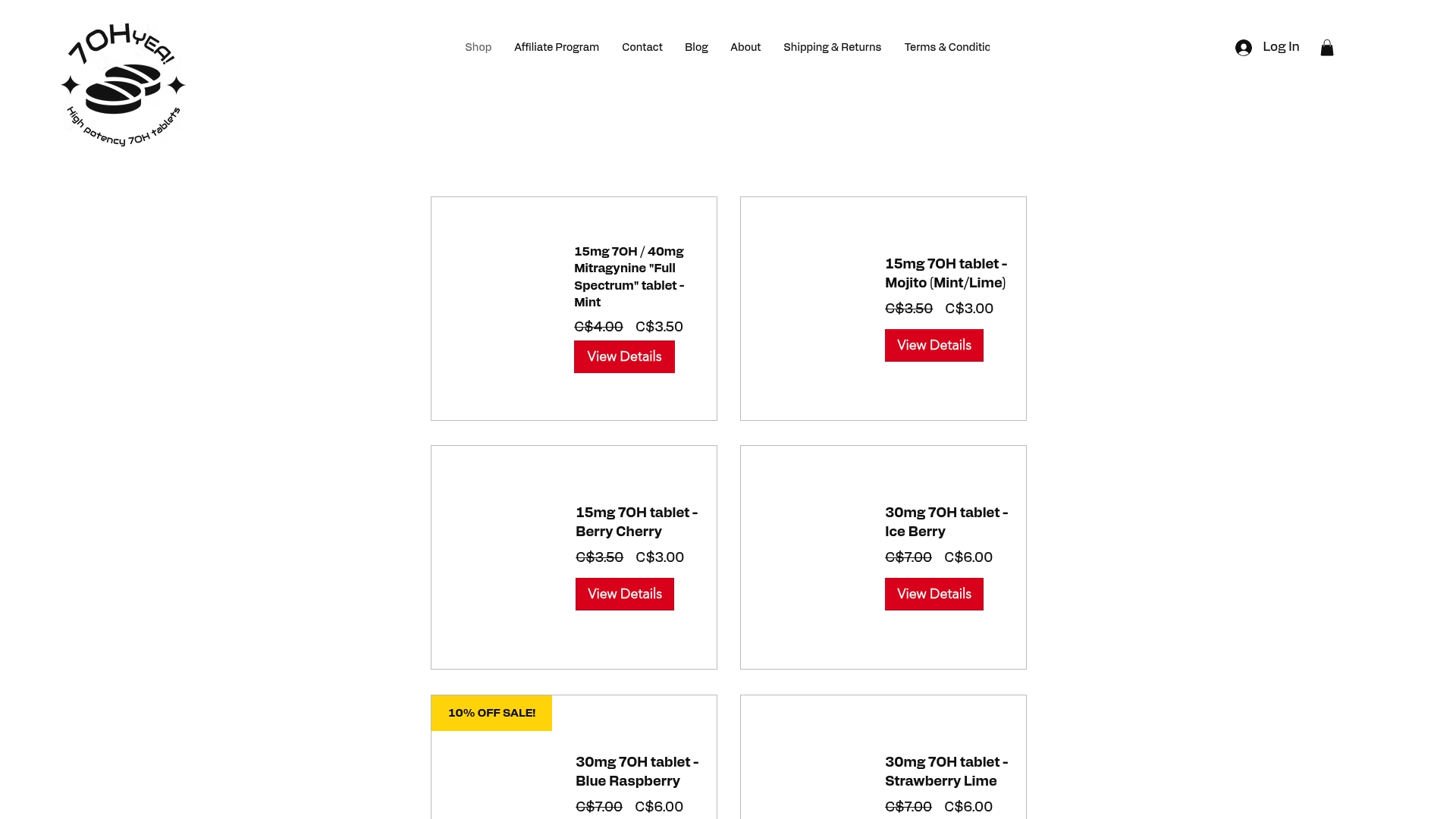
For labs building out a mitragynine alkaloid reference panel, our category page of 7OH and related research materials covers tablet and powder formats, including the 81% pure 7OH powder at $50 one-off and the 43% pure Mitragynine “Full Spectrum” powder at $6.75 one-off, both shipped within Canada without the delays that come with cross-border orders. These materials are intended strictly for laboratory and analytical work, never for human consumption, and they are not a GLP monitoring authority or a substitute for SCC recognition. Before incorporating any reference material into a GLP study, confirm the COA matches your study’s documentation requirements and that the material’s suitability has been reviewed against your own SOPs. For labs ready to place an order, our research-grade product catalogue is the starting point.
This article is general information, not a substitute for advice from a qualified doctor. Consult a qualified healthcare professional about your own circumstances before acting on anything here.
FAQ
How to qualify for GLP-1 in Canada?
This question often confuses two unrelated terms. “GLP-1” refers to a class of prescription drugs, such as semaglutide and tirzepatide, used for conditions like type 2 diabetes, and qualifying for one requires a prescription from a licensed healthcare provider, not a laboratory certification process. Good Laboratory Practice, by contrast, is a facility-level quality standard that has nothing to do with patient eligibility, as Health Canada’s public notice on GLP-1 drugs makes clear.
Can I get GLP-1 medication in Canada?
Yes, GLP-1 medications like Ozempic and Mounjaro are available in Canada by prescription through a licensed healthcare provider and pharmacy. Health Canada specifically warns against purchasing unauthorized or counterfeit versions of these drugs, noting that unauthorized GLP-1 products pose a genuine public health risk and are illegal to market in Canada.
Can I get GLP-1 supplements in Canada?
Products marketed as “GLP-1 supplements” are not the same as prescription GLP-1 medications and are not regulated or authorized the same way. Health Canada’s guidance focuses on warning consumers away from unauthorized products claiming GLP-1 effects, so anyone considering such a supplement should verify its regulatory status before purchase rather than assume supplement framing makes it exempt from oversight.
Can you get GLP-3 in Canada?
There is no recognized drug class or regulatory term called “GLP-3” in Canada or internationally; this appears to be a misunderstanding of either GLP-1 medications or Good Laboratory Practice terminology. Readers researching non-clinical study standards should refer to Health Canada’s GLP guidance document, while those researching medications should consult a licensed healthcare provider.
What happens if a Canadian submission lacks GLP evidence?
A submission missing adequate GLP evidence risks delay or rejection, since Health Canada evaluates non-clinical data reliability partly through documented compliance with OECD GLP Principles. Sponsors in this position should expect Health Canada to request additional justification or equivalent evidence before proceeding with review, as outlined in the Health Canada GLP guidance and Q&A.
Sources
- Guidance Document — Non-Clinical Laboratory Study Data: Adherence to Good Laboratory Practice, Health Canada
- Good Laboratory Practices | Standards Council of Canada
- Thinking about buying GLP‑1 drugs like Ozempic or Mounjaro? Beware of fake or unauthorized products — Health Canada