
Who Can Buy 7OH in Canada? What the Headlines Miss

If your feed has been full of 7OH stories lately, you’re not imagining it. US regulators are moving on 7-hydroxymitragynine (7OH, a compound found in tiny amounts in the kratom plant), and Canadians are asking the obvious follow-up: who can actually buy it here?
The short answer for our corner of the market is simple. At 7OH Canada, we sell research-grade material to laboratories and qualified professionals for analytical work only. It is for research use only, not for human consumption. Nothing in this article is legal advice, and a seller’s label has never been the same thing as a regulator’s approval.
7ohyeaResearch-Grade 7OH for Analytical Work7OH Canada provides research-grade materials for laboratory and analytical use by research teams and qualified professionals, not for human consumption.
VisitTL;DR
- Our products are research-grade materials for laboratory and analytical use only, sold to research teams and qualified professionals. They are not for human consumption.
- An age gate or a “research use” label on a website is a store policy. It is not a Health Canada authorization.
- Health Canada’s rules turn on how a product is marketed and what it’s meant for, and imported health products have their own requirements.
- The big recent headlines come from the United States, where scheduling proposals are still moving. Don’t assume they apply in Canada, and don’t assume they don’t.
- For anything legal, ask a lawyer or contact Health Canada directly.
Table of Contents
- Quick facts
- Why is everyone suddenly asking who can buy 7OH?
- What did the headlines get wrong?
- So who can buy 7OH in Canada?
- Can you import it, or order from online sellers?
- Is 7OH legal in Canada?
- What does the science debate actually say?
- What this means for readers
- Our view: the label has to mean something
- Where to find research-grade material
- What to watch in the next few months
- FAQ
- Sources
Quick facts
| Question | Plain answer |
|---|---|
| What is 7OH? | 7-hydroxymitragynine, an alkaloid (a plant-derived chemical compound) linked to the kratom plant |
| Who does 7OH Canada sell to? | Research teams, scientists, analytical chemists and other qualified professionals |
| What are the products for? | Laboratory and analytical use only |
| Are they for human consumption? | No. Research use only, not for human consumption |
| Where do they ship from? | Canadian sourcing, with fast domestic delivery and no border fees |
| Do we supply paperwork? | Batch-specific certificates of analysis (CoAs) |
| Biggest news right now | US federal scheduling proposals for 7OH and mitragynine |
Why is everyone suddenly asking who can buy 7OH?
Because Washington got loud about it. In July 2025, the US Food and Drug Administration announced it was recommending a scheduling action under the Controlled Substances Act for certain 7OH products. The coverage at the time said the recommendation was aimed at concentrated products, not the trace amounts found naturally in the plant.
Then came October 2026. A Federal Register notice dated 14 October 2026 shows the US Drug Enforcement Administration (DEA) issuing a notice of intent about temporarily scheduling 7OH and mitragynine, and withdrawing an earlier notice that used a concentration threshold. A notice of intent is a step in a process. It isn’t the final word, and we won’t pretend to know where it ends.
Meanwhile, search results for “buy 7OH Canada” are packed with shops promising fast shipping and bold legal reassurances. That mix of US headlines and confident Canadian marketing is exactly why the question matters.
What did the headlines get wrong?
Three things come up again and again. Let’s take them as myths versus facts.
Myth: A US move automatically changes Canadian law
Fact: The FDA and DEA have authority in the United States. Canada’s rules come from Health Canada and the federal Food and Drugs Act framework. A US announcement is a signal worth watching, but it’s not a Canadian rule.
The flip side is also a myth. “It’s only a US story” is a lazy take. Cross-border supply chains, retailers and regulators do watch each other.
Myth: “19+ only” means the product is approved
Fact: Several Canadian shops put an age notice at the top of the page. That’s a store policy. It tells you who the shop will take an order from. It says nothing about whether Health Canada has authorized a product for sale.
Age limits are also a blunt tool. They answer “how old are you?” and skip the questions that matter more: what is this material for, who is buying it and why?
Myth: A “research use” label is a magic password
Fact: Labels don’t override rules. Health Canada looks at how a product is represented and what it’s for. Material supplied for laboratory work sits in a different context than a product pitched for people to take.
That’s why we’re blunt about it. Our materials are for analytical purposes. If a seller’s page reads like a lifestyle product, the “research” tag is decoration.
So who can buy 7OH in Canada?
Here’s our straight answer, by buyer type.
Research teams and analytical labs
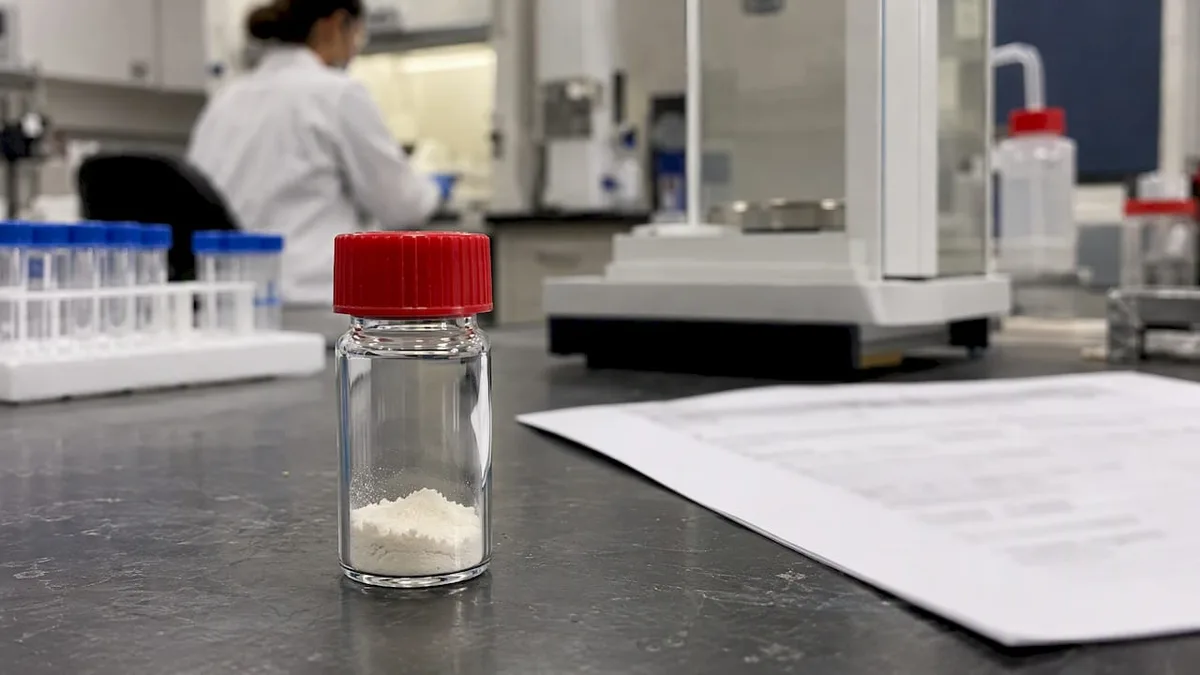
This is who we’re built for. University labs, contract analytical labs and independent research groups buy reference materials to run assays, build calibration standards and compare batches. They want a defined purity, a certificate of analysis and a supplier that ships quickly inside Canada.
Qualified professionals working on controlled studies
Scientists and analytical chemists ordering for documented laboratory protocols are the second group. If you’re in this group, expect a seller that takes the research-use boundary seriously, and expect questions about your intended use.
Individual consumers and hobbyists
Not us. Our paying customers are research teams and professionals, not people looking for something for personal or recreational use. Our products are not for human consumption, and we don’t market them that way.
Health professionals through official channels
There is one official route worth knowing about. Health Canada’s Special Access Programs let health, dental and veterinary practitioners request non-marketed drugs and medical devices that aren’t authorized for sale in Canada. That’s a practitioner-driven, case-by-case pathway. It isn’t a loophole for a retail checkout, and it’s not something a customer can use on their own.
Can you import it, or order from online sellers?
This is where people get tripped up, so let’s slow down.
Health Canada’s guidance on personal-use imports (updated 2023) explains that residents and visitors can bring in a limited quantity, up to a 90-day supply, of certain health products without specific import licences if they meet criteria. The same page notes that unauthorized drugs can still be subject to border control. “Personal use” is not a blanket green light.
Commercial importing is stricter. Health Canada’s page on commercial imports of health products says that importing a non-compliant drug for sale is prohibited unless the importer gives advance notice and the product is modified so its sale is lawful.
The practical upshot: cross-border ordering adds regulatory questions that domestic sourcing avoids. It’s one reason we emphasize Canadian sourcing, fast shipping and no border fees for our lab customers. For the wider picture on buying research material at home, see our guide to buying research-grade 7-hydroxymitragynine in Canada.
Is 7OH legal in Canada?
We’ll be careful here, because this is where overconfident shops cause the most damage.
What we can say: Health Canada regulates products by what they are claimed to be and how they’re sold. Health products sold in Canada generally need to meet authorization requirements, as the commercial import guidance above describes. A product marketed to be taken by people is treated very differently than reference material supplied for lab analysis.
What we won’t do: tell you that something is simply “legal across Canada” because a seller’s banner says so. Some of the top-ranking pages make that kind of broad claim. We don’t think a banner is a legal opinion.
Provinces and territories can also have their own rules on how products are sold, so a single sweeping answer is rarely right. If your lab needs certainty for a specific protocol, talk to your institution’s compliance office, a lawyer, or Health Canada.

What does the science debate actually say?
We’re keeping this short on purpose. You don’t need a pharmacology lecture to follow the story.
7OH is a minor compound in the kratom leaf. Concentrated 7OH products are made differently than raw leaf, and that’s the heart of the policy argument. Regulators in the US have pointed to the concentrated products as the problem, while advocates for the plant argue the leaf itself shouldn’t be swept up in the same net.
That split is why the October 2026 notice matters as a news story: the agency withdrew a concentration-threshold approach and moved to a different notice. Whether that holds is unconfirmed, and anyone who tells you they know the outcome is guessing.
For readers who want the chemistry basics, our explainer on what 7-hydroxymitragynine is covers the analytical side. Our piece on mitragynine versus 7-hydroxymitragynine explains why labs treat them as separate reference materials.
What this means for readers
Here’s the plain-English version, depending on who you are.
- If you run or work in a lab: Ask any supplier for batch-specific certificates of analysis, a clear research-use policy and domestic shipping details. Document your intended use. Keep an eye on both Health Canada notices and US federal developments.
- If you’re a consumer scrolling past “buy 7OH” ads: An age gate isn’t an approval. Our products are not for human consumption, and we don’t sell them to individuals for personal use.
- If you’re a retailer or reseller: The way you describe a product matters as much as the product. Research-use language has to match reality.
- If you’re a journalist or just curious: Treat US proposals as news, not as Canadian law, and treat anything described as “settled” with suspicion.
None of this is legal advice. It’s a map of the questions worth asking.
Our view: the label has to mean something
We think the loudest problem in this market isn’t the regulation. It’s the gap between what a product page says and what the product is for.
When we say our 7OH and related alkaloid materials are for research use only, we mean laboratories and analytical work. That’s why we publish batch-specific certificates of analysis, why we source domestically and why we focus on research teams and qualified professionals rather than general retail.
Canadian labs deserve a supplier that ships fast, doesn’t add border fees and doesn’t blur the line between a reference material and a consumer product. A tighter regulatory climate makes that clarity more valuable, not less.
If you’re trying to work out whether a supplier is the real thing, ask what they say the material is for, and whether their paperwork backs it up.
John
Where to find research-grade material
If you’re a lab or a qualified professional, our range covers 7OH, mitragynine, MGM-15 and SR17018 materials in tablet and powder formats, with reference-grade mitragynine alkaloids and bulk purchasing for research teams. Everything is intended for analytical use only, not for human consumption.
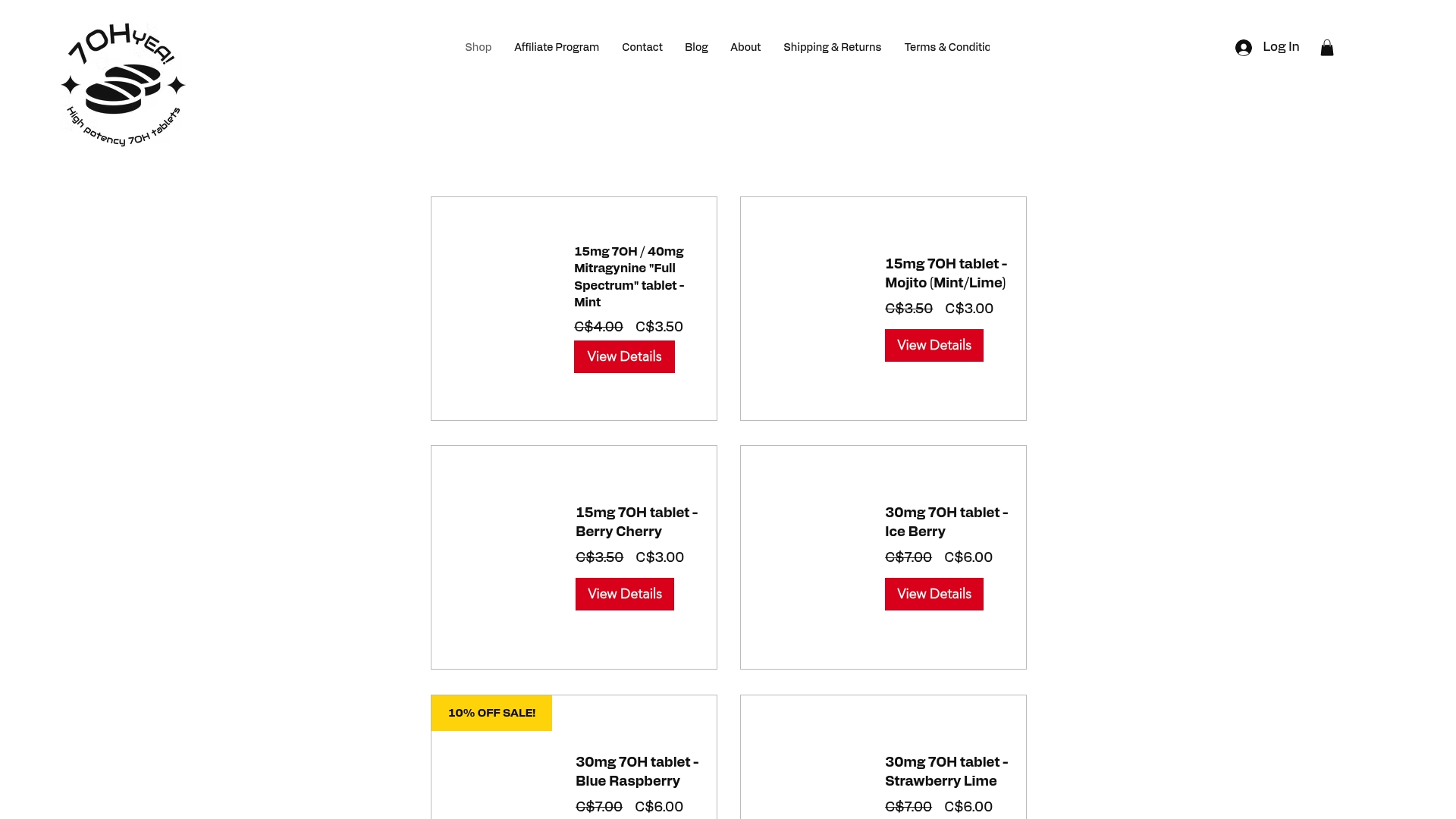
Powders have published prices: the 81% pure 7OH powder is 50 CAD, the 43% pure mitragynine full spectrum powder is 6.75 CAD, and the 99% pure SR17018 powder is 48 CAD. Tablet pricing is listed on our shop pages.
Browse the full range at 7OH Canada or read our lab buyer’s guide to costs before you order.
What to watch in the next few months
A few things are worth tracking, without us pretending to predict them.
- The US process. The October 2026 DEA notice is a step. Final action, if any, would be published in the Federal Register.
- Health Canada notices. Check Canada.ca for current advisories on health products and unauthorized sales.
- Retailer behaviour. Expect more shops to tighten their language as attention grows. The ones that rely on a banner may be the first to change.
- Supplier transparency. Certificates of analysis, batch tracking and clear buyer policies are the baseline.
For our own deeper dive into the Canadian angle, see 7OH, potency, risks and Canadian law on our blog.
FAQ
Can you buy 7OH in Canada?
We sell research-grade 7OH to laboratories and qualified professionals for analytical use only, not for human consumption. Other retail listings exist, but whether a given product meets Health Canada’s requirements is a separate question from whether a shop will take your order. For compliance questions, speak to a lawyer or Health Canada.
Is 7OH legal in Canada?
There’s no one-line answer we’re willing to give. Health Canada looks at how a product is marketed and what it’s for, and products sold in Canada generally have to meet authorization requirements. A banner claiming 7OH is “legal everywhere” isn’t a legal opinion, so get proper advice for your situation.
Does an age limit mean a product is approved?
No. A “19+” or similar notice shows who a shop will sell to. It doesn’t show that Health Canada has authorized the product. Treat it as a store rule.
Can I import 7OH from outside Canada?
Health Canada’s personal-use import guidance sets criteria and notes that unauthorized drugs can still face border control, while commercial imports have stricter requirements. Domestic sourcing sidesteps border fees and the import questions that come with them. Check the current Health Canada guidance before importing anything.
Do you sell to individuals for personal use?
No. Our customers are research teams, scientists, analytical chemists and other qualified professionals. Our products are for research use only, not for human consumption.
So here’s our open question for you: should “research use only” be a promise sellers have to prove, or is a label enough? Tell us what you think in the comments, and share this with someone who’s confused by the headlines.
7ohyeaQuestions About Research Use?Email 7OH Canada with questions about its research-grade materials for laboratory and analytical purposes.77ohyea
Email us7ohyea@gmail.comSources
- FDA recommends scheduling action for 7-OH products (NutraIngredients, 29 July 2025)
- Federal Register, 14 October 2026 (DEA notice on 7-hydroxymitragynine and mitragynine)
- Health Canada: Special Access Programs
- Health Canada: Bringing health products into Canada for personal use
- Health Canada: Importing and exporting health products for commercial use