Clinicians & researchers: 7-hydroxymitragynine pharmacology

7-hydroxymitragynine is a high-affinity mu-opioid receptor agonist formed from mitragynine through CYP3A4 metabolism, and the preclinical record already shows naloxone-reversible respiratory depression and dependence-like signals in animals. Human exposure data remain sparse, drawn mostly from small pharmacokinetic studies rather than controlled clinical trials. The claim rests on four evidence types: receptor binding assays, functional signalling studies, a handful of human PK investigations, and animal toxicology. Each carries its own caveats, and none alone settles the question of human risk.
TL;DR:
- 7-Hydroxymitragynine has a high affinity for mu-opioid receptors, with potency that can rival or exceed morphine in laboratory assays, though results vary across test systems.
- Functional studies show it acts as a full or near-full agonist at MOR, with some evidence of signalling bias, but assay dependency limits certainty about safety implications.
- Human PK data indicates CYP3A4 is the primary enzyme converting mitragynine to 7OH, with low oral bioavailability and gastric degradation further complicating dose predictions.
- Preclinical animal studies demonstrate naloxone-reversible respiratory depression, reward effects, and dependence, suggesting significant abuse potential.
- Concentrated and semi-synthetic 7OH products deliver doses well above natural kratom leaf levels, heightening risk and complicating regulation, with human data on safety and efficacy still very limited.
7ohyea7ohyea.caSource Research-Grade 7OH7OH Canada provides high-quality tablets and powders for analytical purposes, with consistent formulations and domestic sourcing from British Columbia.
Visit 7OH CanadaTable of Contents
- Receptor binding affinity: how strong is 7OH at MOR, KOR, and DOR?
- Functional assays and the signalling behaviour behind the numbers
- Human pharmacokinetics and the role of CYP3A4 in forming 7OH
- Preclinical toxicology: respiratory depression, reward, and dependence in animals
- What human case data and regulators have said so far
- Priorities for researchers designing the next generation of studies
- Beyond MOR: what 7OH does at kappa and delta receptors
- Why animal data doesn’t translate cleanly to human pharmacology
- Trace kratom levels versus concentrated 7OH: why the distinction matters
- Signalling pathways: G-protein activation versus beta-arrestin recruitment
- Clinical implications: therapeutic potential and abuse liability
- Where the evidence is strong and where it still fails researchers
- Sourcing research-grade 7OH for validated laboratory work
- Sources
- FAQ
Receptor binding affinity: how strong is 7OH at MOR, KOR, and DOR?
Binding assays consistently place 7-hydroxymitragynine’s affinity for the mu-opioid receptor well above that of mitragynine, with several assay systems reporting potency that rivals or exceeds morphine in the same experimental conditions, according to a review of kratom pharmacology and toxicology. The magnitude of that gap depends heavily on which lab, which cell line, and which radioligand generated the number, so a single Ki value should never be read as a fixed constant.
Three variables explain most of the spread you’ll see across the literature:
- Cell system: cloned human receptors expressed in HEK293 or CHO cells behave differently than native tissue preparations.
- Radioligand choice: displacement assays using different tracer compounds yield different apparent affinities for the same test article.
- Species source: rodent-derived receptor constructs don’t always mirror human receptor pharmacology, a point that matters more later when translating dose to humans.
Selectivity data point the same direction: 7OH’s binding at kappa and delta opioid receptors is measurably weaker than at MOR, though it isn’t negligible, which is part of why researchers can’t treat it as a clean MOR-only tool compound. Any study comparing potency across ligands should report the assay system alongside the number, not the number alone.
Functional assays and the signalling behaviour behind the numbers
Binding affinity tells you how tightly a molecule sits in the receptor pocket, not what it does once it’s there. Functional assays, cAMP inhibition, BRET-based G-protein reporters, and [35S]GTPγS stimulation, answer that second question, and the picture for 7OH is mixed depending on which readout you’re watching.
- cAMP and BRET assays report varying Emax and EC50 values for 7OH, with some studies showing partial agonism and others showing efficacy approaching that of a full MOR agonist.
- [35S]GTPγS assays in several studies show substantial G-protein stimulation, consistent with meaningful in vivo activity rather than a weak or inconsequential signal.
- β-arrestin-2 recruitment appears reduced relative to classical full agonists in some assay formats, a pattern often described as signalling bias, though the kratom pharmacology review cautions that this finding is assay-dependent and should not be read as evidence that 7OH avoids respiratory or dependence risk.
Pro Tip:When comparing studies, weigh functional Emax/EC50 data over binding Ki alone: functional endpoints track more closely with in vivo effect than affinity numbers by themselves.
Whether 7OH behaves as a partial or near-full agonist in a given assay changes what you’d predict for ceiling effect on respiratory depression, and that distinction should shape how you design any downstream toxicology or PD study.
Human pharmacokinetics and the role of CYP3A4 in forming 7OH
The clearest human data come from a controlled pharmacokinetic study examining how itraconazole affects mitragynine and 7-hydroxymitragynine exposure. After kratom tea administration, 7OH reached a median peak concentration at a Tmax near 1.77 hours, with a moderate metabolic ratio indicating that only a modest fraction of ingested mitragynine converts to the more potent metabolite under these conditions.
Pretreatment with itraconazole, a strong CYP3A4 inhibitor, significantly reduced 7OH exposure in that same study, confirming that CYP3A4-mediated oxidation is the primary route by which mitragynine becomes 7-hydroxymitragynine in humans.
That single mechanistic finding carries practical weight for research design:
- Drug-drug interaction risk: co-administered CYP3A4 inhibitors or inducers (many antifungals, macrolides, and anticonvulsants among them) could shift 7OH exposure substantially.
- Low oral bioavailability: preclinical work in Sprague-Dawley rats found oral bioavailability for purified 7OH of only about 2.7%, alongside Caco-2 permeability near 19.7 x10⁻⁶ cm/s.
- Gastric instability: the same preclinical data show that simulated gastric fluid degrades 7OH and can convert some of it back to mitragynine, complicating dose-response predictions from oral administration.
- P-glycoprotein involvement: in vitro work on mitragynine and 7OH ADME properties found P-gp interaction at micromolar concentrations, another route through which co-medications might alter exposure.
Preclinical toxicology: respiratory depression, reward, and dependence in animals
The animal data underpinning current safety concern are specific and consistent. Rat studies cited in the FDA’s scientific assessment of 7-hydroxymitragynine show respiratory depression that is reversible with naloxone, the standard pharmacological test for confirming an opioid-mediated mechanism, with potency in that model reported as higher relative to morphine.
- Respiratory depression: naloxone reversal confirms MOR-mediated suppression of breathing, mirroring the mechanism seen with classical opioids.
- Reward and self-administration: multiple preclinical studies referenced in the same assessment demonstrate rewarding effects and self-administration behaviour in rodents.
- Dependence and withdrawal: repeated dosing produces withdrawal signs on cessation, consistent with physical dependence rather than a purely reinforcing effect without physiological adaptation.
7OH produced naloxone-reversible respiratory depression at doses showing greater relative potency than morphine in the same rodent model, according to the FDA’s review, a finding that anchors much of the current regulatory caution.
Route of administration and dose matter enormously here: intravenous dosing in rodents produces a different exposure profile than oral dosing would in a human research subject, and extrapolating a rodent IV dose directly to a human oral equivalent risks over- or understating real-world risk.
What human case data and regulators have said so far
Human evidence beyond the itraconazole PK study is thin. Case reports and poison-centre signals increasingly describe dependence and withdrawal tied to concentrated 7OH products, though no controlled human trials of isolated 7OH efficacy or safety exist yet.
- PK study limitations: the itraconazole trial and similar work involve small sample sizes and typically dose kratom leaf material rather than purified 7OH, so extrapolating to concentrated products requires caution.
- Clinical case reports: emerging surveillance data point to withdrawal and dependence presentations following heavy use of concentrated 7OH, a pattern distinct from historical kratom leaf exposure.
- Regulatory guidance: the FDA’s assessment flags concentrated and semi-synthetic 7OH products as a public health concern separate from botanical kratom, and clinical toxicology groups have echoed calls for caution pending more data.
Priorities for researchers designing the next generation of studies
Given how much of the current evidence base is preclinical or drawn from leaf material rather than purified compound, a handful of study designs would close the most consequential gaps.
- Purified-7OH human PK trials: low, ascending oral doses of standardized 7OH formulation, with parent compound and key metabolites measured directly rather than inferred from kratom tea.
- Controlled respiratory PD studies: pairing dose with objective respiratory endpoints (oximetry, capnography) rather than relying on animal-to-human potency ratios alone.
- Standardized receptor and arrestin assays: consistent cell systems and radioligands across labs so Ki and Emax values become comparable rather than assay artifacts.
- Sex and route as variables: prior rodent work has not consistently reported sex-disaggregated data or compared oral to parenteral routes, both of which affect translational confidence.
Pro Tip:Verify any commercial 7OH material by LC-MS against a certificate of analysis before use: label claims on concentrated products have repeatedly mismatched actual alkaloid content in market surveillance.
Beyond MOR: what 7OH does at kappa and delta receptors
7-hydroxymitragynine’s pharmacology doesn’t stop at the mu-opioid receptor, even though MOR activity dominates the safety conversation. Binding data show measurable, if comparatively modest, activity at kappa and delta opioid receptors, and that secondary activity complicates any attempt to model 7OH as a simple MOR-selective probe.
Kappa receptor engagement is pharmacologically relevant because KOR agonism is classically associated with dysphoria and anti-reward effects in other opioid ligands, a property that could theoretically offset some of MOR’s rewarding pull, though no controlled human data currently confirm that balance for 7OH specifically. Delta receptor activity tends to be weaker still, and its functional consequence in the context of 7OH’s overall profile remains poorly characterized.
The practical issue for researchers is that a compound with meaningful multi-receptor activity does not behave predictably from MOR data alone. A study designed purely around MOR binding or MOR-linked functional assays risks missing contributions from KOR or DOR engagement that could shape the net behavioural or physiological outcome, particularly at higher doses where secondary receptor occupancy becomes more likely. Mitragynine itself is understood to have a more balanced multi-receptor profile than 7OH, and the shift toward MOR dominance that occurs on hydroxylation is part of what distinguishes the metabolite’s risk profile from the parent alkaloid, a distinction covered in more detail in this comparison of 7OH and mitragynine potency.
Any pharmacodynamic model built for 7OH should account for kappa and delta contributions explicitly rather than treating MOR as the whole story, especially when interpreting behavioural outcomes like locomotor activity or place preference that other receptor systems are known to influence.

Why animal data doesn’t translate cleanly to human pharmacology
Species differences sit at the centre of nearly every caveat attached to 7OH’s preclinical record, and they deserve direct attention rather than a passing mention. Rodent metabolism, receptor expression, and first-pass handling of mitragynine-derived compounds don’t map one-to-one onto human physiology, which means potency ratios generated in rats need a translational discount before they inform human risk estimates.
Metabolic enzyme expression is one obvious divergence: CYP3A4-mediated conversion of mitragynine to 7OH is well documented in humans, but the relative contribution of that pathway versus other oxidative routes can differ across species used in preclinical toxicology, affecting how much 7OH a given mitragynine dose actually generates in a rat versus a person. Oral bioavailability estimates from rat studies, including the roughly 2.7% figure reported for purified 7OH in Sprague-Dawley pharmacokinetic work, may not hold at the same magnitude in humans given differences in gut transit time, gastric pH, and P-glycoprotein expression along the intestinal wall.
Receptor pharmacology itself can diverge too: cloned receptor constructs used in binding and functional assays sometimes originate from non-human sources, and affinity or efficacy measured against those constructs is an approximation of human receptor behaviour rather than a direct measurement of it. Route of administration compounds the problem, since much of the respiratory depression and self-administration data comes from intravenous or parenteral dosing in rodents, a route that bypasses the gastric degradation and first-pass metabolism that shape human oral exposure. None of this invalidates the animal findings; it means the numbers should be treated as directional evidence of risk rather than as a direct dosing guide for human studies.
Trace kratom levels versus concentrated 7OH: why the distinction matters
Natural kratom leaf contains 7-hydroxymitragynine only at trace concentrations relative to mitragynine, and most of a person’s 7OH exposure from traditional leaf products comes from metabolic conversion after ingestion rather than from the raw plant material itself. Concentrated or semi-synthetic 7OH products sold commercially are a different exposure category entirely, delivering the compound directly at doses far above what leaf-derived metabolism would typically produce.
That distinction is central to the current regulatory conversation. The FDA’s assessment treats concentrated and semi-synthetic 7OH products as a separate public health concern from botanical kratom precisely because the dose and delivery route bypass the natural rate-limiting step of CYP3A4 conversion. Analytical surveys cited in the kratom pharmacology review have found that many commercial concentrated products contain high 7OH levels with chemical signatures suggesting semi-synthetic manufacture, and that label claims frequently don’t match actual assayed content.
For researchers, this means a study’s conclusions about “kratom” risk or “7OH” risk depend enormously on which material was actually tested. Findings from leaf-derived trace exposure don’t generalize to concentrated product exposure, and the two should never be cited interchangeably when describing dose or risk. Any protocol involving commercial 7OH material should independently verify alkaloid content by LC-MS rather than relying on packaging claims, a step covered in more depth in this guide comparing mitragynine and 7-hydroxymitragynine for laboratory use.
Signalling pathways: G-protein activation versus beta-arrestin recruitment
The signalling question that has drawn the most research attention is whether 7OH activates G-protein pathways and beta-arrestin recruitment to the same degree, since that balance has been proposed elsewhere in opioid pharmacology as a potential lever for separating analgesic-type effects from respiratory depression. For 7OH, the picture reported across BRET and related assays shows G-protein signalling that is often robust, alongside beta-arrestin-2 recruitment that appears comparatively reduced in some assay formats.
That pattern, sometimes described as G-protein bias, has occasionally been framed as reassuring, on the theory that reduced arrestin recruitment might correlate with less respiratory suppression in other opioid scaffolds. The kratom pharmacology review explicitly cautions against that leap for 7OH: the bias observed is assay-dependent, varying with cell system and reporter construct, and it has not been shown to eliminate the respiratory depression documented directly in animal studies. In other words, the in vitro signalling profile and the in vivo toxicology finding need to be read together, not used to override one another.

The practical takeaway for anyone designing a mechanistic study is to treat bias data as one data point among several, not as a safety signal on its own. G-protein versus arrestin recruitment ratios can shift depending on which downstream reporter a lab uses, and a compound showing apparent bias in one assay format can still produce clear naloxone-reversible respiratory depression in a whole-animal model, exactly the pattern seen with 7OH.
Clinical implications: therapeutic potential and abuse liability
The clinical case for 7OH cuts two directions at once, and both deserve equal weight in how researchers and clinicians talk about it. On one side, its potent MOR agonism has generated interest in whether it or related structural analogues could inform new analgesic development, particularly given the ongoing search for opioid-pathway compounds with better safety margins. On the other, that same potency, combined with confirmed respiratory depression and dependence signals in animals, places it squarely in the abuse liability category that any responsible clinical assessment has to acknowledge.
No controlled human efficacy trials of isolated 7OH currently exist, so any therapeutic claim remains speculative rather than clinically established. What does exist is a growing body of surveillance and case report data describing dependence and withdrawal in people using concentrated 7OH products, a pattern that tracks with what the preclinical dependence and self-administration studies would predict. Clinicians encountering a patient using concentrated 7OH products should recognize the potential for classical opioid-type withdrawal on cessation and manage it accordingly, rather than assuming kratom-derived products carry a fundamentally different risk profile than other MOR agonists.
The abuse liability side of the ledger is, at this point, better supported by direct evidence than the therapeutic side. That asymmetry should shape both clinical caution and research prioritization: studies that can generate real human PK and PD data on purified 7OH would do more to clarify the risk-benefit picture than continued extrapolation from animal potency ratios alone.
Where the evidence is strong and where it still fails researchers
7OH’s MOR potency is one of the more solidly established facts in this field. Where the picture falls apart is in translating that potency into confident human risk estimates, since so much of the toxicology rests on rodent data and small PK studies using leaf material rather than purified compound.
My honest read: the biggest research gap isn’t more binding assays, it’s controlled human PK and respiratory PD work on purified 7OH. Analytical verification of test material and inclusion of respiratory endpoints should be standard, not optional, in any protocol going forward.
— Deek
Sourcing research-grade 7OH for validated laboratory work
Studies built on unverified commercial material inherit that material’s uncertainty, which is why analytical confirmation matters as much as study design. Research-grade 7OH is available in tablet and powder forms, with dosage options including various formats to accommodate different protocol needs, and all products are intended strictly for laboratory and analytical use, not human consumption.
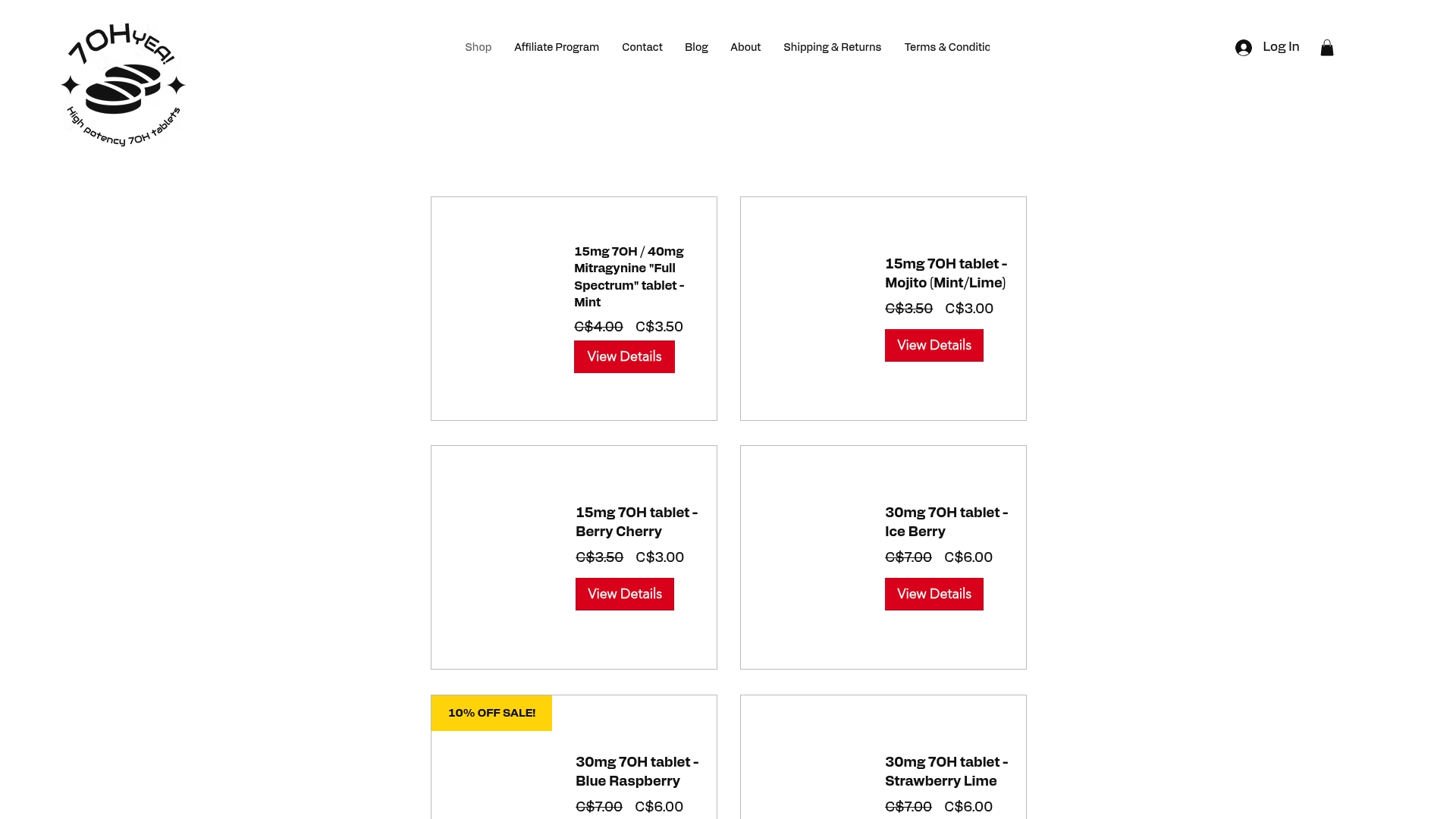
- Product range: Various research-grade 7OH tablets and powders are offered in multiple formulations suitable for different research needs.
- Batch verification: Certificates of analysis are provided with materials to support LC-MS confirmation.
- Sourcing and shipping: Materials are sourced and shipped to facilitate procurement timelines for research schedules.
Qualified research teams can review current formulations and purity options on the 7OH products page to match materials to a specific protocol.
Sources
- FDA scientific assessment: 7‑hydroxymitragynine (7‑OH) — characterization and public health considerations
- Review: pharmacology and toxicology of kratom and its major alkaloids
This article is general information, not a substitute for advice from a qualified doctor. Consult a qualified healthcare professional about your own circumstances before acting on anything here.
FAQ
What does 7-hydroxymitragynine metabolize into?
7-hydroxymitragynine is itself a metabolite, formed from mitragynine primarily through CYP3A4-mediated oxidation, and gastric fluid can partly convert it back toward mitragynine under acidic conditions according to preclinical PK work in rats. Downstream metabolites beyond that reverse conversion are not yet fully characterized in humans.
What does 7-hydroxymitragynine do to the brain?
It acts primarily as a potent agonist at mu-opioid receptors, with weaker activity at kappa and delta receptors, producing effects consistent with classical opioid pharmacology including analgesic-type activity and, at sufficient exposure, respiratory suppression. Animal data confirm this MOR-driven effect is reversible with naloxone, according to the FDA’s assessment.
Will 7OH show up on a standard drug test?
Standard opioid immunoassays are not designed to detect 7-hydroxymitragynine or mitragynine, so routine workplace drug panels typically won’t flag it. Specialized LC-MS testing can detect it specifically, and clinical toxicology labs increasingly offer targeted kratom alkaloid panels when exposure is suspected.
Does kratom affect dopamine or serotonin as well as opioid receptors?
Kratom’s alkaloids, including mitragynine and 7-hydroxymitragynine, are studied primarily for their opioid receptor activity rather than direct dopamine or serotonin receptor binding, and the kratom pharmacology review frames their effects mainly through MOR, KOR, and DOR pathways. Downstream reward-related dopamine signalling can still occur indirectly through opioid receptor activation, as it does with other opioid agonists, rather than through a direct action on dopamine or serotonin receptors themselves.