Health Canada Playbook: Research Chemical Compliance for Canadian Labs

Most legitimate research labs in Canada can acquire and handle controlled precursors as end-users, without a separate Health Canada licence, provided they buy from a licensed dealer and sign an end-use declaration. That protection stops the moment your activity crosses into production, packaging, or import and export, or the moment the substance is a Class A precursor or a newly scheduled compound. Before you accept a shipment, confirm your supplier’s licence status, request a batch-specific certificate of analysis, and complete the end-use declaration. Skip any one of those three, and you have shifted risk onto your lab.
TL;DR:
- Handling controlled precursors in Canadian research labs is permitted without a licence if purchased from a licensed dealer and accompanied by an end-use declaration, but risks increase once crossing into production, import, or export activities.
- Confirm dealer licensure, request batch-specific certificates of analysis, and document storage controls before ordering, since skipping any step shifts liability onto the lab during an inspection.
- Most research organizations qualify for the end-user pathway by signing an end-use declaration and avoiding activities like large-scale production or import/export, which require a licence or permit.
- Verifying a supplier’s licence, inspecting the COA for completeness and lab accreditation, and avoiding vague purity claims are critical for compliance and avoiding enforcement actions.
- Consistently documenting receipt, storage conditions, and disposal, while reviewing compliance policies regularly, helps prevent violations that could lead to fines, license loss, or criminal charges.
7ohyeaSource Research-Grade 7OH Materials7ohyea provides research-grade 7OH tablets and powders, domestically sourced from British Columbia for analytical laboratory purposes.
Visit 7ohyeaTable of Contents
- Research chemical compliance in Canada: a quick checklist
- Do you need a licence, or just an end-use declaration?
- Sourcing and vendor verification: what to demand from suppliers
- Documentation, storage and lab practices that keep you audit-ready
- Permits, exemptions and import and export basics
- A practical workflow from pre-order to close-out
- What documentation to expect from a compliance-focused Canadian supplier
- Clarification of legal obligations and liabilities in case of non-compliance
- Guidance on disposal protocols for unused or expired research chemicals
- Overview of penalties and enforcement actions for violations under Canadian law
- Why compliance habits matter more than compliance knowledge
- Sourcing 7OH research materials without the paperwork gap
- Sources
- FAQ
Research chemical compliance in Canada: a quick checklist
Run through these eight checks before you place an order or sign for delivery. Each one closes a gap that inspectors, auditors, or a poison control review would flag first.
- Confirm the dealer’s licence or registration number and get direct contact information for their compliance officer.
- Prepare and sign an end-use declaration where the substance and activity call for one.
- Request a batch-specific COA and check that the testing lab is independently accredited, not an in-house claim.
- Document storage and access controls, and name a Senior Person In Charge (SPIC) for your site.
- Confirm the supplier’s shipping standard operating procedures, especially chain-of-custody for temperature-sensitive materials.
- Log receipt into your inventory system the day materials arrive, and scan the COA into your records immediately.
- Retain every document (COA, declaration, permit, shipping paperwork) for the period your institution’s compliance policy sets.
- Bookmark the Health Canada guidance pages that track current scheduling and Precursor Control Regulations updates.
Do you need a licence, or just an end-use declaration?
The Precursor Control Regulations (PCR) and the Controlled Drugs and Substances Act (CDSA) split precursor chemicals into two tiers. Class A precursors carry tighter controls: producing, packaging, selling, or importing and exporting them generally requires a Health Canada licence. Class B precursors are lower risk but still regulated, and dealers who sell them typically need a registration rather than a full licence.
Here is where most research teams actually sit: if you buy from a licensed dealer and sign an end-use declaration confirming the material is for research and not for production, resale, or synthesis into a controlled substance, you can possess and handle many precursors without a separate authorization of your own. That end-user pathway was built specifically so routine academic and industrial research does not get buried under licensing paperwork.
The pathway breaks down once your work moves past simple possession and use. Producing a scheduled substance, packaging it for distribution, running large-scale transfers between sites, or importing and exporting material yourself all require a licence or permit. If your lab does any of that, someone on staff needs to hold the SPIC role named on your registration or licence application, and that designation needs to be renewed on the cycle your registration specifies.
Sourcing and vendor verification: what to demand from suppliers
Confirming a supplier’s licensed dealer status is not optional diligence, it is the entire foundation of the end-user exemption. Check the dealer’s name against Health Canada’s current lists before you place your first order, and keep that confirmation on file.
A valid COA states the compound’s identity, its purity percentage, the assay method used (HPLC, GC-MS, or equivalent), and the name of the certifying lab. If a COA is missing any of those four elements, or the testing lab cannot be independently verified, treat it as incomplete.
Pro Tip:Ask your supplier for the testing lab’s accreditation number before you order, not after. A legitimate lab will provide it without hesitation; a vendor stalling on that request is telling you something.
Watch for these red flags:
- COAs with vague purity ranges instead of batch-specific figures.
- Testing labs you cannot find or verify independently.
- Consumer-facing marketing language on a page that claims to sell “research-grade” material.
- Any supplier messaging that hints at bypassing scheduling or documentation requirements.
Research into kratom sales in Canada found that a large share of online vendors provide poor-quality consumer information, and Health Canada separately warns about the risks of buying drugs and health products online without verification. Both point to the same lesson for lab procurement: an “analytical use only” label on a package is marketing, not documentation. It does not substitute for a COA, a declaration, or a documented chain of custody.
Documentation, storage and lab practices that keep you audit-ready
Auditors look for a paper trail that starts before the shipment arrives and continues through disposal. Your inventory log should record the date of receipt, quantity, lot number, and who signed for the material, cross-referenced against the supplier’s shipping documentation.
Name your SPIC in writing, not just informally. Health Canada’s registration guidance treats the Senior Person In Charge as accountable for internal controls, so their responsibilities, and their backup when they are away, need to be documented in your lab’s compliance policy.
Storage security means locked cabinets with restricted access lists, not a shared key on a hook by the door. Where a substance is temperature-sensitive, your storage log should show continuous monitoring, not spot checks.
Retention periods matter as much as the documents themselves. Keep COAs, signed end-use declarations, permits, and shipping paperwork for as long as your institution’s policy requires, and store them somewhere a second staff member can retrieve them if the original signer leaves.
Permits, exemptions and import and export basics
An import or export permit typically becomes necessary when material crosses the Canadian border outside the routine channels a licensed dealer already uses. Licensed dealers generally hold their own permits and manage that logistics layer for you, which is one reason buying domestically through a registered dealer simplifies your compliance load considerably.
Exemption certificates exist for preparations and mixtures where the regulated precursor is present below a threshold concentration. Qualifying for that exemption still requires documentation showing the formulation and concentration, so do not assume a mixture is automatically exempt without paperwork to back it up.
Transit and transhipment permits cover a different scenario: material passing through Canada without being imported for use here. These carry separate requirements from a standard import or export permit, and Health Canada’s guidance pages walk through which applies to your shipment. Start that conversation with your supplier early. Permit processing is not instant, and a shipment held at the border because paperwork was missing costs you more time than the application would have.
A practical workflow from pre-order to close-out
Follow this sequence for every new material, not just the first order from a new supplier.
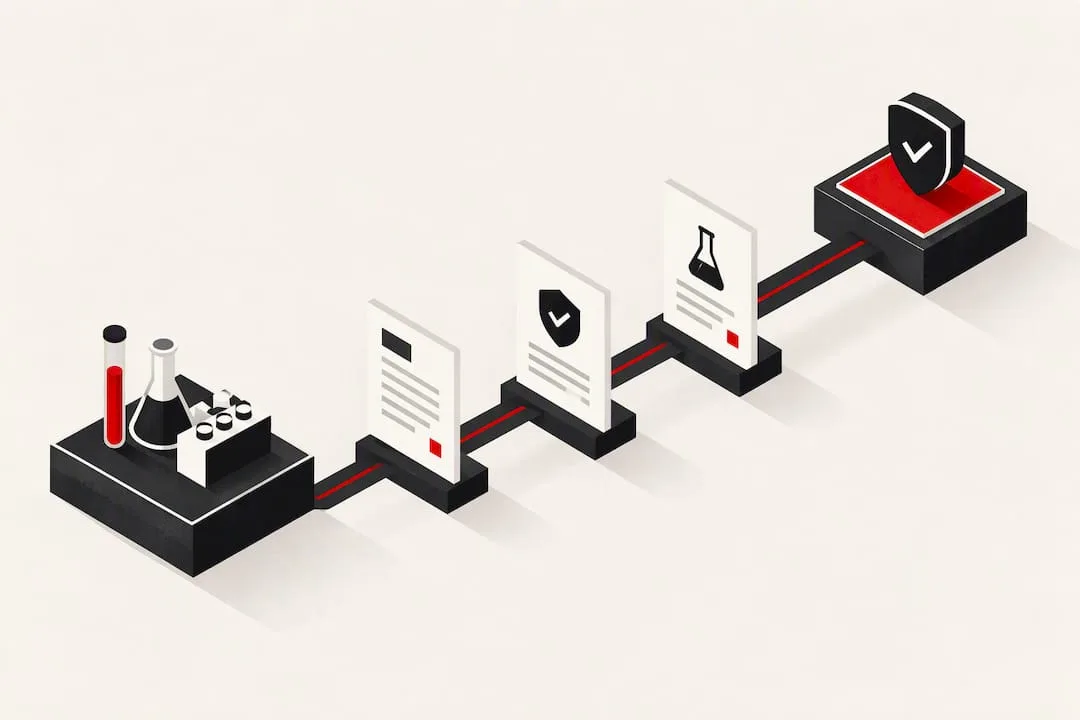
- Pre-order: Check current scheduling status, vet the supplier’s licence, assign or confirm your SPIC, and draft the end-use declaration.
- Ordering: Request the COA and shipping SOP in writing, and confirm with the supplier whether any permit applies to your specific shipment.
- Receiving: Verify all paperwork against the physical shipment, log it into inventory, and confirm storage and access controls before the material reaches the shelf.
- In-use and disposal: Log every use event, retain reference samples where your protocol calls for them, and manage disposal or return according to your written SOP.
- Audit and update: Review your procedures on a set schedule and check for scheduling changes that might reclassify a material you already hold.
Pro Tip:Set a recurring calendar reminder tied to step five. Scheduling amendments, like the 2023 changes covering novel fentanyl precursors, can move a compound you have safely stocked for years into a stricter category overnight.
What documentation to expect from a compliance-focused Canadian supplier
A supplier built around research use, rather than consumer sales, should hand you proof without being asked twice. That means a batch-specific COA for the exact lot you are receiving, not a generic specification sheet reused across shipments, along with “analytical use only” labelling backed by a documented standard operating procedure and a clear path to verify the testing lab behind the COA.
Operational details matter too. Domestic sourcing from British Columbia removes the customs delays and border fees that come with importing analytical-grade material, and temperature-controlled shipping within Canada protects alkaloid stability in transit. Customizable dosage and purity options, common across research-grade 7-hydroxymitragynine and mitragynine products, let your protocol dictate the material rather than forcing your protocol to adapt to whatever a vendor happens to stock.
Before your first order with any Canadian supplier, request four things: the COA, the shipping SOP, an end-use declaration template, and direct contact information for the testing lab named on the COA. If a vendor cannot produce all four promptly, that is your answer.
Clarification of legal obligations and liabilities in case of non-compliance
Signing an end-use declaration is a legal statement, not a formality. It tells Health Canada, in writing, that your lab intends to use the material for research and nothing else, and it puts your institution on record if that use changes without notice.
Liability under the CDSA and the PCR does not require intent to divert or misuse a substance. Possessing a Class A precursor without the required licence, or a Class B precursor from a dealer who lacks proper registration, can trigger regulatory action even when the lab’s actual research purpose was entirely legitimate. The mechanism matters less than the paperwork gap.
Your institution carries the compliance burden, not just the individual researcher who placed the order. If your SPIC leaves and nobody formally replaces that role, or if your end-use declaration lists a use case that no longer matches what the lab is doing, that gap belongs to the lab’s leadership when an inspection happens.
Liability also extends backward through your supply chain. Buying from a dealer who turns out to lack proper licensing does not shield your lab because you acted in good faith. Verification is your responsibility at the point of purchase, which is exactly why vendor vetting sits at the top of the pre-order checklist rather than as an afterthought.
The safest posture is to treat every declaration, permit, and registration as a living document tied to your lab’s actual current activity, reviewed whenever your research scope changes, not filed away once and forgotten.

Guidance on disposal protocols for unused or expired research chemicals
Disposal is where a lot of otherwise compliant labs quietly create risk. A precursor or controlled substance does not stop being regulated because it expired or because the study using it wrapped up.
Your disposal record should mirror your receiving record: what was disposed of, the quantity, the date, the method, and who authorized it. That log belongs in the same retention file as your COAs and declarations, because an inspector reviewing your inventory will expect the numbers to reconcile from receipt through to final disposition.
Most institutions route controlled substances and precursors through a licensed waste management contractor rather than standard chemical waste streams, and for good reason: an unlicensed disposal pathway can itself violate the same regulations that govern acquisition. Check with your supplier or your institution’s environmental health and safety office about which contractors are approved for the specific substance class you are disposing of.

Never rely on informal destruction methods, dilution down a drain, or simply discarding material in general waste, even for small quantities. Regulatory expectations around precursors and controlled substances apply at every stage of the material’s life in your lab, and disposal is the final stage where documentation still counts. If your lab’s SPIC has not reviewed the current disposal SOP in the past year, that is a gap worth closing before it becomes a problem during an audit rather than after.
Overview of penalties and enforcement actions for violations under Canadian law
Enforcement under the CDSA and the PCR ranges from administrative correction to criminal prosecution, depending on the nature and scale of the violation. A missing or incomplete end-use declaration might draw a compliance notice and a requirement to correct the paperwork. Possessing a scheduled precursor without the licence or registration that activity requires is a more serious matter, and can result in charges under the CDSA itself.
Penalties scale with intent and quantity. A lab that made a documentation error while genuinely conducting legitimate research faces a different enforcement path than an operation using research-lab language to mask production or distribution. Health Canada and law enforcement distinguish between the two, but that distinction only helps a lab whose paper trail actually supports its stated purpose.
Institutional consequences often outlast any individual penalty. A lab flagged for a compliance failure can lose dealer relationships, face tighter scrutiny on future permit or registration applications, and in serious cases, lose institutional research funding tied to regulatory standing. None of that requires a criminal conviction. A pattern of sloppy documentation is enough to change how suppliers and regulators treat your lab going forward.
The practical takeaway is not that enforcement is aggressive for honest mistakes. It is that the cost of fixing a documentation gap after the fact is always higher than the cost of getting it right before the shipment arrives.
Why compliance habits matter more than compliance knowledge
Most compliance failures I have seen written up were not the result of anyone breaking a rule on purpose. Someone skipped the COA check because the packaging said “analytical use only” and that felt like enough. Someone trusted a supplier’s marketing copy instead of asking for the testing lab’s credentials.
The labs that stay clean do a few unglamorous things consistently: they log receipt the same day material arrives, they put one named person in charge of the SPIC role instead of leaving it ambiguous, and they revisit their compliance policy on a set schedule rather than only when something goes wrong. Checking Canada.ca for scheduling updates should be a calendar habit, not a reaction to a news story about a substance getting reclassified.
— Deek
Sourcing 7OH research materials without the paperwork gap
There are Canadian suppliers offering research-grade alkaloids domestically that can help avoid border delays, inconsistent COAs, and vague labelling which create compliance gaps. Sourcing domestically in Canada can avoid customs friction and often includes batch-specific certificates of analysis for shipments.
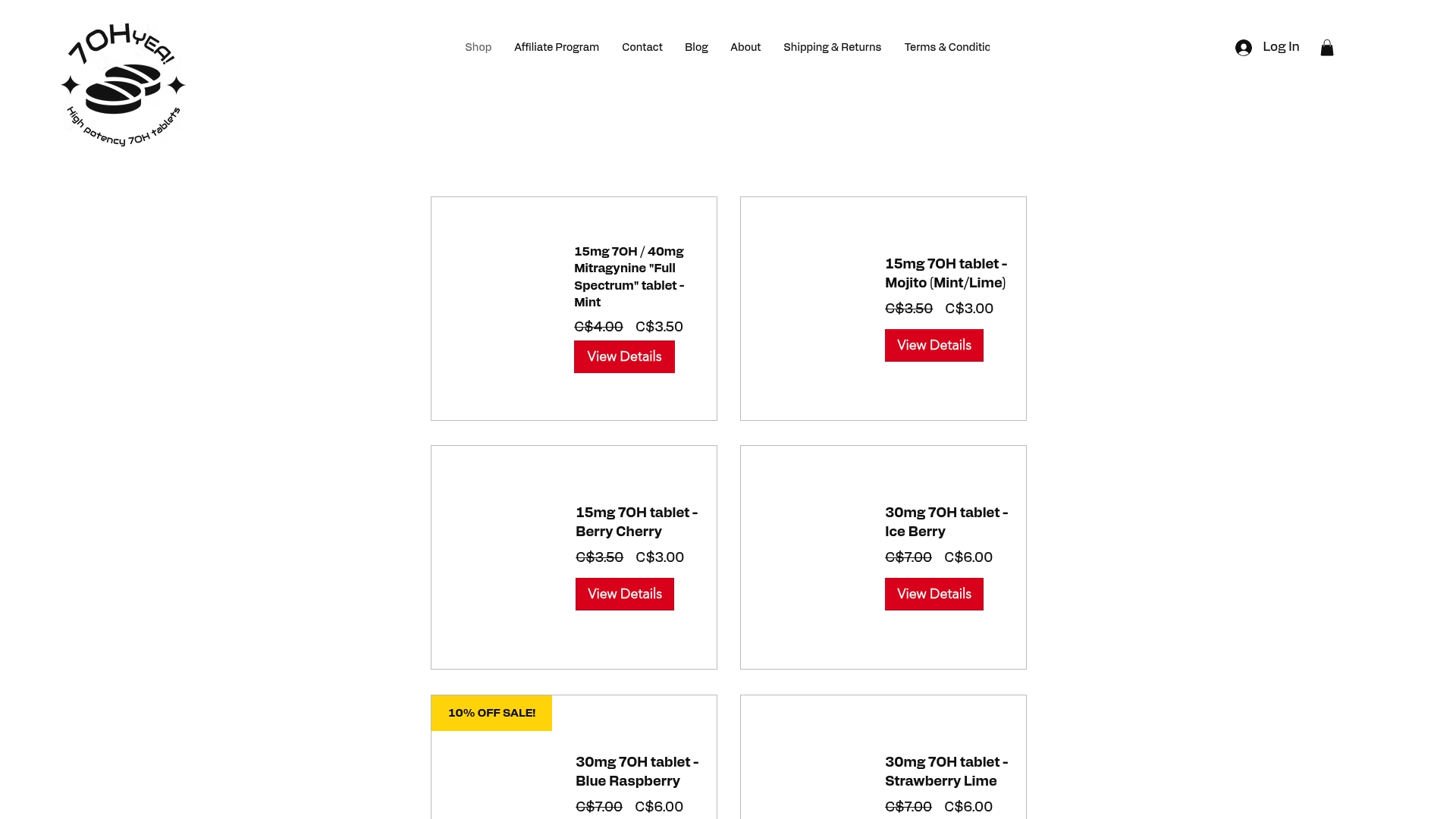
Before you place an order, ask for the COA, the shipping SOP, and an end-use declaration template, exactly as this guide recommends for any supplier. Browse the current research-grade product catalogue to see dosage and purity options across tablets and powders, and request your documentation package before your next procurement cycle begins.
This article is general information, not a substitute for advice from a qualified lawyer. Consult a qualified legal professional about your own circumstances before acting on anything here.
Sources
- Canada Gazette, Part 2: Regulations amending the Precursor Control Regulations (Novel fentanyl precursors)
- Guidance — Precursor Control Regulations: applications for import/export/transit/transhipment permits (Health Canada)
- Kratom exposures managed by the British Columbia poison centre, 2012–2019: a descriptive analysis
FAQ
Do Canadian research labs need a Health Canada licence to buy precursors?
Most labs do not. If you buy from a licensed dealer and sign an end-use declaration, you generally qualify as an end-user and can possess and handle the material without a separate licence.
What is the difference between Class A and Class B precursors?
Class A precursors carry stricter controls, and producing, packaging, or importing and exporting them usually requires a full Health Canada licence. Class B precursors require registration rather than a licence for the dealers who sell them.
What should a valid certificate of analysis include?
A complete COA states the compound’s identity, its purity percentage tied to that specific batch, the assay method used, and the name of an independently accredited testing lab. Missing any of those elements is a reason to question the supplier.
How much does 7OH research material cost from 7ohyea?
Current prices are listed on the 7ohyea product catalogue, where dosage and purity options vary by product line. Powder formats, including 43% pure Mitragynine “Full Spectrum” powder, are priced individually on the site.
How long should a lab keep compliance documentation?
Retention periods should follow your institution’s compliance policy, but COAs, signed end-use declarations, permits, and shipping paperwork should all be kept together and accessible to more than one staff member, not just the original signer.