Labs: 7-OH Tablet Strengths 15, 30, 50 mg for COA & Validation

Research-grade 7-hydroxymitragynine tablets are commonly supplied in three pre-measured strengths: 15 mg, 30 mg, and 50 mg, alongside “full spectrum” tablets that combine 7-OH with mitragynine. These formats exist strictly for laboratory calibration, method development, and quality control work, never for human consumption, and any batch a lab receives should arrive with a certificate of analysis confirming identity and purity before it enters a workflow.
TL;DR:
- Tablets at 15 mg, 30 mg, and 50 mg are exclusively for laboratory calibration and are never intended for human use.
- The 50 mg tablets are better suited for protocols requiring large dilution factors or low extraction recovery, reducing weighing errors.
- Confirm the certificate of analysis covers purity, uncertainty, batch traceability, and proper preparation details before using the material in validation.
- A validated UPLC-MS/MS method can quantify 7-hydroxymitragynine from 10 to 4,000 ng/mL with an achievable lower limit of 10 ng/mL.
- Using solution standards from tablets works for instrument calibration, but full method validation requires matrix-matched certified reference materials.
7ohyea7ohyea.caResearch-Grade 7OH for Laboratory WorkChoose consistent 7OH tablet and powder formulations, sourced domestically from British Columbia for analytical research purposes.
Explore 7OH research materialsTable of Contents
- Dosage overview: catalogue of tablet strengths and formats
- How to choose a tablet strength for your method or study
- Quality, purity and verification: what to require from suppliers
- Analytical method considerations and calibration
- Storage, stability and handling
- Ordering, packaging and logistics for labs
- What adopting pre-measured tablets means for a lab’s workflow
- How 7OH Canada supports lab workflows with customizable dosages
- Sources
- FAQ
Dosage overview: catalogue of tablet strengths and formats
Each tablet strength serves a distinct role on the bench. The 15 mg tablet suits low-level calibration points and spiking experiments where a smaller absolute mass keeps dilution series manageable. The 30 mg tablet works well as a mid-range reference point, useful when a lab wants fewer dilution steps to reach a target concentration. The 50 mg tablet, such as the 50 mg 7OH Tablet - Orange, gives analysts more material to subsample from a single unit, which reduces the relative weighing error that comes with very small aliquots.

“Full spectrum” tablets, like the 15 mg 7OH / 40 mg Mitragynine formulation, pair 7-OH with mitragynine in a single dosage form, which is useful for labs studying the two alkaloids together rather than in isolation.
Format and strength involve trade-offs that matter for precision:
- Smaller tablets demand finer analytical balances and careful technique to avoid disproportionate weighing error during subsampling.
- Larger tablets offer more forgiving handling but require larger initial dilution volumes to reach working concentrations.
- Blister-packed units limit cross-contamination between tablets, while bulk bottles trade that protection for faster access during high-throughput work.
- Full spectrum tablets simplify multi-analyte studies but complicate calibration when a lab needs a pure 7-OH reference point.
Choosing between these formats comes down to what a given assay actually calls for, not simply what is on hand.
How to choose a tablet strength for your method or study
Selecting the right tablet strength starts with the calibration curve a method actually needs to cover, not with what happens to be in stock.
- Map your expected lower and upper limits of quantitation (LLOQ and ULOQ) before choosing a tablet mass, since the tablet needs to support the full range without excessive dilution.
- Account for anticipated recovery losses during extraction and clean-up, since matrix effects can reduce measured concentration well below the nominal spike.
- Favour higher-mass tablets, such as the 50 mg format, when your protocol involves large dilution factors or when extraction recovery is historically low for your matrix.
- Reserve solution standards or matrix-matched calibrators for instrument-level calibration, and turn to certified reference materials when validating the full method, including sampling and extraction, as matrix-matched CRMs address steps that solution standards cannot capture on their own, according to NRC guidance on certified reference materials.
- Confirm the tablet’s stated purity and lot documentation align with your acceptance criteria before committing it to a validation run.
Pro Tip:Run a small pilot dilution series before committing a full batch to your calibration curve, since it reveals whether your chosen tablet strength actually reaches your LLOQ without excessive extrapolation.
Method development is iterative, and a tablet that works well for one matrix may behave differently in another, particularly where extraction efficiency varies.

Quality, purity and verification: what to require from suppliers
A certificate of analysis is only useful if it contains the details a lab actually needs to trust the material. Before a tablet strength enters a validated method, confirm the documentation covers the following:
- Assay purity expressed as a percentage, along with the analytical method used to determine it.
- Expanded uncertainty on the stated purity value, not just a single point estimate.
- Lot or batch number that ties the physical tablet back to its specific COA.
- A traceability statement linking the value assignment to recognized reference standards.
- Preparation method, since gravimetrically prepared standards carry different confidence levels than estimated formulations.
Third-party identity and purity testing adds a layer of verification beyond the supplier’s own internal COA, and labs working with sensitive protocols should feel comfortable requesting the raw laboratory report behind any summary certificate. This becomes more important given that consumer-market kratom products have shown variable and sometimes mislabelled 7-OH concentrations, a pattern flagged in an Early Warning Advisory from the UNODC in August 2025. That kind of variability in the consumer market is exactly why laboratory-grade materials need batch-specific documentation rather than generic labelling.
Reference-material standards such as ISO 33403 describe how value assignment and preparation practices should tie back to ISO 17034 and ISO 33405, giving labs a framework for judging whether a supplier’s documentation meets a defensible standard. For more detail on interpreting purity claims and batch testing, see our guide to 7-hydroxymitragynine purity levels.
Analytical method considerations and calibration
Turning a tablet into a usable calibrator follows a fairly consistent workflow: dissolve the tablet in an appropriate solvent, prepare a serial dilution series across the intended concentration range, then spike a blank matrix to create matrix-matched calibrators where full-method validation is the goal.
- Dissolve the tablet fully and verify concentration against the stated label value before proceeding.
- Prepare serial dilutions that bracket your expected LLOQ and ULOQ with enough points to establish curve linearity.
- Spike a representative blank matrix rather than relying solely on solvent standards when validating extraction and clean-up steps.
- Include quality control samples at low, mid, and high concentrations within each calibration run.
A validated UPLC-MS/MS method for quantifying 7-hydroxymitragynine demonstrated a linear calibration range of 10 to 4,000 ng/mL with a lower limit of quantitation of 10 ng/mL, according to a published method in the Journal of Biomedical Chromatography. That range shows low-nanogram quantitation is achievable with proper method validation, giving labs a practical benchmark when designing their own calibration curves.
Extraction recoveries in that same published method fell in the 62 to 67% range, a reminder that recovery losses should be built into curve design rather than assumed away. For background on how 7-OH’s chemistry differs from mitragynine and what that means for method selection, our comparison of mitragynine and 7-hydroxymitragynine covers the practical implications.
Storage, stability and handling
Tablet integrity depends on how it is stored between receipt and use. Keep reference tablets in a cool, dark, and dry environment, adding desiccant where humidity control is a concern.
- Avoid repeated freeze-thaw cycles for any dissolved stock solutions, since this can degrade alkaloid content over successive cycles.
- Recognize that stability in biological matrices is generally shorter than stability of the solid tablet itself, so spiked samples should be analyzed promptly.
- Weigh out the minimum sample mass your balance can measure reliably, since very small subsamples amplify relative weighing error.
- Log subsampling steps carefully, particularly when a single tablet supplies multiple aliquots over time.
These practices protect both the analytical result and the traceability chain back to the original lot.
Ordering, packaging and logistics for labs
A smooth procurement process starts before the order ships. Request the certificate of analysis, lot number, stability statement, and recommended shipping conditions at the time of order, not after the package arrives.
- Blister packaging limits handling and cross-contamination between individual tablets, useful for labs running many small-scale spikes.
- Bottled bulk formats suit high-throughput work where speed of access matters more than individual tablet isolation.
- Confirm lot traceability is documented on the shipment itself, not just referenced in a separate email.
Domestic sourcing shortens lead times and avoids the customs delays and fees that come with cross-border shipments, which matters when a validation timeline is tight. For a broader look at what drives procurement costs, see our lab buyer’s guide to 7-hydroxymitragynine cost.
What adopting pre-measured tablets means for a lab’s workflow
Bringing pre-measured tablets into a validated workflow works best as a staged process: verify the COA against the lot on hand, run an independent identity check where resources allow, then fold the tablet into a pilot calibration run before relying on it for reported results. These materials exist for calibration and method work only, never for human use, and a documented chain of custody protects both the data and the lab’s own credibility.
— Deek
How 7OH Canada supports lab workflows with customizable dosages
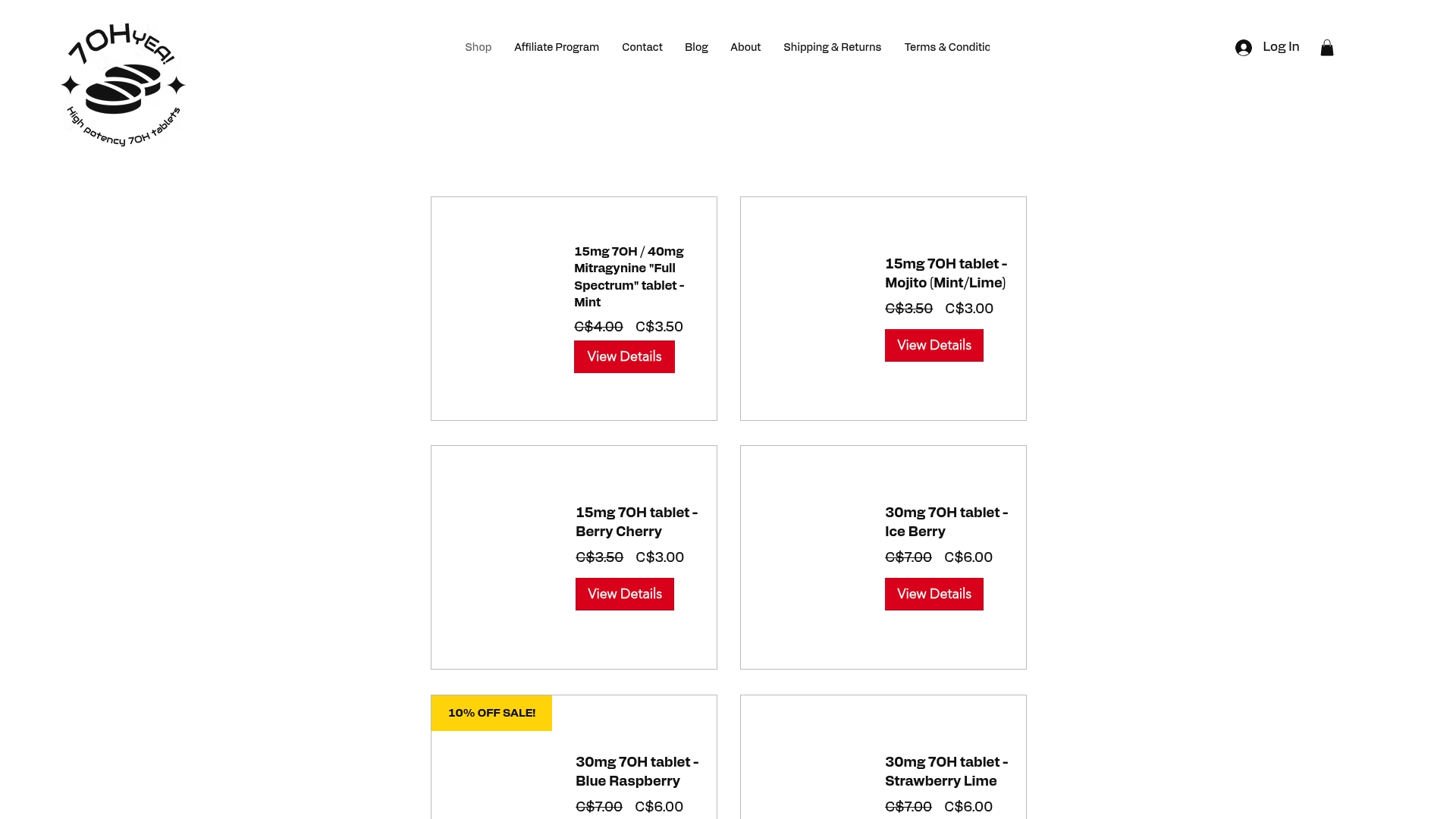
Labs that need pre-measured 7-OH reference material without a long procurement cycle have direct product options available. The catalogue includes 7OH tablets, full spectrum tablets, MGM-15 tablets, and related powders at 15 mg, 30 mg, and 50 mg strengths, each shipped with a batch-specific certificate of analysis.
- Domestic sourcing helps keep lead times short and avoids cross-border customs delays.
- Customizable dosage options let a lab match tablet strength to a specific calibration curve rather than adapting a protocol to available materials.
- COAs usually accompany batches, supporting the traceability documentation a validated method requires.
Browse the full product category or the shop page to request a certificate of analysis or discuss a custom dosage run for your lab.
Sources
- UNODC Early Warning Advisory announcement (Aug 2025)
- HEMP-1 certified reference material (NRC Digital Repository)
- ISO 33403:2024 - Reference materials — Requirements and recommendations for use
- Validated UPLC‑MS/MS method for 7-hydroxymitragynine quantitation (2013, Wiley)
FAQ
What tablet strengths are available for 7-OH reference materials?
Research-grade 7-hydroxymitragynine tablets are commonly supplied at 15 mg, 30 mg, and 50 mg, along with full spectrum tablets combining 7-OH with mitragynine. These strengths are intended for laboratory calibration and method development, not human consumption.
How do I verify the purity of a 7-OH tablet before use?
Request the batch-specific certificate of analysis, which should list assay purity, expanded uncertainty, and a traceability statement. Third-party identity and purity testing adds an additional layer of confidence beyond the supplier’s internal documentation.
Can 7-OH tablets be used for full method validation?
Solution standards prepared from tablets work well for instrument calibration, but full method validation, including extraction and clean-up, generally calls for matrix-matched certified reference materials, as NRC guidance explains. Labs should treat solution standards and CRMs as complementary rather than interchangeable tools.
What calibration range can a UPLC-MS/MS method achieve for 7-OH?
A validated UPLC-MS/MS method demonstrated a linear range of 10 to 4,000 ng/mL with a lower limit of quantitation of 10 ng/mL, according to this validated method. That range gives labs a practical reference point when designing their own calibration curves.
Does 7OH Canada provide certificates of analysis with its tablets?
Yes, 7OH Canada supplies a batch-specific certificate of analysis with its research-grade tablets, sourced domestically from British Columbia. Dosage options include 15 mg, 30 mg, and 50 mg strengths, available through the product category page.