Bulk Alkaloid Standards in Canada: NRC CRMs, Fewer Import Delays

Canadian labs can source bulk alkaloid reference standards domestically through National Research Council Canada (NRC) certified reference materials (CRMs) and qualified Canadian suppliers such as 7OH Canada, avoiding cross-border delays. Before placing any order, we recommend you request the batch-specific Certificate of Analysis (COA), confirm the alkaloid’s regulatory schedule under Canadian law, and verify the supplier’s traceability documentation.
TL;DR:
- Confirm each alkaloid’s status under Canada’s Controlled Drugs and Substances Act, and obtain any required institutional license or section 56(1) exemption before shipment.
- Reject any lot whose certificate lacks identity confirmation, expanded uncertainty, individual impurity concentrations, relevant residual solvent results, and matching lot and retest details.
- Choose powders for dilution, tablets in 15 mg, 30 mg, or 50 mg strengths for repeatable dosing, and prepared solutions for instrument checks.
- Use NRC certified reference materials when validation requires SI traceability; verify supplier claims against ISO/IEC 17025 testing or ISO 17034 producer accreditation.
- On receipt, match package and certificate lot numbers, confirm shipping documents and temperature needs, then follow storage and minimum sample mass instructions.
7ohyea7ohyea.caSource 7OH for Canadian Research7OH Canada supplies research-grade 7OH tablets and powders in customizable strengths, sourced domestically from British Columbia for laboratory use.
Visit 7OH CanadaTable of Contents
- 1. Available product formats and strengths
- 2. Reading COAs, CRMs and the accreditations behind them
- 3. Canada-specific regulatory and compliance considerations
- 4. Pricing, bulk ordering and procurement steps
- 5. Shipping, import and receiving logistics for Canadian labs
- 6. Storage, stability and handling best practices
- 7. 7OH Canada: domestic supplier capabilities for lab procurement
- 8. Methods for verifying purity and concentration in-house
- 9. Recommended uses and applications in research
- 10. Customization options for dosage and formulation
- 11. Safety protocols for handling and disposal
- 12. Procurement checklist: an actionable summary for the lab buyer
- Ordering from 7OH Canada: how to get started
- FAQ
- Sources
- Procurement checklist: an actionable summary for the lab buyer
1. Available product formats and strengths
Bulk alkaloid procurement in Canada generally comes down to three usable formats, and the right one depends on what your assay is actually measuring.
Powders remain the most flexible option for method development and large-scale testing. Bulk weights typically range from smaller to larger quantities, with purity grades that should always be stated on the COA rather than assumed from a product label. When working with a CRM, the certificate will usually specify a recommended minimum sample mass to ensure the measured value stays within its certified uncertainty, a detail labs sometimes overlook when they scale a method down from a validation study to a routine assay.
Calibrated tablets suit labs that need fixed-dose reproducibility across runs rather than raw material for extraction or dilution work. Fixed strengths, such as 15 mg, 30 mg or 50 mg formats, reduce the weighing error that creeps into powder-based calibration curves and make day-to-day method reproducibility easier to document.

Solution ampoules and prepared mixtures serve system suitability testing and instrument qualification on LC-MS or HPLC platforms, where a pre-diluted, matrix-matched standard saves preparation time and reduces operator-introduced variability.
Across all three formats, lot labelling conventions matter for bulk orders:
- Lot or batch number printed on both the packaging and the COA, not just one or the other.
- Expiry or re-test date tied to the stability data referenced in the certificate.
- Storage condition markings (temperature, light sensitivity) visible before the package is opened.
- Identity statement matching the compound name and salt form ordered, since alkaloids often exist as free base or salt forms with different molecular weights.
2. Reading COAs, CRMs and the accreditations behind them
A Certificate of Analysis is only as useful as the data it actually contains, and a one-line purity statement without supporting detail tells you very little about what you are calibrating against.
A complete COA for a bulk alkaloid standard should include:
- Identity confirmation, typically by nuclear magnetic resonance (NMR) spectroscopy, mass spectrometry or infrared spectroscopy, matching the stated compound.
- Assay or purity value expressed with expanded uncertainty, written as U=kuc with a stated coverage factor, commonly k=2 for a 95% confidence interval.
- Impurity profile, including any related compounds and their individual concentrations rather than a single “total impurities” figure.
- Residual solvent data where the synthesis or extraction process could leave trace solvents behind.
- Lot number, manufacture date, expiry or re-test date, and the signature or identifier of the releasing analyst.
Pro Tip:Keep a running log of COA lot numbers against your internal sample inventory so any later recall or stability flag from the supplier can be traced to the exact vials or tablets on your shelf.
NRC CRMs are built around traceable certified values with their own document identifiers, which is what sets a true certified reference material apart from a standard commercial reference standard. NRC’s certified reference materials program issues alkaloid CRMs, including berberine chloride, with certified purity values and published uncertainty data suitable for calibration and method validation work. When your method requires a defensible, SI-traceable value, for instance in accredited method validation or inter-laboratory comparisons, an NRC CRM is the stronger choice over a general-purpose reference standard.
Two accreditation terms are worth distinguishing when you ask a supplier what stands behind their numbers. ISO/IEC 17025 applies to testing and calibration laboratories and speaks to how the measurement itself was performed, while ISO 17034 applies to reference material producers and covers the characterization and certificate assignment. A supplier who can point to either, or who sources from a producer that holds one, gives you a documentation trail worth keeping on file.
Before accepting a bulk lot into inventory, confirm the COA matches the physical lot number, check the expanded uncertainty figure is present and interpretable, and file the certificate alongside your internal receiving record rather than relying on the supplier’s online copy alone.
3. Canada-specific regulatory and compliance considerations
Alkaloid procurement in Canada sits at the intersection of controlled substances law and natural health product guidance, and the applicable framework depends entirely on which compound you are ordering.
The Controlled Drugs and Substances Act governs possession, sale, import and export of substances listed in its schedules, and researchers need to confirm an alkaloid’s schedule status before it ever ships. Some compounds used in alkaloid research fall outside CDSA scheduling entirely; others may require a specific authorization. Section 56(1) of the Act allows for exemptions granted for scientific purposes, which is the route institutions typically pursue when a scheduled substance is genuinely needed for a research protocol.
Where an alkaloid overlaps with natural health product categories rather than controlled substance law, Health Canada’s quality guidance for natural health products expects validated identity, purity and potency testing, often referencing pharmacopoeial methods, along with Good Manufacturing Practices appropriate to the material’s intended use.
Practical points worth building into your procurement checklist:
- Confirm scheduling status for each specific alkaloid, since structurally related compounds can sit in different categories.
- Check whether your institution needs a dealer’s licence, permit or section 56(1) exemption before the order ships.
- Ask your supplier what sample retention practices they follow, since importers of regulated materials may have retention obligations of their own.
- Favour domestic suppliers for anything with ambiguous or scheduled status, since cross-border import adds licensing exposure that a Canadian-sourced order avoids entirely.
Involve your institution’s compliance or legal office early when a compound’s status is unclear. That conversation is far easier before a shipment is sitting at a border crossing than after.
4. Pricing, bulk ordering and procurement steps
Pricing for bulk alkaloid standards in Canada generally follows two models: a per-milligram rate for powders and a per-unit rate for calibrated tablets, with wholesale tiers kicking in once order volume passes a supplier’s standard retail quantity. As one concrete reference point, 7OH Canada lists its 81% pure 7OH powder at $50 CAD one-off and its 43% pure Mitragynine “Full Spectrum” powder at $6.75 CAD one-off, giving procurement teams a baseline to compare against other quoted formats.
A reasonably streamlined procurement workflow looks like this:
- Confirm institutional purchasing authority and whether an institutional purchase order (PO) is required before contacting a supplier.
- Qualify the supplier by requesting a sample COA and checking accreditation claims before committing to a bulk quantity.
- Review the COA against your method’s requirements, including uncertainty and impurity data.
- Confirm the order and request batch reservation if your protocol depends on using material from a single lot across multiple runs.
Pro Tip:Ask any supplier for their return or acceptance policy before the order ships, not after a lot arrives with documentation gaps, since a verbal assurance is harder to act on than a written policy.
Before finalizing a budget, consider all relevant costs including product price, shipping, taxes, duties, and potential storage or handling expenses. Our guide to reference material certification walks through how traceability documentation factors into total procurement cost for Canadian labs.
5. Shipping, import and receiving logistics for Canadian labs
Bulk alkaloid shipments need documentation that matches the material’s regulatory status and physical handling needs.
- Confirm the shipping mode and whether temperature control is required in transit, particularly for solution ampoules or moisture-sensitive powders.
- Request that the COA, Safety Data Sheet (SDS) and a commercial invoice with correct HS codes accompany the shipment, since missing documentation is a common cause of customs holds.
- Ask about carrier tracking and signature-on-delivery requirements for controlled or high-value lots.
Domestic sourcing cuts transit time meaningfully and removes the cross-border licensing complexity that comes with importing scheduled or temperature-sensitive alkaloids from outside Canada, which is part of why many labs default to Canadian suppliers for routine reordering.
6. Storage, stability and handling best practices
Reference material integrity depends on following the COA’s stability statement exactly, not on general assumptions about the compound class.
- Store powders in a dry, light-protected environment unless the COA specifies refrigeration, and keep desiccants in the container once opened.
- Handle CRMs with the minimum recommended sample mass stated on the certificate, since taking too small a subsample can introduce error the certified uncertainty does not account for.
- Treat solution ampoules as single-use where possible to avoid repeated freeze-thaw cycles degrading the standard.
- Follow Good Manufacturing Practices-aligned cleaning and contamination control steps consistent with Health Canada’s GMP guidance when transferring material between containers.
7. 7OH Canada: domestic supplier capabilities for lab procurement
7OH Canada supplies research-grade 7-hydroxymitragynine (7OH) and related mitragynine alkaloid materials in formats built around the procurement checkpoints above.
- Sourcing and manufacturing take place domestically in British Columbia, which supports faster delivery within Canada and avoids the licensing friction that comes with cross-border import of scheduled or ambiguous materials.
- Tablets are available in configurable strengths, suited to labs that need consistent fixed-dose material across repeated assay runs.
- Each product line is intended strictly for analytical and laboratory research, not human consumption, consistent with the compliance expectations research institutions already apply to controlled or research-only materials.
- Batch-specific documentation and procurement support are available for institutional buyers placing bulk orders.
Our posts on mitragynine reference standards and laboratory detection methods for 7-hydroxymitragynine go deeper into the testing and documentation side of working with these materials.
8. Methods for verifying purity and concentration in-house
A supplier’s COA is a starting point, not a substitute for your own verification, particularly for a bulk lot that will feed multiple projects.
High-performance liquid chromatography (HPLC) with UV or diode-array detection remains the workhorse method for confirming purity against a known reference standard, since it separates the target alkaloid from closely related compounds and degradation products. Liquid chromatography coupled with mass spectrometry (LC-MS) adds identity confirmation on top of quantification, which matters when a supplier’s impurity profile lists compounds with similar retention behaviour.
For powders, a melting point check or an NMR spectrum run against a known reference can confirm identity quickly before committing a lot to a longer validation run. Karl Fischer titration or loss-on-drying testing catches moisture content that can throw off weight-based concentration calculations, a detail that matters more for hygroscopic alkaloid salts than for stable free-base forms.

Whatever method you choose, run it against a reference standard with its own documented traceability, ideally an NRC CRM or an equivalent certified material, so your in-house verification has something defensible to compare against rather than just confirming internal consistency.
9. Recommended uses and applications in research
Bulk alkaloid standards serve a narrower set of purposes than the variety of research projects that rely on them might suggest.
Method development and validation account for a large share of use, where a known-purity standard anchors a calibration curve before a new assay moves into routine use. System suitability testing on LC-MS or HPLC platforms uses smaller standard quantities to confirm an instrument is performing within specification before a batch of samples runs, which is where pre-diluted solution ampoules save real preparation time.
Comparative and stability studies draw on standards to track how a compound degrades under different storage or formulation conditions, a use case where having a well-characterized CRM matters more than having the cheapest available material. Assay development for new analytical methods, particularly where an alkaloid lacks an established pharmacopoeial method, depends on a reference standard whose own purity and impurity profile is documented well enough to support the new method’s validation.
Across all of these, the common thread is that the standard’s value depends entirely on the documentation behind it. A powder with no uncertainty statement and no impurity profile is unsuitable for calibration work even if it tests clean on a quick internal check.
10. Customization options for dosage and formulation
Bulk alkaloid procurement in Canada increasingly includes configurable formats rather than a single fixed catalogue item. Tablet-based standards are commonly available in a handful of fixed strengths, such as 15 mg, 30 mg and 50 mg, which lets a lab match the dose format to a specific protocol without needing to dilute or subdivide raw powder on-site.
Powder formats offer a different kind of flexibility: purity grade becomes the configurable variable rather than dose, since a lab can dilute a high-purity powder to whatever working concentration a method requires. Full-spectrum formulations, which combine an alkaloid with related compounds at stated percentages, suit research protocols studying compound interactions rather than a single isolated alkaloid.
When requesting a custom dosage or formulation, specify the exact strength and format your protocol calls for and ask whether the supplier can confirm that configuration on the COA before the order ships, since a custom strength still needs the same identity, purity and uncertainty documentation as a standard catalogue item.
11. Safety protocols for handling and disposal
Lab-grade alkaloid standards call for the same baseline precautions used with any potent, pharmacologically active research compound.
Personal protective equipment, including gloves, eye protection and a lab coat, should be standard when weighing powders or handling concentrated solutions, given that many alkaloids are active at low milligram quantities. Work should take place in a fume hood or with appropriate local exhaust ventilation when handling fine powders, since inhalation is a more realistic exposure route than skin contact for most alkaloid classes.
Disposal needs to follow your institution’s chemical waste program rather than general lab trash or sink disposal, since alkaloid waste often falls under hazardous or controlled waste categories depending on the compound’s regulatory status. Keep disposal records alongside your receiving and usage logs, which matters both for internal safety audits and for any regulatory inspection tied to controlled materials.
Spill response should be planned before the first order arrives: have absorbent material, a designated spill kit and a documented cleanup procedure on hand, and train anyone handling bulk quantities on the specific compound’s safety data sheet rather than assuming generic chemical handling training covers it.
12. Procurement checklist: an actionable summary for the lab buyer
Before your next bulk order ships, run through this sequence:
- Confirm the alkaloid’s schedule status under Canadian law.
- Request the batch-specific COA before committing to the order.
- Verify the supplier’s accreditation claims or CRM traceability.
- Confirm institutional PO and billing details.
- Check storage readiness matches the COA’s stability statement.
- Confirm the shipment’s HS code and customs documentation.
- Clarify your institution’s sample retention obligations.
- Confirm lead time and batch reservation if continuity matters.
Document receipt against the lot number and file the COA before releasing material into working inventory.
Ordering from 7OH Canada: how to get started
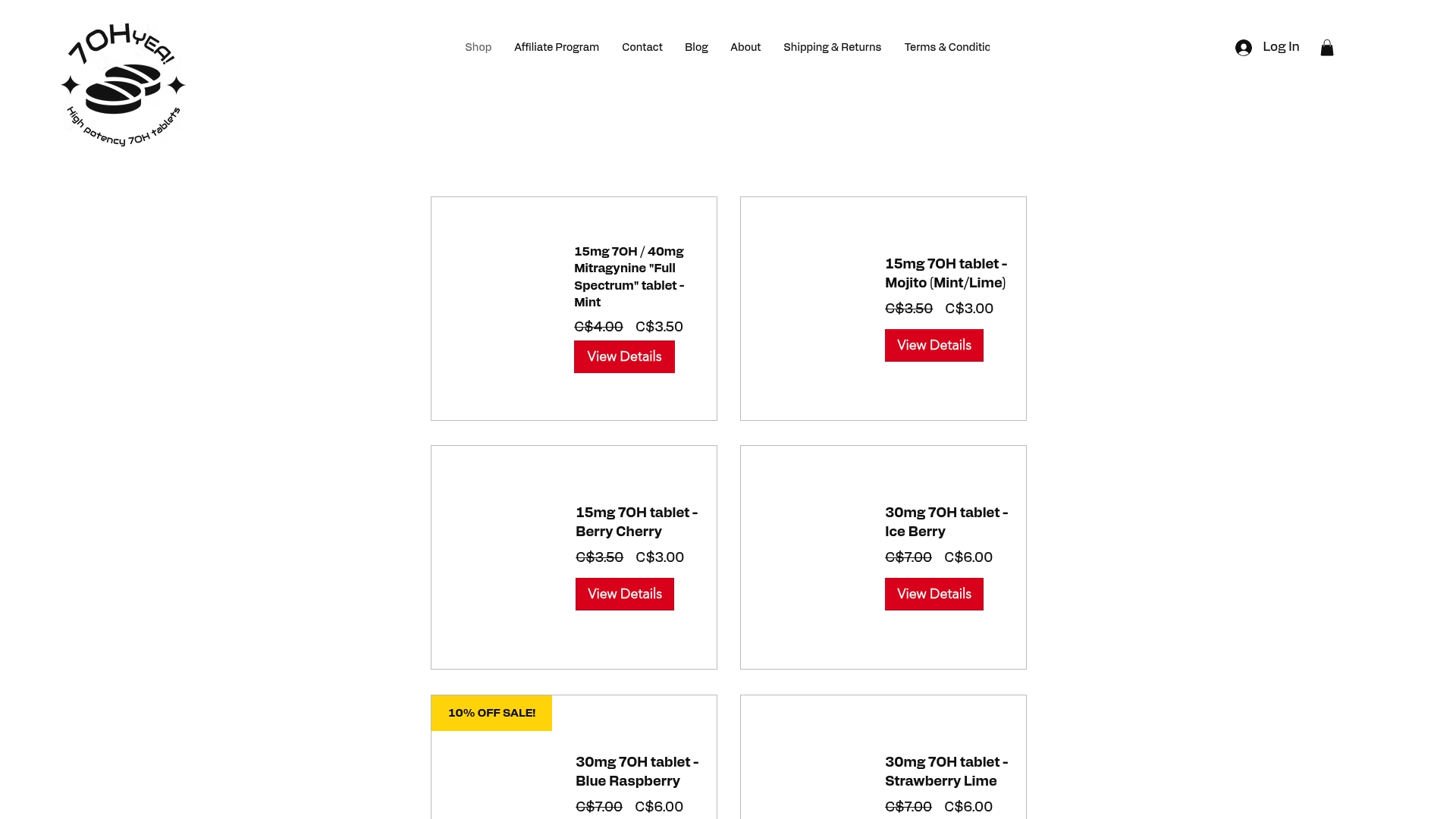
Once you have confirmed scheduling status and documentation requirements, ordering domestically removes most of the friction left in the process. We invite research teams to request a sample Certificate of Analysis and an institutional quote through our product category page before placing a bulk order.
- Confirm your institutional affiliation and purchasing authority.
- Request a batch COA for the specific product line and strength you need.
- Submit your purchase order and confirm quantities.
- Schedule delivery timing against your project’s start date.
Our 50 mg 7OH tablet listing shows the level of SKU-specific detail available for institutional procurement planning.
FAQ
What is the first step before ordering bulk alkaloid standards in Canada?
Confirm the specific alkaloid’s regulatory status under the Controlled Drugs and Substances Act before contacting any supplier. Once scheduling is clear, request a batch-specific COA to confirm identity, purity and uncertainty data match your method’s requirements.
How do NRC certified reference materials differ from standard reference standards?
NRC CRMs carry certified values traceable to SI units, published through NRC’s certified reference materials program, along with documented uncertainty and impurity data. A standard commercial reference standard may not carry the same traceability or certified uncertainty statement, which matters for accredited method validation.
What should a Certificate of Analysis include for a bulk alkaloid lot?
A complete COA includes identity confirmation, an assay or purity value with expanded uncertainty (commonly expressed as U=kuc with k=2), an impurity profile, residual solvent data where relevant, and a lot number with expiry date. Missing uncertainty or impurity data is a sign the lot should not be used for calibration without further testing.
Does buying from a Canadian supplier avoid import permits for controlled alkaloids?
Domestic sourcing reduces cross-border licensing exposure, but it does not eliminate the need to confirm an alkaloid’s schedule status under the CDSA. Some compounds may still require institutional authorization or a section 56(1) exemption regardless of where the supplier is based.
What dosage options does 7OH Canada offer for research tablets?
7OH Canada offers configurable tablet strengths, including 15 mg, 30 mg and 50 mg formats, across its 7OH and Mitragynine product lines. Pricing for powders is listed on the product category page, with tablet pricing available on request.
Sources
- Certified reference materials - NRC Canada
- Quality guide for natural health products - Health Canada
- Controlled Drugs and Substances Act - Justice Laws
Procurement checklist: an actionable summary for the lab buyer
Canadian procurement for bulk alkaloid standards rewards caution over convenience, and the biggest mistake we see is treating a supplier’s price list as the starting point instead of the certificate behind it. A cheap powder with no expanded uncertainty statement is not a bargain. It is an unverified material that happens to have a price tag.
The more durable lesson is that traceability costs less than the alternative. A lab that insists on batch-specific COAs, asks about ISO 17025 or ISO 17034 status, and confirms CDSA scheduling before the purchase order goes out spends a little more time upfront and avoids the far more expensive problem of a validation study built on a standard nobody can defend in an audit. Domestic sourcing does not replace that diligence. It simply removes one layer of friction, cross-border import risk, from an already careful process.
— Deek
7ohyeaAsk About Research-Grade 7OHEmail 7OH Canada with questions about research-grade tablets and powders, customizable strengths, or domestic sourcing for laboratory purposes.77ohyea
Email 7OH Canada7ohyea@gmail.com