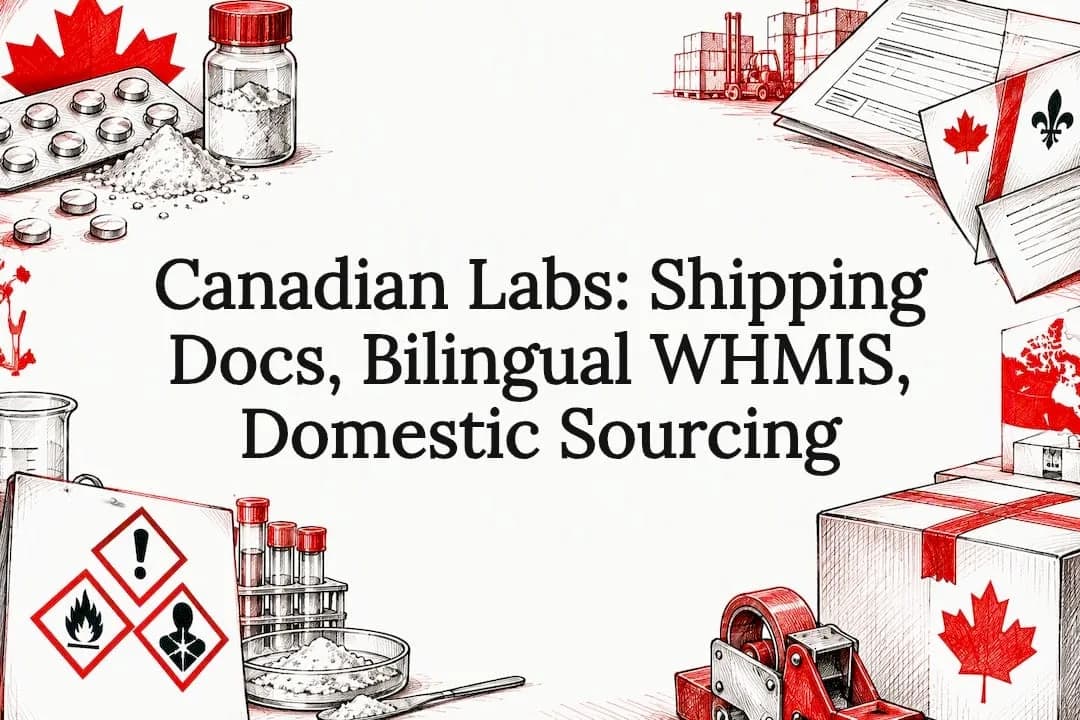
Canadian Labs: Shipping Docs, Bilingual WHMIS, Domestic Sourcing

Before accepting any shipment of research-grade 7-hydroxymitragynine in Canada, your lab needs five things in hand: a bilingual safety data sheet, a compliant supplier label, a batch certificate of analysis, a chain-of-custody or receipt record, and lawful standing to possess the substance, either through a Health Canada exemption or a purchase routed through a licensed dealer. Confirming the substance’s control status with Health Canada comes first, since every other step depends on it.
TL;DR:
- Confirm the substance’s control status with Health Canada before ordering to ensure compliance with import and possession requirements.
- Obtain a bilingual safety data sheet, a compliant supplier label, and a batch certificate of analysis before accepting shipment, and verify their consistency.
- Keep detailed chain-of-custody records and storage of SDSs and purchase documentation for at least six years, with electronic systems offering acceptable redundancy.
- Domestic suppliers like 7OHYEA help reduce import duties by providing batch-specific certificates and shipping from within Canada, avoiding foreign-importer obligations.
- Exemption processing times range from 45 to 70 days, and incomplete applications with missing documentation cause significant delays.
7ohyeaSource Research-Grade 7OH Within Canada7OH Canada provides research-grade tablets and powders with consistent formulations, domestic British Columbia sourcing, and quality assurance for laboratories.
- ✓Research-grade 7OH tablets and powders
- ✓15mg, 30mg, and 50mg dosage options
- ✓Domestic sourcing from British Columbia
- ✓Quality assurance for consistent formulations
Table of Contents
- What each document must contain and verify
- CDSA permits and exemptions: which route applies to your lab
- Importer and supplier duties under WHMIS, the HPA, and the HPR
- Procurement checklist and realistic timing
- How 7OH Canada and 7OHYEA reduce paperwork risk
- Where Canadian labs lose the most time
- Order research-grade 7OH with your documentation ready
- FAQ
- Sources
What each document must contain and verify
Each piece of paperwork does a different job, and procurement officers who skip one usually discover the gap during an audit rather than before it matters. The safety data sheet is the anchor document: under WHMIS 2015 guidance, it must follow the 16-heading format and be available in both English and French before the product enters a Canadian workplace. Labs relying on an electronic SDS system can stay compliant as long as the system offers redundancy and constant access, which matters when a shipment arrives outside normal business hours.
The supplier label carries hazard pictograms, the product identifier, and precautionary statements. Laboratory samples sometimes qualify for limited labelling exemptions, but your institution still has to identify the material internally and train staff on its hazards, so a relaxed label never means no label.

A proper certificate of analysis lists the batch or lot number, the assay or purity figure, and the testing method used. Labs ordering 7OH tablets or powders should insist on receiving the COA before the shipment leaves the supplier, not after, since reconciling a COA against a received batch after the fact creates unnecessary delay.
Chain-of-custody records close the loop: sender, recipient, lot number, quantity, date, and signature. These fields matter most when an inspector or auditor asks you to reconstruct where a controlled substance has been.
Verify the SDS carries all 16 headings in both official languages before signing off on receipt.
Check the supplier label against the product identifier on the certificate of analysis.
Confirm the COA states a batch number, assay percentage, and test method, not just a product name.
Log sender, recipient, quantity, and signature on every transfer, even internal ones.
Ask whether your supplier ships directly from a foreign address, since that shifts compliance duties onto your institution.
When a foreign supplier ships directly into Canada, the importer becomes the regulated party, so labs should also consider how to Zollfallen vermeiden: CBD‑Kauf in Deutschland für Ex‑Raucher to stay compliant with customs and imports. That means your lab, not the overseas vendor, may need to prepare a compliant SDS and label before the shipment clears for use.
CDSA permits and exemptions: which route applies to your lab
Possessing or studying a controlled substance without written authorization is not a grey area under the Controlled Drugs and Substances Act. Most research teams fall into one of two lanes: apply for a subsection 56(1) exemption directly, or work through a licensed dealer who already holds the necessary authorizations.
- Only licensed dealers are eligible to apply for import permits for controlled substances.
- Researchers without a dealer’s licence typically need their own exemption before they can lawfully possess or study the material.
- Status confirmation from Health Canada is a prerequisite for most licence applications involving substances that are not already listed.
Before applying for anything, confirm the substance’s legal status. Health Canada’s Status Confirmation of Substances Section handles exactly this question and can be reached at hc.status-demandedestatut.sc@canada.ca, as described in the overview of the status determination process. Skipping this step is the most common reason applications bounce back incomplete.
Processing times vary by request type:
- Clinical study exemptions run on a service-standard target of about 45 calendar days from receipt of complete documentation, according to Health Canada’s exemption guidance.
- Scientific research exemptions carry a target of about 70 calendar days under the same guidance.
- Non-routine requests, including those missing documentation or requiring clarification, take longer and the clock effectively restarts once Health Canada sends a request for additional information.
When adding a substance that is not explicitly listed to an existing dealer’s licence, attach the status confirmation directly to the application. Leaving it out is one of the fastest ways to have an otherwise solid application returned as incomplete.
Importer and supplier duties under WHMIS, the HPA, and the HPR
The Hazardous Products Act and its regulations split responsibility between whoever supplies the hazardous product and whoever brings it into Canada, and the two roles do not always sit with the same company. Suppliers and importers must provide bilingual SDSs and compliant labels for any hazardous product destined for a Canadian workplace, as set out in Health Canada’s WHMIS supplier guidance.
- If a foreign supplier ships directly to your lab, your institution is the importer of record and inherits the compliance duty for labels and SDSs.
- Suppliers and importers must retain true copies of labels and SDSs, along with related purchase records, for six years.
- Documents must be produced to the Minister or an inspector on written request, so storage has to be retrievable, not just archived.
- Laboratory samples sometimes receive relaxed workplace labelling, but internal identification and staff training remain mandatory regardless.
- Electronic SDS storage is acceptable when the system guarantees redundancy and uninterrupted access during working hours.
A domestic supplier that already issues bilingual documentation removes one entire category of risk from this list, since the importer obligation never triggers when the product is sourced and shipped within Canada in the first place.
Procurement checklist and realistic timing
A clean procurement file starts well before the shipment arrives, not after a customs delay forces the issue.
- Request the bilingual SDS, a copy of the supplier label, and the batch COA at the time of order, not at delivery.
- Confirm the declared chemical identifiers, including CAS number or DIN where applicable, match across the SDS, label, and COA.
- Start any exemption, import permit, or dealer licence application early, using the 45 to 70 day service-standard windows as your planning baseline.
- For temperature-sensitive material, request packaging documentation stating the required temperature range and the monitoring method used in transit, and confirm your carrier understands hazardous handling expectations.
- If any document is missing on arrival, quarantine the shipment, notify your institutional compliance officer, and contact the supplier before releasing the material for use.
Pro Tip:Keep a single institutional contact responsible for chasing missing SDSs or COAs, since split responsibility across several staff is the most common reason a quarantined shipment sits for weeks instead of days.
How 7OH Canada and 7OHYEA reduce paperwork risk
Buying from a domestic supplier changes the compliance math. We supply batch-specific certificates of analysis with our tablets and powders and source materials domestically, which helps avoid foreign-importer obligations. For labs that need practical guidance on handling and transit, 7OHYEA’s shipping compliance guidance and temperature-controlled shipping notes walk through packaging and documentation expectations. A simple workflow works well: request the COA and SDS at order placement, ask the supplier for written statements that match the fields your permit application needs, and file the supplier’s contact information alongside your record package.

Where Canadian labs lose the most time
Most delays we see trace back to incomplete exemption applications, usually a missing status confirmation attached late or not at all. Build that confirmation into your application packet from the start rather than treating it as an afterthought.
Shipments from foreign suppliers frequently arrive without bilingual SDSs, which forces the receiving lab into an unplanned relabelling exercise. A domestic supplier relationship, or at minimum a pre-shipment documentation check, avoids this entirely.
The simplest fix across both problems is structural: one redundant SDS storage system, and one named contact responsible for permit follow-ups. Scattered responsibility is what turns a two-week delay into a two-month one.
— Deek
Order research-grade 7OH with your documentation ready
We ship research-grade 7OH tablets and powders from British Columbia, and every order comes with a batch certificate of analysis so your compliance file starts complete instead of half-finished. Domestic sourcing means no foreign-importer obligations land on your institution, and we can answer SDS or label questions directly instead of leaving you to chase an overseas supplier.
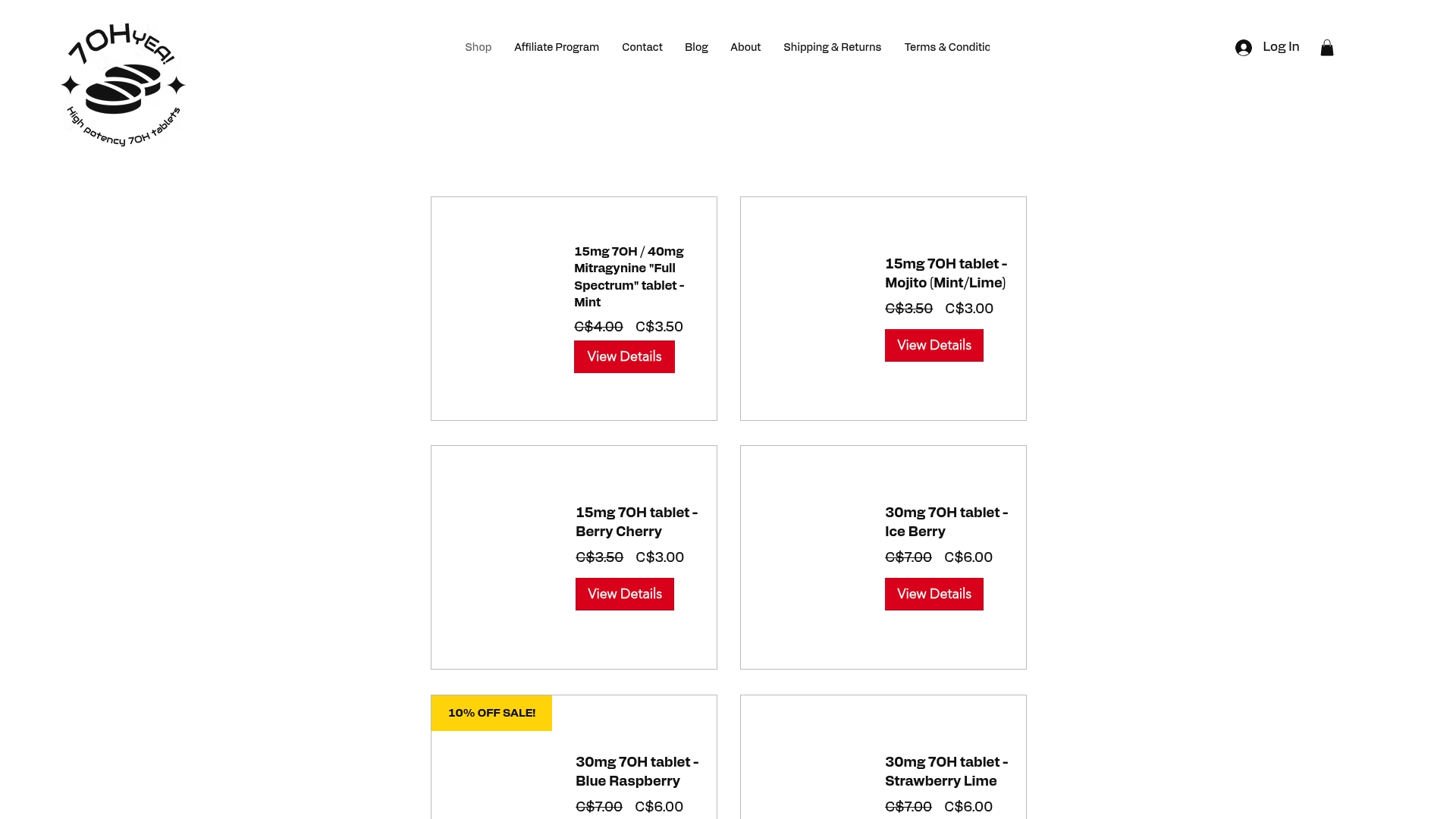
- Browse 7OH tablets, powders, and related alkaloid lines to find the dosage format your protocol needs.
- Check a specific batch option, such as the 43% pure Mitragynine “Full Spectrum” powder, before placing a bulk order.
- Contact us through 7ohyea for institutional invoices, documentation bundles, or compliance questions ahead of your order.
This article is general information, not a substitute for advice from a qualified lawyer. Consult a qualified legal professional about your own circumstances before acting on anything here.
FAQ
What documents do I need before accepting a 7OH shipment in Canada?
You need a bilingual SDS, a compliant supplier label, a batch certificate of analysis, and a chain-of-custody record, plus lawful standing to possess the substance through a Health Canada exemption or a licensed dealer. Confirming the substance’s control status with Health Canada should happen before any of the other paperwork is finalized.
How long does a Health Canada research exemption take to process?
Scientific research exemptions carry a service-standard target of about 70 calendar days, while clinical study exemptions target roughly 45 days, both measured from receipt of complete documentation according to Health Canada’s exemption guidance. Incomplete applications or requests for more information reset that clock.
Who is responsible for the SDS if a foreign supplier ships directly to my lab?
Your institution becomes the importer of record and inherits the compliance duty for labels and SDSs under the Hazardous Products Act framework. Sourcing from a Canadian supplier avoids this obligation entirely since the product never crosses the importer threshold.
Does 7OH Canada provide a certificate of analysis with every order?
Yes, we supply a batch-specific certificate of analysis with our research-grade tablets and powders. That document is one of the core pieces procurement officers need before accepting a shipment into lab inventory.
How long must we keep SDSs and purchase records?
Suppliers and importers must retain true copies of labels and SDSs, along with related purchase records, for six years, and produce them to an inspector on written request under Health Canada’s WHMIS guidance. Electronic storage is acceptable as long as the system guarantees constant, redundant access.