Kratom Alkaloid Panel Standards: What Labs Actually Use

Here’s the headline that keeps getting lost: there is no single, official kratom alkaloid panel. There are published methods, a few serious benchmarks and a growing pile of recommendations. In June 2026, the Association of Public Health Laboratories (APHL) put out a substance awareness bulletin on kratom alkaloids, and it says the quiet part out loud: products can contain more than one kratom alkaloid, and new ones may keep turning up.
Why are people talking about this now? Because 7-hydroxymitragynine (7-OH) has become the center of a loud public debate, and labs are being asked to measure it properly. This article sticks to the testing side: what a panel is, what the benchmarks say, and what it means for Canadian labs. Our products are sold for research use only, not for human consumption.
7ohyeaSupport Precise Alkaloid Research7OH Canada supplies research-grade 7-hydroxymitragynine tablets and powders for analytical purposes, with dosage options for diverse research protocols.
Explore research materialsTL;DR
- No universal kratom alkaloid panel exists. The closest thing is a mix of AOAC performance requirements, published LC-MS/MS methods and the APHL bulletin.
- The core trio most guidance points to is mitragynine, 7-OH and mitragynine pseudoindoxyl, with their ratio treated as useful information.
- Look-alike molecules called diastereomers can fool a lab if the method doesn’t separate them by chromatography.
- Plant chemistry varies from product to product, so panels will too.
- A drug-screen panel and an analytical alkaloid panel answer different questions.
Table of Contents
- Quick facts
- Wait, is there an official kratom panel?
- What does a “panel” even mean here?
- Which alkaloids get measured?
- Why do panels differ from lab to lab?
- Myth vs fact: “If the label says the percentage, the panel is done”
- What did AOAC actually set?
- Is there a method that passed that bar?
- How are samples actually measured?
- The look-alike problem the headlines skip
- What the Canadian picture looks like
- And south of the border?
- Reference standards: where the numbers come from
- How newer methods are raising the bar
- What this means for readers
- Where to find research-grade materials
- FAQ
- Sources
Quick facts
- Topic: Which alkaloids a lab tests for, and how it proves the numbers.
- Best-known benchmark: AOAC SMPR 2015.008, effective March 19, 2015.
- Core trio in the APHL bulletin (June 2026): mitragynine, 7-OH, mitragynine pseudoindoxyl.
- Leaf chemistry: more than 50 alkaloids, according to WHO’s 2021 pre-review.
- Canadian status of a national panel standard: we found none in the sources we reviewed.
- Our products: research use only, not for human consumption.
Wait, is there an official kratom panel?
Short answer: no. If you were hoping for a single document that lists the alkaloids every lab must report, it doesn’t exist in the sources we reviewed.
What exists is a patchwork. AOAC INTERNATIONAL, a standards body for analytical methods, wrote performance requirements for two alkaloids. Academic groups have published validated methods for ten, eleven or more. Public health labs have issued recommendations. They overlap, but they don’t match.
That’s not a scandal. It’s what happens when a plant moves faster than the paperwork.
What does a “panel” even mean here?
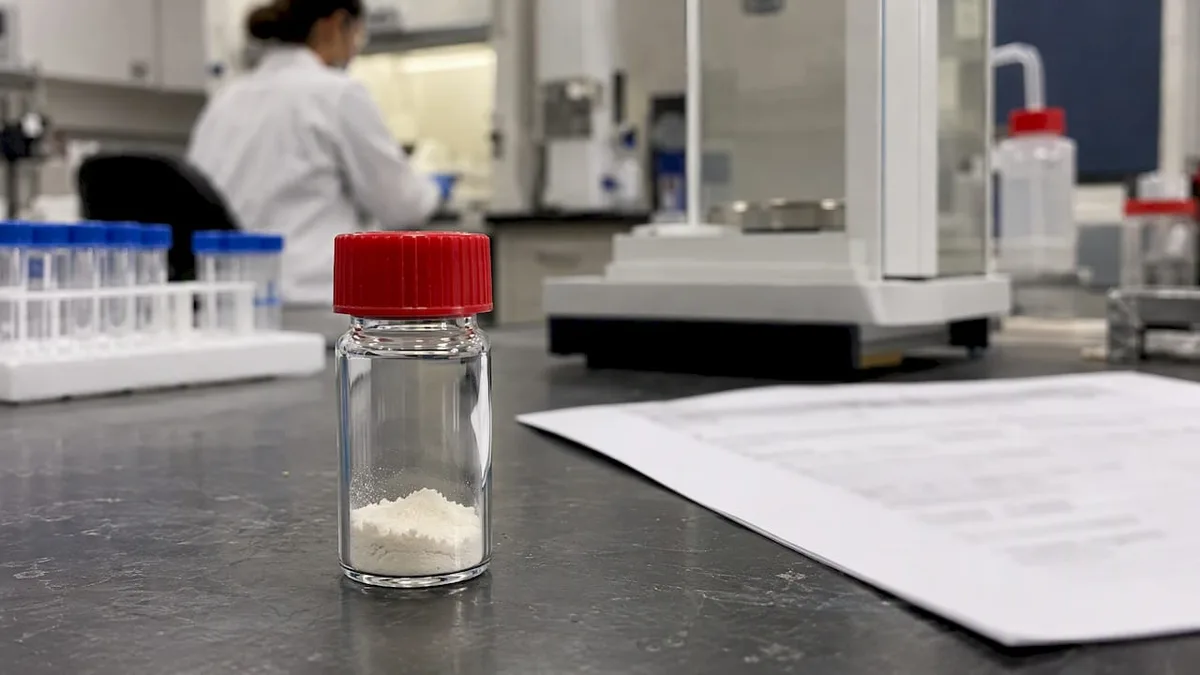
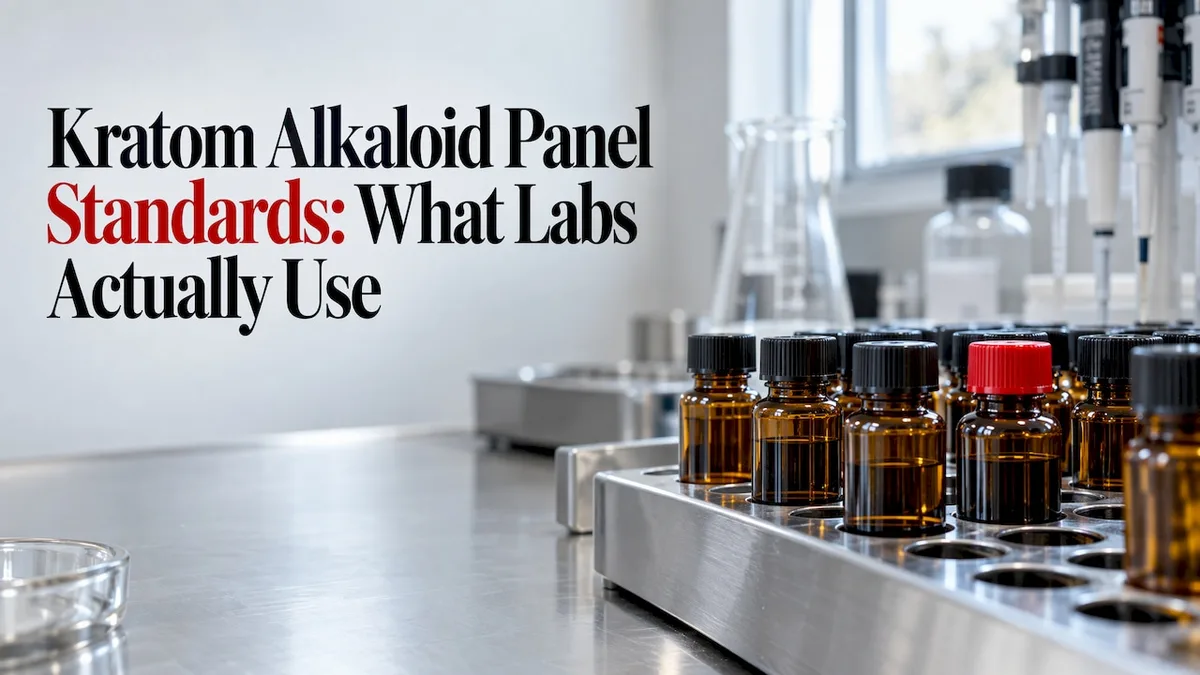
A panel is just the list of compounds a lab measures in one run. In an analytical panel, each compound gets its own reference standard, which is a purified, documented material used to calibrate the instrument.
That’s different from a workplace drug screen. A screening test asks a yes or no question about one drug class. An analytical panel asks “how much of each compound is here?” The APHL bulletin makes the same point from the toxicology side: a qualitative hit only indicates exposure, while quantitative results are what improve interpretation.
So when someone says “kratom panel,” ask which kind they mean. The answer changes everything about the method, the standards and the report.

Which alkaloids get measured?
The leaf is a crowded place. The WHO Expert Committee on Drug Dependence noted in its 2021 pre-review that kratom contains more than 50 alkaloids. Mitragynine makes up as much as two-thirds of the alkaloid content, and 7-OH is about 1%.
The short list most guidance keeps returning to:
| Alkaloid | Why it’s on the list |
|---|---|
| Mitragynine | The dominant leaf alkaloid, the usual anchor of any panel |
| 7-hydroxymitragynine (7-OH) | Present in small amounts in leaf, central to the current debate |
| Mitragynine pseudoindoxyl | Named alongside the other two in the APHL recommendation |
| Paynantheine, speciogynine, speciociliatine | Minor alkaloids included in wider validated panels |
| Corynantheidine, corynoxine, corynoxine B, isocorynantheidine, mitraphylline | Part of a published ten-alkaloid method |
The ten-alkaloid method comes from a UPLC-MS/MS paper built for standardization and quality control. It runs each sample in 22.5 minutes and covers 1 to 200 ng/mL for every alkaloid.
Why do panels differ from lab to lab?
Two reasons, and neither is lab sloppiness.
First, the plant isn’t uniform. A 2022 validation study led by Manwill found that major and minor alkaloid levels varied from product to product. The authors concluded that multiple chemotypes, meaning chemically distinct versions of the same species, exist. A 2020 PLOS ONE paper adds that over 40 alkaloids have been identified and that levels shift with region, harvest timing and plant age.
Second, purpose drives design. A lab checking a raw material for quality control needs a different list than a forensic lab reading a blood sample. Instruments differ. Budgets differ. Reference standards differ in availability.
Myth vs fact: “If the label says the percentage, the panel is done”
Myth: A single purity number tells you what’s in the sample.
Fact: A purity figure is one number about one compound. A panel shows the surrounding alkaloids and their ratio. The APHL bulletin recommends considering quantitative or semi-quantitative analysis of the ratio between mitragynine, 7-OH and mitragynine pseudoindoxyl because it helps interpretation.
That’s why a batch-specific Certificate of Analysis (COA) matters more than a marketing percentage. A COA ties numbers to one batch and one method.
What did AOAC actually set?
The closest thing to a formal benchmark is AOAC’s Standard Method Performance Requirements 2015.008, effective March 19, 2015. It doesn’t hand labs a method. It tells them how good a method must be.
For mitragynine, it sets an analytical range of 0.1 to 15%, with a limit of quantification of 0.05% or less (500 ppm) and a limit of detection of 150 ppm. For 7-OH, the range is 0.01 to 0.5%, with a quantification limit of 0.005% or less (50 ppm) and a detection limit of 15 ppm.

A method that meets those numbers is considered fit for plant material, extracts and finished products. Note what’s missing: it covers two alkaloids, not a full panel.
Is there a method that passed that bar?
Yes. A First Action method for mitragynine and 7-OH in raw materials and dietary supplements, using HPLC-UV, was adopted by an AOAC Expert Review Panel. It was evaluated against SMPR 2015.008. Repeatability precision ranged from 0.51% to 0.95%, and recoveries from 93.6% to 98.9% across product types. The panel also gave recommendations for reaching Final Action status.
That’s real, peer-reviewed validation. It’s also a single-laboratory result, which is exactly why standardization is still a work in progress.
How are samples actually measured?
Most modern work uses liquid chromatography paired with mass spectrometry. The 2023 review by Citti calls HPLC with mass spectrometry the most widely used approach, followed by HPLC with UV detection and GC-MS.
Sample prep in published methods is fairly plain: extract with ethanol or methanol, sonicate, centrifuge, dilute, then run against fresh calibration and quality control standards.
The APHL bulletin adds a warning. Skip acid and base during prep, because these compounds are chemically unstable. Adding acid to mitragynine may form 7-OH, and adding base to 7-OH may form mitragynine pseudoindoxyl. In other words, a careless prep can create the very compound you’re hunting for.
The look-alike problem the headlines skip
Mitragynine has three diastereomers: mitraciliatine, speciogynine and speciociliatine. Diastereomers share a formula and connectivity but differ in 3D arrangement. A mass spectrometer alone can’t tell them apart because they have the same mass.
A Swedish study by Helander and Rylski shows how real this is. In 29 urine samples, speciociliatine was the highest in 66%. Co-elution, where compounds exit the column together, explained routine positives that fell below the mitragynine cutoff in 28%.
The lesson is blunt. A panel is only as good as its chromatography. Retention time, meaning when each compound leaves the column, does the work the mass spec can’t.
What the Canadian picture looks like
Canada first, since that’s where our readers are. We found no Canadian national standard that defines a kratom alkaloid panel in the sources we reviewed. We can’t confirm that none exists, so treat that as a gap in what we found, not a statement of law.
For the legal status of kratom and related alkaloids, go straight to Health Canada’s own notices rather than a summary. We’re not giving legal advice, and rules can change. If you’re a lab working with reference materials, confirm your own obligations before you order.
What Canadian labs can do is borrow from the best existing benchmarks. AOAC’s requirements are international in use, and the AOAC method paper above has Canadian authorship. Our own pages on laboratory detection methods for 7-hydroxymitragynine in Canada and what Canadian labs need to know about mitragynine and 7-hydroxymitragynine go deeper on the lab side.
And south of the border?
The American context is louder. The APHL bulletin states that kratom and its alkaloids aren’t FDA-approved drugs and aren’t federally scheduled as of June 2026, though they are Schedule I in some states. That’s a snapshot, and it may change. We won’t predict what happens next.
The WHO took a more cautious line. Its 44th Expert Committee, in October 2021, concluded the evidence didn’t justify a critical review of kratom, mitragynine or 7-OH. It recommended keeping all three under surveillance. Science says “keep watching,” and regulators in different places are reading that differently.
Reference standards: where the numbers come from
A panel without trustworthy standards is just a nice chart. The validated ten-alkaloid study prepared stock solutions for each analyte, calibration standards and quality control standards at four concentrations. Acceptance limits were 20% or less at the lowest level and 15% or less at the others.
One published LC-MS/MS approach also spiked extracts with a deuterated mitragynine analogue as an internal standard, which corrects for losses in extraction. It’s described in a Canadian method-validation paper.
There’s a catch worth knowing. Citti’s review says analytical standards for metabolites of kratom alkaloids aren’t available, which limits forensic work. For parent alkaloids, though, standards exist. Our guides on what labs should require from mitragynine reference standards and on the paynantheine reference standard cover what to ask for.
How newer methods are raising the bar
Capillary electrophoresis is catching up. A 2025 study by Horniakova and colleagues validated a multisegment injection CE-MS/MS method for mitragynine and 7-OH in raw kratom. They reported precision of 3.3% to 9.4% RSD, accuracy of 92.2% to 108.4%, recovery of 85.1% to 99.7%, and detection limits of 1 ng/mL and 2 ng/mL.
On the clinical side, a 2020 forensic study validated LC-Q/TOF-MS identification of five mitragyna alkaloids in blood and tissue, with quantitation limits of 0.5 to 2 ng/mL.
Different matrices, different tools, same theme: validation numbers are published, and they’re good. What’s missing is one agreed list.
What this means for readers
- If you run a lab: Build your panel around mitragynine, 7-OH and mitragynine pseudoindoxyl, add the minor alkaloids your question needs, and report ratios, not just totals.
- If you buy reference materials: Ask for batch-specific COAs and documented methods. Chromatographic separation of diastereomers should be part of the story.
- If you’re a student or a curious reader: Remember that “kratom test” can mean a drug screen or a full analytical panel. They’re not the same thing.
- For everyone: Our products are for research use only, not for human consumption. Check Health Canada directly for current rules.
Our take on panel standards
We think the field’s biggest weakness isn’t a lack of instruments. It’s the lack of a shared reference point, and labs shouldn’t wait for one before demanding documentation.
That’s why we publish batch-specific Certificates of Analysis with our research-grade materials and source domestically in British Columbia. A lab that knows exactly what’s in its reference material can trust its own calibration curve.
We’d rather see Canadian researchers set a high bar early than copy a patchwork later. Our materials are designed for analytical work, and they’re sold for research use only, not for human consumption.
John
Where to find research-grade materials
If you’re building or checking a panel, our catalogue includes mitragynine, 7-OH, MGM-15 and SR17018 materials made for analytical work in laboratories. Powders are listed at published prices: 81% pure 7OH powder is 50 CAD, 43% pure Mitragynine “Full Spectrum” powder is 6.75 CAD, and 99% pure SR17018 powder is 48 CAD, all one-off. Everything ships from within Canada, so there are no border fees. Not for human consumption.
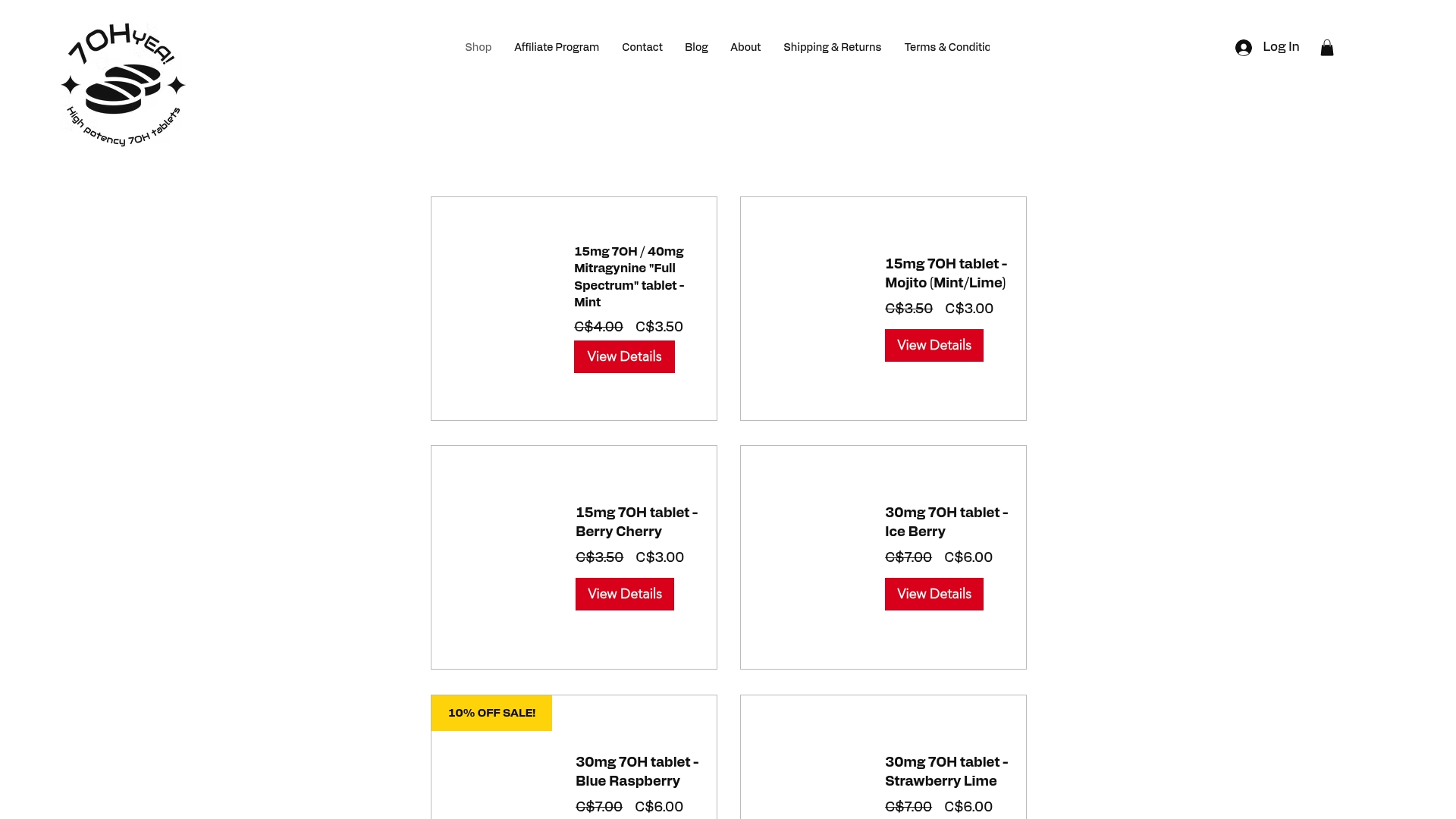
Browse the full range on our research materials page and ask about bulk options for research teams. For cost context, see our note on kratom panel costs in Canada.
FAQ
Does a standard drug test panel check for kratom?
Not as a rule. A workplace screen is built to flag specific drug classes, while kratom alkaloid detection normally needs a targeted method such as LC-MS/MS. Ask the testing provider exactly which compounds are in scope.
What’s the minimum a lab should include in a kratom alkaloid panel?
Most guidance points to mitragynine, 7-hydroxymitragynine and mitragynine pseudoindoxyl, per the APHL bulletin. AOAC’s requirements cover the first two. Wider panels add minor alkaloids such as speciogynine, speciociliatine and paynantheine.
Why can the same sample give different results in two labs?
Often it comes down to chromatography and sample prep. If a method doesn’t separate mitragynine from its diastereomers, results can be skewed. Acid or base during prep can also convert one alkaloid into another.
Is there a Canadian standard for these panels?
We didn’t find one in the sources we reviewed. Labs here commonly lean on AOAC performance requirements and published validated methods. For legal questions, check Health Canada directly.
Sources
- APHL Kratom Alkaloids Substance Awareness Bulletin
- WHO Expert Committee on Drug Dependence, 2021
- Simultaneous quantification of ten key kratom alkaloids
- Manwill et al., kratom validation study, 2022
- Ellis et al., Evaluating kratom alkaloids using PHASE, PLOS ONE
- AOAC SMPR 2015.008
- Determination of alkaloids in Mitragyna speciosa, JAOAC
- Citti, Kratom: the analytical challenge of an emerging herbal drug
- Helander and Rylski, drug testing for mitragynine and kratom
- Analytical method validation with development, PubMed
- Horniakova et al., CE-MS/MS for mitragynine and 7-hydroxymitragynine
- Basiliere et al., five mitragyna alkaloids in blood and tissues
So here’s our question: should Canada wait for a formal alkaloid panel standard, or should labs agree on one themselves? Tell us what you think in the comments.
7ohyeaDiscuss Your Research MaterialsEmail 7OH Canada with questions about research-grade 7-hydroxymitragynine tablets and powders for analytical purposes.77ohyea
Email us7ohyea@gmail.com