7-OH Comparator Standards: What Labs Should Check First

Seven-OH is in the headlines again, and this time the story is about paperwork as much as pharmacology. In the United States, federal agencies have spent over a year moving against concentrated 7-hydroxymitragynine products, and every lab that works with the compound is now asking the same quiet question: how good is the reference material on my bench?
That’s what a comparator standard answers. It’s the known material you measure everything else against. If it’s weak, every number downstream is weak too.
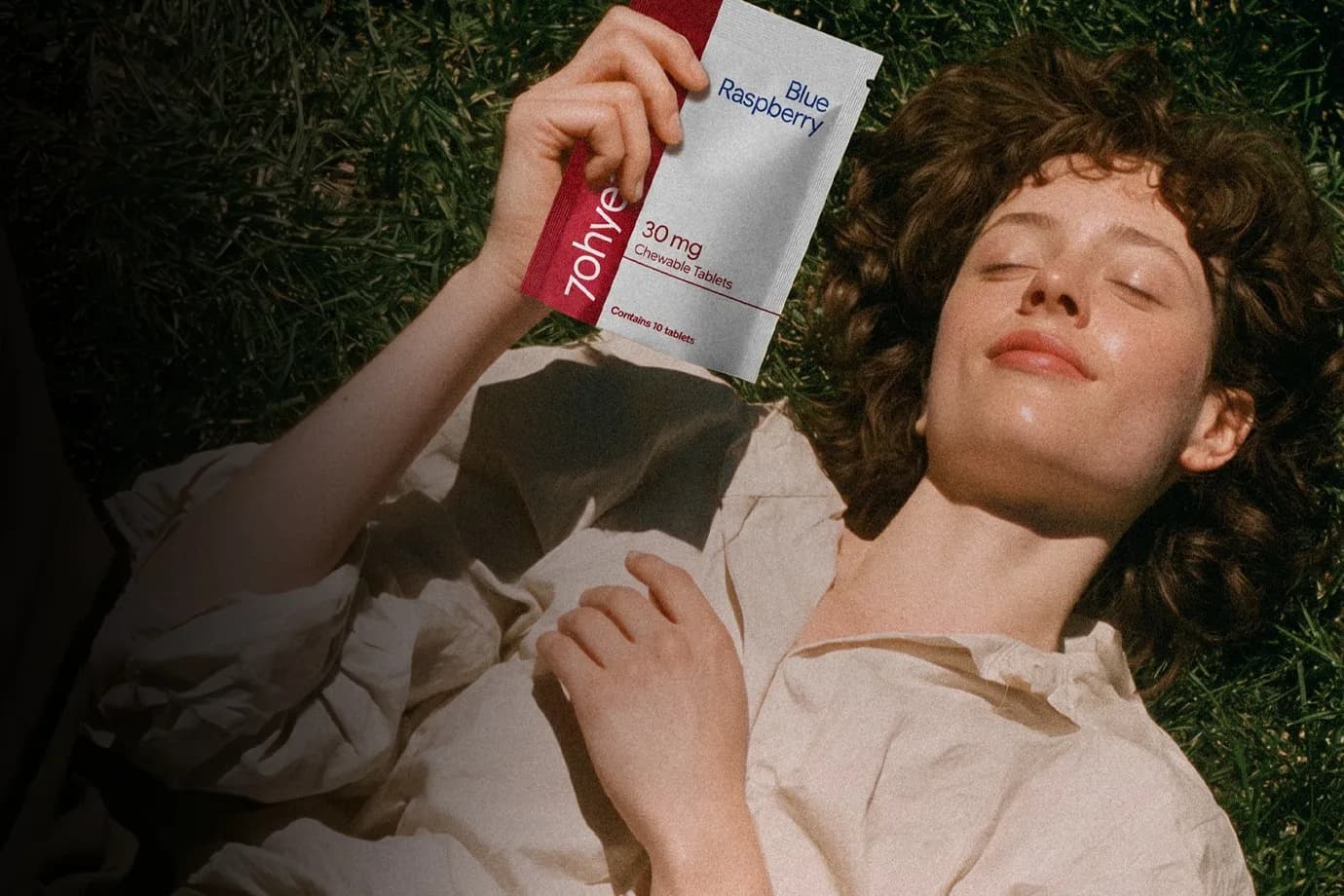
All 7ohyea products are for research use only. They are not for human consumption.
7ohyea7ohyea.caChoose 7-OH Research Materials7OH Canada supplies research-grade 7-hydroxymitragynine tablets and powders for analytical purposes, with customizable dosage options for laboratory studies.
View research materialsTL;DR
- A comparator (or reference) standard is a well-characterized material used to calibrate and check your measurements. Its identity and purity drive the quality of your data.
- 7-OH is a minor alkaloid in plant material and is reported to be the least stable of the alkaloids in at least one cited study, so storage and documentation matter more than most labs expect.
- A useful certificate of analysis (COA) is batch-specific, names the method, and says how purity was measured. A single purity percentage isn’t enough.
- Regulatory news is moving fast, especially in the US. Confirm current Canadian rules with Health Canada and your institution before you order. This isn’t legal advice.
Table of Contents
- Quick facts
- Why is everyone suddenly talking about 7-OH standards?
- What did the headlines get wrong?
- What is a comparator standard, in plain English?
- What should a 7-OH certificate of analysis actually show?
- Which methods are used to check 7-OH?
- Is 7-OH really that fragile?
- Why does mitragynine matter when you pick a comparator?
- What does this mean for Canadian labs?
- Our view: the standard is the story
- Where can Canadian labs find our reference materials?
- FAQ
- Sources
Quick facts
| Item | What to know |
|---|---|
| Compound | 7-hydroxymitragynine (7-OH), an alkaloid related to mitragynine |
| What a comparator standard does | Calibrates instruments and anchors quality-control samples |
| Status of our products | Research use only, not for human consumption |
| US context | FDA recommended Schedule I control on July 29, 2025; a DEA action followed in 2026 |
| Canadian context | Confirm directly with Health Canada and your institution’s compliance office |
| Documentation to demand | Batch-specific COA, method, identity data, storage guidance |
Why is everyone suddenly talking about 7-OH standards?
Because the compound moved from niche chemistry to national policy in about a year.
On July 29, 2025, the FDA recommended that the DEA classify 7-hydroxymitragynine as a Schedule I controlled substance, according to a legal analysis of the joint press conference. HHS and the FDA later publicly backed DEA notices of intent covering 7-OH and related compounds, including MGM-16. One industry summary says the DEA announced temporary Schedule I control in July 2026 for 7-OH, MGM-15 and others, while drawing a line around qualifying botanical kratom products.
We can’t tell you how every one of those steps resolves, and nobody else can either. Scheduling processes have stages, and the stage matters. If your lab touches the US side of things, read the Federal Register notice itself rather than a summary, ours included.
What did the headlines get wrong?
Three things come up again and again.
Myth: it’s all one product. Headlines blur leaf kratom, concentrated extracts and lab-grade reference materials into a single “7-OH” story. The agencies themselves draw lines between botanical products and concentrated or synthesized ones. A reference standard sold to a laboratory for analytical work is a different category of thing from a retail product, and the paperwork should show it.
Myth: 7-OH is a big part of kratom. It isn’t. In a validated analysis of kratom products, 7-hydroxymitragynine was a minor alkaloid, between 0.01% and 2.8% w/w, while mitragynine was among the major ones. That gap is exactly why labs need a clean standard: you’re trying to measure something small against something large.
Myth: a purity number settles everything. It doesn’t. Purity by one method can hide an impurity another method would catch. We’ll get to that.
What is a comparator standard, in plain English?
Think of it as the ruler you check your other rulers against.
In bioanalytical work, reference standards are used to spike calibration and quality-control samples, so their purity and identity are critical. Spiking just means adding a known amount of the standard to a blank sample so you can see what your instrument reports back.
The same paper notes that a commercial reference standard can be used to calibrate the concentration of a less well-characterized bulk material for a study. So a comparator isn’t always the thing you’re studying. Sometimes it’s the yardstick that tells you how much of your working material is really there.
Two terms are worth pinning down:
- Certified reference material: a standard issued with formally established values and stated uncertainty, usually under an accredited framework.
- Research-grade reference material: a well-characterized material supplied with a COA, but not necessarily certified under that formal framework.
Be honest about which one you’re buying and which one your protocol needs. Many method-development and screening workflows are fine with the second. A submission to a regulator may not be.
What should a 7-OH certificate of analysis actually show?
We’d put the answer in one line: enough that a stranger could judge your data without calling you.
There’s no single universal template for this compound, so treat the following as a practical checklist drawn from how reference standards are handled in method validation, not as a regulation.
- Batch or lot number that matches the label on the container.
- Identity evidence, such as mass spectrometry and chromatographic retention data, not just a name.
- Purity value with the method named, for example liquid chromatography with a stated detector.
- Date of analysis and a retest or expiry date.
- Storage conditions the supplier recommends.
- Who did the testing. An independent third-party laboratory is a plus, and the report should say so plainly.
- Related-substance information, because mitragynine and 7-OH sit in the same chemical family.
That last point is not trivial. A review of kratom analysis notes that chromatographic retention time is needed to distinguish diastereoisomers that mass spectrometry alone can’t tell apart. Diastereoisomers are molecules built from the same atoms but arranged slightly differently in space. If a COA leans only on a mass spectrum for identity, ask what else backs it up.
We’ve written more on this in our guide to what labs should require from mitragynine reference standards, and the logic carries over to 7-OH.
Which methods are used to check 7-OH?
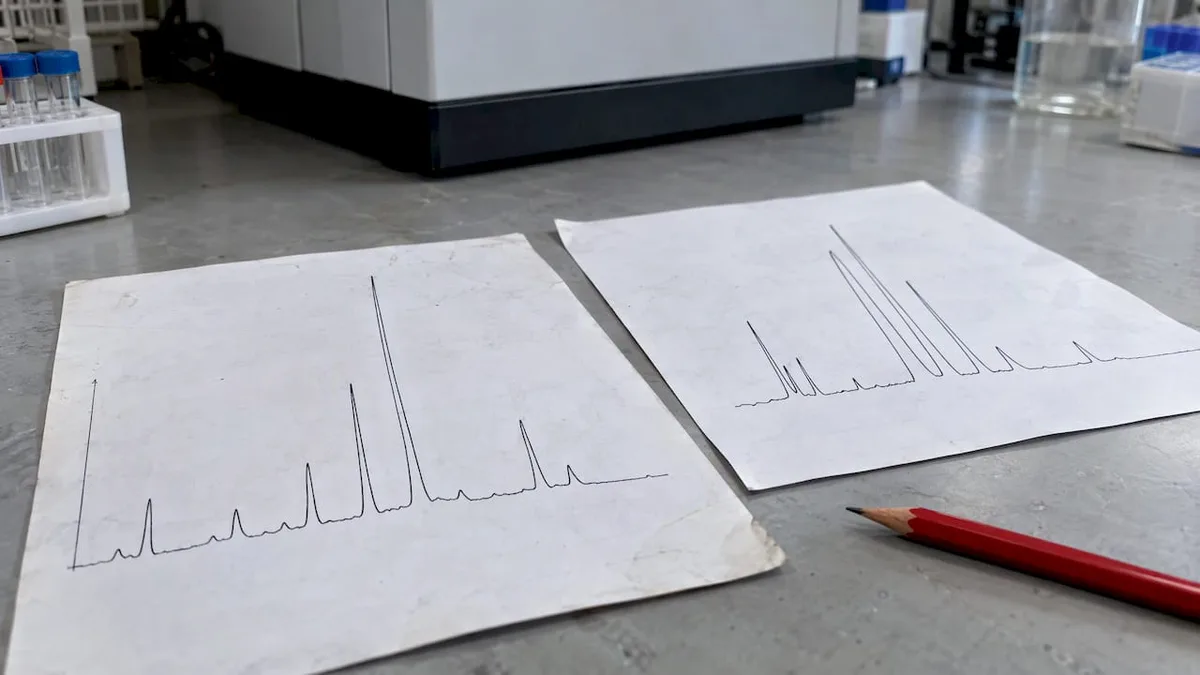
Mostly liquid chromatography paired with tandem mass spectrometry (LC-MS/MS), which separates compounds and then identifies them by mass.
A few real examples show what “validated” means in practice:
- One UPLC-MS/MS method quantified ten kratom alkaloids, and validation covered sensitivity, linearity, accuracy, precision, dilution integrity, robustness and stability.
- A blood and urine procedure for five mitragyna alkaloids reported limits of quantification of 0.5 to 2 ng/mL, with precision, bias and matrix effects within acceptable thresholds.
- For plant materials, AOAC SMPR 2015.008 sets minimum recommended performance characteristics for methods that quantify mitragynine and 7-hydroxymitragynine.
One technical gotcha is worth knowing. 7-OH can form an unexpected M+18 adduct (an extra piece clinging to the molecule) during electrospray ionization, and the 2023 review says using ammonium acetate in the mobile phase rather than formic acid or ammonium formate can overcome it. If your signal looks odd, that’s a cheap thing to check before blaming the standard.
For a Canadian angle on instruments and workflows, see our overview of laboratory detection methods for 7-hydroxymitragynine in Canada.
Is 7-OH really that fragile?
It’s the part of this story that deserves more attention than it gets.
In one study cited by that review, 7-hydroxymitragynine was the least stable alkaloid tested, with significant loss after 8 hours at 40°C. The authors say stability and degradation patterns need further case-by-case investigation. That’s a careful way of saying nobody should assume.
What does that mean for a lab? It means you treat storage and handling as part of the method, not as housekeeping. Record where the material was kept, for how long, and when you opened it. Note any benchtop time in your run log. If a result looks off, a degraded standard is a candidate suspect.
Our post on 7-OH artifact risk and degradation goes deeper on why a compound that breaks down easily can create misleading peaks in your data.
Why does mitragynine matter when you pick a comparator?
Because in most real samples, mitragynine is the big peak and 7-OH is the small one.
That shapes what you buy. If you’re building a method for botanical material, you probably need both compounds as separate standards, plus a plan for how they behave together. If you’re studying 7-OH on its own, you need to know exactly how much mitragynine is hiding in your 7-OH material, and vice versa.
The Reddit threads that rank for this keyword show how muddled the public conversation gets. People trade guesses about how much of one alkaloid turns into another, or quote percentages with no method behind them. That’s the opposite of what a comparator is for. A standard exists so you don’t have to guess.
We lay out the chemistry differences for lab readers in Mitragynine vs 7-Hydroxymitragynine: what Canadian labs need to know. If you’re weighing whether lab conversion is a sensible route to your own material, our note on converting mitragynine to 7-OH covers the documentation and compliance side.

What does this mean for Canadian labs?
Short version: the US news is loud, but your obligations start closer to home.
Here’s what we’d do, in order:
- Check Canadian rules first. Contact Health Canada or your institution’s research compliance office about acquiring and holding this compound. We aren’t going to guess at current Canadian status in an article, and you shouldn’t rely on one to tell you.
- Check the US position if you cross the border. Shipping, collaboration or publishing with US partners can pull you into US rules. Read the HHS statement and the Federal Register notices for the current stage.
- Keep your paper trail. Purchase records, COAs, storage logs and intended-use statements are your best friends in an audit.
- Match grade to purpose. Method development, screening and quantitative reporting don’t all need the same level of certification.
This is general information, not legal advice. Nobody can say for certain how pending scheduling actions will end, and anything we say about the future is unconfirmed.
Our view: the standard is the story
We’ll say it plainly. The loudest part of the 7-OH debate is about products on shelves, and it’s drowning out a quieter and more useful conversation about measurement.
If regulators, clinicians and journalists want to know what’s in a sample, the answer depends on whether a lab had a trustworthy standard. That’s why we put batch-specific COAs at the center of what we offer, and why we keep telling labs to ask for the method behind the purity number.
Our products are made and sourced in Canada, which means domestic shipping and no border fees for Canadian labs. They’re sold for analytical and laboratory use only, never for human consumption. We’d rather lose a sale than see that line blurred.
We also think the field is better served by boring documentation than by bold marketing. Ask any supplier, us included, to show the data. If a COA can’t survive your questions, it’s not a COA worth having.
— John
Where can Canadian labs find our reference materials?
We supply research-grade 7-OH and related alkaloid materials for analytical work, with batch-specific certificates of analysis. For method development, our 81% pure 7OH powder is listed at 50 CAD, and our 43% pure Mitragynine “Full Spectrum” powder is 6.75 CAD. Our 99% pure SR17018 powder is 48 CAD and is available on the same product category page, alongside tablet formats and bulk options for research teams.
Everything is for research use only, not for human consumption. Our tablet testing checklist explains the three things we think every lab should insist on before running tablet material through a method.
FAQ
What’s the difference between a reference standard and a comparator?
In everyday lab talk the two overlap. A reference standard is a characterized material used to calibrate or check a method. A comparator is the thing you measure another sample against, which can be that same standard. Check your protocol’s wording and confirm which grade it requires.
Does a high purity percentage mean the standard is good?
Not by itself. Purity depends on the method used to measure it, and one technique can miss what another would catch. Look for the named method, identity data, the batch number and an analysis date on the COA.
How should a lab handle 7-OH material?
Treat storage as part of the method. One cited study found that 7-OH was the least stable alkaloid it tested, so follow the supplier’s storage guidance and log time out of storage. Ask your own safety officer about handling procedures.
Is 7-OH legal for Canadian labs to buy?
We can’t answer that for your situation, and this isn’t legal advice. Rules differ between Canada and the US and are changing. Contact Health Canada and your institution’s compliance office before you order. Do you think labs are getting clear enough guidance? Tell us in the comments and share this with a colleague who’s wondering the same thing.
Sources
- FDA Announces Plan to Restrict 7-OH Opioid Products (Venable)
- HHS, FDA Commend DEA Action Against Dangerous Enhanced 7-OH Products
- What Is 7-OH? The Emerging Opioid Threat Addiction Professionals Need to Understand in 2026 (ISSUP)
- Simultaneous quantification of ten key Kratom alkaloids
- Recommendations and Best Practices for Reference Standards
- Kratom: The analytical challenge of an emerging herbal drug
- Identification of five mitragyna alkaloids in blood and urine
- AOAC SMPR 2015.008
7ohyeaAsk About 7-OH Research MaterialsEmail 7OH Canada with questions about its research-grade 7-hydroxymitragynine tablets and powders for analytical purposes.77ohyea
Email us7ohyea@gmail.com