Kratom Research Trends in 2026: What Canadians Should Know

The kratom debate changed in October 2026. On October 9, the US Department of Health and Human Services recommended concentration-based thresholds for 7-hydroxymitragynine (7-OH) and a related compound called MGPI. The goal is to separate concentrated products from natural kratom leaf.
That’s the story behind the headlines. Kratom is no longer one plant and one argument. It’s a split between a leaf and a growing set of lab-made or lab-enriched alkaloid products, and researchers, regulators and doctors are all circling that split.
A note up front: our products are sold for laboratory research use only. They are not for human consumption, and nothing here is health advice.
7ohyeaSupport Precise 7-OH Research7ohyea provides research-grade 7-OH tablets and powders for analytical purposes, with customizable dosage options for laboratory research.
Explore research materialsTL;DR
- The biggest 2026 trend is the leaf-versus-concentrate split. Policy papers and US regulators now treat enriched 7-OH products differently from traditional kratom.
- US poison centre reports hit a record in 2025, but most deaths in the CDC data involved more than one substance.
- The US has proposed science-based thresholds for 7-OH. Those are recommendations, not Canadian law.
- In Canada, Health Canada has not authorized any kratom product for sale. Researchers should check the current rules before they buy or import anything.
- Several headline claims are still unconfirmed, and we flag them below.
Table of Contents
- Quick facts
- Why is everyone suddenly talking about 7-OH?
- What did the headlines get wrong?
- What’s actually new in the science?
- What’s the legal picture in Canada and the US?
- What does this mean for readers?
- Where do analytical labs fit in?
- Our view: the threshold idea is the right debate
- Looking for research-grade reference materials?
- Where are the biggest research gaps?
- FAQ
- Sources
Quick facts
Quick facts
- Topic: kratom and 7-OH research and policy trends, 2026
- Key US news: HHS threshold recommendation, October 9, 2026
- Key US data: 3,434 kratom exposure reports to poison centres in 2025, per the CDC
- Canada: Health Canada has not authorized the sale of any kratom-containing product
- Our products: research use only, not for human consumption
- Biggest open question: what the long-term data say about concentrated alkaloids versus leaf
Why is everyone suddenly talking about 7-OH?
Because 7-OH moved from a footnote to the main character.
7-hydroxymitragynine is an alkaloid, a naturally occurring plant compound. In kratom leaf it shows up only in trace amounts, according to the American College of Medical Toxicology (ACMT) in its August 2026 position statement. The same statement says concentrated commercial products have been linked to overdose and death.
The ACMT also describes 7-OH as associated with opioid-like effects, including respiratory depression, dependence and withdrawal. That’s a medical society’s position, not a finding about any product we sell.
HHS went further in October. It pointed to preclinical studies, meaning lab and animal work, showing 7-OH is substantially more potent than morphine. It then recommended that the DEA use concentration or ratio thresholds, with an example of more than 1 mg per gram in solids, to target enhanced products.
Notice what it didn’t say. It didn’t call for banning the leaf.

What did the headlines get wrong?
Three things come up again and again.
Myth: “Kratom is kratom”
Fact: researchers are increasingly insisting it isn’t. A October 2026 paper in Frontiers in Pharmacology argues for clear product definitions, manufacturing standards and labelling. It highlights concentrated, semisynthetic alkaloid products as an emerging concern. It also argues that an outright ban on traditional botanical preparations isn’t supported by the evidence.
That’s an opinion piece, so treat it as one side of the debate. But it matches where US regulators landed.
Myth: “The numbers prove kratom is exploding and killing people on its own”
The numbers are real. The CDC reported that kratom-related poison centre exposure reports reached 3,434 in 2025, up about 1,200% from 258 in 2015.
But the same CDC report found that 79% of the 233 kratom-associated deaths between 2015 and 2025 involved multiple substances. Opioids were the most common co-ingestant, at 62%.

So the honest reading is this: reports are rising fast, and the deaths mostly aren’t kratom alone. Both halves matter. Headlines usually give you only one.
A caveat on the scale, too. Poison centre reports count calls, not confirmed causes. They also rise when awareness rises.
Myth: “Hospital data is just US noise”
It’s US data, and that’s the point. A ToxIC registry study covering 2010 to 2024 found 152 patients with kratom, phenibut or tianeptine exposures, including 102 with kratom. About one in five were critically ill.
The study can’t tell you how many Canadians are affected. No one has published a comparable Canadian picture that we could verify. That’s a research gap, and a real one.
What’s actually new in the science?
Less than you’d think, and more than you’d hope.
The most notable 2026 research news isn’t about harm. In June, NIH announced that an investigational new drug application for mitragynine had taken effect. That clears the way for a phase I human study of its safety and tolerability as a potential treatment for opioid use disorder.
Phase I means a small first-in-human safety study. It doesn’t mean a treatment exists. Anyone who tells you otherwise is skipping a decade of work.
The second trend is about product composition. A 2026 review in the literature on kratom product evolution looks at how extract powders and capsules differ from native leaf powder. If you want the plain version: the market has moved from leaf to extracts, and research is chasing it.
The third trend is regulatory science. The question isn’t just “is it dangerous?” It’s “which product, at what concentration, and how do you test for it?” That’s a measurement problem, and measurement is what analytical labs do.
What’s the legal picture in Canada and the US?
Canada first.
Canada
Health Canada’s position, stated in a seizure alert about unauthorized kratom products, is that it hasn’t authorized the sale of any product containing kratom. The department also says selling health products without authorization is illegal. That alert dates from May 2018, so check Health Canada’s current pages for any change.
The same alert lists risks Health Canada associates with kratom, including drowsiness, nausea, vomiting, seizures, liver toxicity and a rapid heartbeat. It also says kratom has potential for abuse and dependence.
What we haven’t found: a Canadian equivalent of the US threshold proposal for 7-OH. If one is announced, it will be on Health Canada’s site first. Until then, we won’t guess.
United States
The US picture moves faster. The HHS recommendation above goes to the DEA, which decides whether to act. A recommendation isn’t a scheduling order, and we won’t predict what the DEA will do.
Some blogs report that the DEA placed three 7-OH-related compounds, including MGM-15, into Schedule I by temporary order in August 2026. We couldn’t confirm that on an official DEA or Federal Register notice, so treat it as unconfirmed until you’ve seen the notice itself.
The FDA, meanwhile, says it will keep monitoring data trends and supporting research. Its kratom page is the place to check for updates.
What does this mean for readers?
Here’s the practical read.
- If you’re a researcher in Canada: the leaf-versus-concentrate split is now the central framing. Documentation matters more than ever: batch-specific certificates of analysis, clear labelling of what a material is, and a clear record that it’s for laboratory use only.
- If you’re following policy: watch Health Canada and the DEA’s Federal Register notices, not social media summaries. Many viral posts mix up recommendations and orders.
- If you’re a general reader: the data show rising poison centre reports and mostly multi-substance deaths. That’s a reason for caution and for better data, not for panic or for shrugging.
- If you’re thinking about law: we can’t give legal advice. Talk to a lawyer or your institution’s compliance office before you source or import anything.
One more point. Nothing in this story tells you any specific product is safe or effective, and we aren’t saying that. Our materials are for analytical research only, not for human consumption.
Where do analytical labs fit in?
If regulators move to concentration thresholds, someone has to measure concentrations. That means reference materials, validated methods and honest paperwork.
We’ve written on the lab side before. Our guide on mitragynine versus 7-hydroxymitragynine for Canadian labs covers how the two alkaloids differ as analytical targets. For the terminology and legal framing, see our research guide to 7-hydroxymitragynine in Canada. If you work with standards, our piece on bulk alkaloid standards in Canada looks at supply and import delays.
For the pharmacology side, written for clinicians and researchers, there’s our 7-hydroxymitragynine pharmacology page.
Our view: the threshold idea is the right debate
We think the most useful thing in the 2026 news is the shift from “ban it or allow it” to “define it and measure it.”
A threshold only works if labs can test against it. That makes accurate reference materials, traceable batches and transparent certificates of analysis the boring but essential infrastructure behind the policy fight.
We also think the data deserve more care than they get. A 1,200% jump is striking, and it belongs in the story. So does the fact that most deaths involved other substances. Good research starts by refusing to pick the more dramatic half.
As a Canadian supplier of research materials, we sell to laboratories and qualified professionals, not to individual consumers. We source domestically and provide batch-specific certificates of analysis. We think that’s the right posture for a field under this much scrutiny.
— John
Looking for research-grade reference materials?
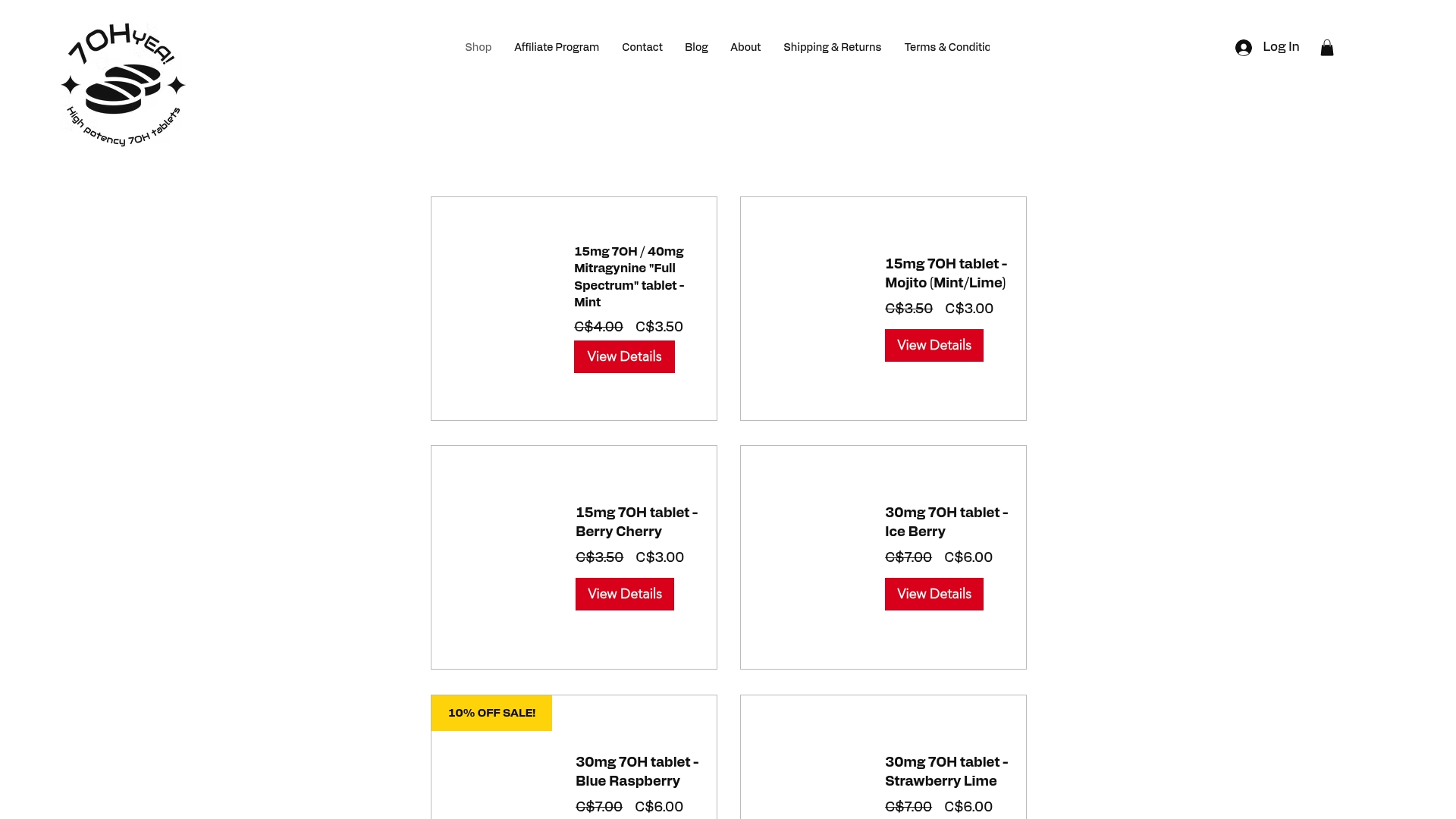
If you run a laboratory protocol and need Canadian-sourced alkaloid materials, you can browse our research-grade 7OH and mitragynine range. It includes tablets and powders for analytical use, with certificates of analysis by batch. They’re for research use only, not for human consumption.
Check your institution’s rules and current Canadian requirements before you order.
Where are the biggest research gaps?
Three stand out.
- Canadian data. Most of the evidence above is American. Without comparable Canadian surveillance, it’s hard to say how much applies here.
- Product composition. Researchers are still working out how leaf products and concentrated extracts differ in content and consistency. The 2026 policy papers say standards are missing.
- Long-term human data. The phase I mitragynine study is a first step. It will tell us about tolerability in a controlled setting, not about the market.
If you spot a claim that doesn’t link to an official notice or a peer-reviewed paper, treat it as unconfirmed. That includes ours.
FAQ
Is kratom legal in Canada?
Health Canada says it hasn’t authorized the sale of any product containing kratom, and selling unauthorized health products is illegal. That statement comes from a 2018 alert, so check Health Canada’s current pages. We can’t give legal advice.
What’s the difference between kratom leaf and 7-OH products?
According to the ACMT, 7-OH occurs naturally only in trace amounts in the leaf. Concentrated products are a different category, and that’s why US regulators and researchers now want them defined separately.
Did the DEA ban 7-OH?
HHS recommended thresholds for 7-OH and MGPI on October 9, 2026, but a recommendation isn’t a scheduling order. Some blogs report a temporary DEA order covering related compounds. We couldn’t verify it on an official notice, so check the Federal Register.
Are kratom deaths mostly caused by kratom alone?
In CDC data covering 2015 to 2025, 79% of 233 kratom-associated deaths involved multiple substances. That doesn’t rule out kratom as a factor. It does mean the data can’t be read as kratom alone.
Are your products for human consumption?
No. They’re sold for laboratory research use only, not for human consumption.
So here’s our question: should regulators draw the line at concentration, or is any single number too blunt for a complicated plant? Tell us what you think.
Sources
- HHS recommends science-based thresholds for enhanced kratom products
- ACMT position statement on 7-hydroxymitragynine
- Frontiers in Pharmacology: Defining kratom
- CDC MMWR: Increases in kratom-related reports to poison centers
- ToxIC Core Registry study on kratom, phenibut and tianeptine
- NIH: IND clears way for mitragynine study
- Health Canada alert on unauthorized kratom products
- FDA and kratom
7ohyeaAsk About 7-OH Research MaterialsEmail 7ohyea with questions about research-grade 7-OH tablets and powders for analytical purposes and customizable dosage options.77ohyea
Email us7ohyea@gmail.com