
Lead Times for 7OH in Canada: What Delays Orders in 2026

Why is everyone suddenly asking how long 7OH takes to arrive in Canada? Because the rules around it are moving fast, and cross-border parcels are the first thing to feel it. In the US, the DEA published a notice of intent in July 2026 to temporarily place 7-hydroxymitragynine above a specified threshold in Schedule I. Anything shipped from south of the border now sits in a more scrutinized lane.
Our answer is simple. A lead time is not a carrier’s transit estimate. It’s order handling plus transit plus whatever happens at the border, and only the first two are in anyone’s control. That’s why 7OH 7ohyea.ca sources domestically in British Columbia: a Canadian shipment skips the border step entirely. Our products are for research use only, not for human consumption.
7ohyea7ohyea.caKeep Cross-Border Delays Out of the Equation7ohyea sources research-grade 7OH domestically in British Columbia, avoiding the customs step that can make cross-border lead times unpredictable.
VisitTL;DR
- A lead time covers order processing, carrier transit and any customs time. Carrier delivery standards usually leave customs out.
- Domestic Canadian shipping avoids cross-border clearance, which is where the longest and least predictable delays show up.
- Carrier standards are estimates. Canada Post only guarantees delivery where an On-Time Delivery Guarantee applies.
- US scheduling news is real but still unfolding. Nothing here is legal advice, and outcomes aren’t predictable.
- All products discussed are research-grade, for laboratory use only, not for human consumption.
Table of Contents
- Quick facts
- What does “lead time” actually mean?
- Myth or fact: does the carrier’s delivery estimate include customs?
- Why do cross-border parcels get stuck?
- What did the headlines get wrong?
- What happens if a parcel is held?
- Is it “too risky to order to Canada right now”?
- Why a general estimate can’t promise your date
- How does lead time compare across shipping types?
- What this means for readers
- Perspective
- Where to order for research use
- FAQ
- Sources
Quick facts
- Product category: research-grade 7-hydroxymitragynine (7OH) and related alkaloid reference materials, for analytical use only.
- Not for human consumption. No health, safety or effect claims are made.
- Our sourcing: domestic, from British Columbia, with batch-specific certificates of analysis.
- Biggest swing factor in any lead time: whether the parcel crosses a border.
- Canadian rules: the Controlled Drugs and Substances Act (CDSA) bars importing listed substances unless authorized.
- US status: a DEA notice of intent was published July 6, 2026. Whether a final temporary order followed is something to check at the Federal Register.
What does “lead time” actually mean?
Most people read it as “how many days until it’s at my door.” That’s only part of it.
A realistic lead time has three pieces:
- Handling time. The gap between your order and the parcel being handed to a carrier. A same-day cut-off, a weekend or a long review queue can add a day or more.
- Carrier transit. The time the parcel spends moving. This is the number carriers publish.
- Exceptions. Customs holds, weather, peak-season backlogs and address problems. Nobody publishes these, because nobody can schedule them.
The forum threads that dominate search results for this keyword mix all three together. One person complains a vendor is slow, and the real culprit was a border hold. Another praises a fast one that simply shipped from inside Canada. Separating the pieces is how you read any estimate honestly.
Myth or fact: does the carrier’s delivery estimate include customs?
Myth. Canada Post’s delivery standards for U.S. and international parcels exclude the day of mailing, weekends, statutory holidays and time in customs. They also say that, unless an On-Time Delivery Guarantee applies, standards are estimates only.
So when a listing says “6 to 10 days,” that clock may not be counting the part that often takes longest.
Here are the published numbers worth knowing, from Canada Post’s delivery standards table updated October 6, 2025:
| Service | Local | Regional | National |
|---|---|---|---|
| Xpresspost (domestic, major urban centres) | 1 to 2 days | 1 to 4 days | 2 to 8 days |
| Expedited Parcel (domestic, major urban centres) | 1 to 2 days | 3 to 6 days | 4 to 10 days |
The same document lists International Parcel–Air at 6 to 10 business days, with extra days for routing through Montreal, Toronto or Vancouver processing facilities. International Parcel–Surface runs 4 to 12 weeks.
Read those two rows side by side. A domestic national Expedited Parcel tops out around 10 days. An international surface parcel can take weeks. The border is the variable.
Why do cross-border parcels get stuck?
It’s not mysterious, and it’s not personal. It’s paperwork.
The Canada Border Services Agency (CBSA) requires all commercial goods to be reported on arrival. Carriers must send advance electronic information before the goods land. According to the CBSA’s Ship and report goods guide, goods that aren’t reported correctly can face delays in border processing. The CBSA may also examine shipments to check admissibility, and examination costs are usually passed from the shipping industry to the importer.
A company blog from a logistics firm, Ottawa Logistics, put numbers on it in May 2026. Clearance with complete paperwork is usually same-day to next business day. When an examination or clarification is needed, it can stretch to 2 to 5 business days or longer. That’s one firm’s guidance, not an official standard, but it matches the pattern: clean paperwork is fast, anything unusual is slow.
For a 7OH parcel there’s an extra layer. Under CBSA Memorandum D19-9-1, the CBSA can detain goods and refer them to Health Canada for an admissibility recommendation. Health Canada inspectors may then examine, open, test and seize them. Nobody can tell you in advance how long that takes.

What did the headlines get wrong?
Two things keep getting garbled in the coverage and in the comment sections.
“It’s banned, so it can’t ship.” Not quite. Canada’s rules are layered. Section 6(1) of the Controlled Drugs and Substances Act prohibits importing substances listed in its schedules unless authorized by regulation. That’s a schedule-based rule, and what’s on or off the schedules is exactly what people argue about. We’re not lawyers and this isn’t legal advice. If you need a ruling on a specific shipment, that’s a question for a lawyer or for Health Canada.
“The US move applies here.” It doesn’t, directly. In July 2025 the FDA recommended scheduling certain 7-OH products as controlled substances, and the DEA’s 2026 notice is the next step on the US side. A notice of intent is not a final order. The Federal Register notice said a temporary scheduling order would not be issued before August 5, 2026. We haven’t confirmed here what happened after that, so check the Federal Register before you rely on anything.
The Canadian takeaway is indirect but real. When one big market tightens, cross-border flows get more attention on both sides of the line, and more attention means more inspections.
What happens if a parcel is held?
Here’s the sequence, in plain words.
The CBSA flags a parcel. It may detain it under the Customs Act and refer it to Health Canada. Health Canada’s import guidance says the Food and Drugs Act lets it seize and detain products believed to be in contravention. Under section 27, an importer may be required to return the goods to the country of origin, dispose of them under Health Canada’s direction, or forfeit them.
That’s three outcomes, and none of them is “arrives on Thursday.”
If duties or taxes are owed on a postal shipment, the parcel arrives with a CBSA Postal Import Form (E14) showing classification, value and the rates. Canada Post collects the amount owing plus a handling fee, according to the same CBSA guide. Surprise charges at the door are one more reason cross-border lead times feel unpredictable.
Is it “too risky to order to Canada right now”?
That’s the worry in one of the top-ranking threads, and it’s a fair question to ask about any import. We won’t tell anyone what to do with their own legal exposure. What we can say is that risk and lead time share a cause: the border step.
A parcel that originates in Canada doesn’t go through CBSA reporting, doesn’t wait for an admissibility referral and doesn’t generate a postal import form. The remaining delay sources are the ordinary ones: carrier volume, weather, holidays and the destination’s remoteness. Canada Post’s northern and remote national Xpresspost standard, for example, runs 6 to 14 days in the same table, versus 2 to 8 for major centres.
Canada Post’s parcel FAQ gives the general mail picture: about 2 business days locally, 3 within your province and 4 across Canada, with holidays and seasonal volume affecting all of it.
Why a general estimate can’t promise your date
Because estimates describe the average case, and your parcel is one case.
Canada Post says outside of an On-Time Delivery Guarantee, standards are estimates. It also says the guarantee may be modified during peak periods or suspended for reasons beyond its reasonable control. Its business delivery guide adds that standards are counted in business days from deposit and that a parcel dropped off after the local cut-off counts as the next business day.
Translate that into planning terms:
- Count business days, not calendar days.
- A Friday afternoon order may effectively start on Monday.
- Peak seasons, especially the weeks before the winter holidays, stretch every number.
- Remote postal codes add days regardless of who ships.
If your lab protocol has a hard start date, order with a buffer and not to the last day of the estimate.
How does lead time compare across shipping types?
Independent guides give a rough cross-border map. Rollo’s August 2026 guide puts most US to Canada parcel shipping at 3 to 10 business days, with postal handoffs around 6 to 10. The Ottawa Logistics matrix, also a company blog, lists express services at 1 to 3 business days by corridor, expedited at 3 to 6, ground at 5 to 12 and postal at 8 to 25. It suggests adding 1 to 2 days to published carrier times to allow for clearance.

Those ranges are logistics-industry estimates for general parcels, not anything specific to 7OH, and the spread is the point. The widest ranges belong to the slowest postal routes, and every one of them includes a border.
What this means for readers
The lab buyer, the analytical chemist, the research team: here’s the practical read.
- Ask what the lead time counts. Handling, transit and customs are three different clocks.
- Prefer a domestic origin when timing matters. Skipping the border removes the least predictable delay.
- Budget in business days. Cut-offs, weekends and holidays decide real arrival dates.
- Keep your paperwork tidy. Certificates of analysis and clear shipping documents are what labs rely on to keep receiving smooth. Our note on shipping documentation for Canadian labs covers that side.
- Watch the legal calendar. The US process is still moving, and Canadian rules are for authorities to interpret. See our page on 7OH legality in Canada for the overview, and talk to a lawyer for your own situation.
To be blunt: if you’re hoping for a product for personal use, this isn’t the page, and our products aren’t that. They’re research-grade materials for laboratory and analytical work only, not for human consumption.
Perspective
We think the lead-time conversation online is asking the wrong question. People compare vendors by how many days a listing says, when the real divider is whether the parcel crosses a border.
Our approach is built around that. We source and manufacture in Canada, with British Columbia as our base, so the shipping path stays domestic and there are no border fees to wait on. Each batch comes with its own certificate of analysis, because a lab needs the paperwork to match the material in hand.
We also stay firm about what we sell. Our 7OH and related alkaloid products are research-grade, for analytical use, not for human consumption. A team that plans protocols around dependable delivery and documented material is the customer we’re built for.
John
Where to order for research use
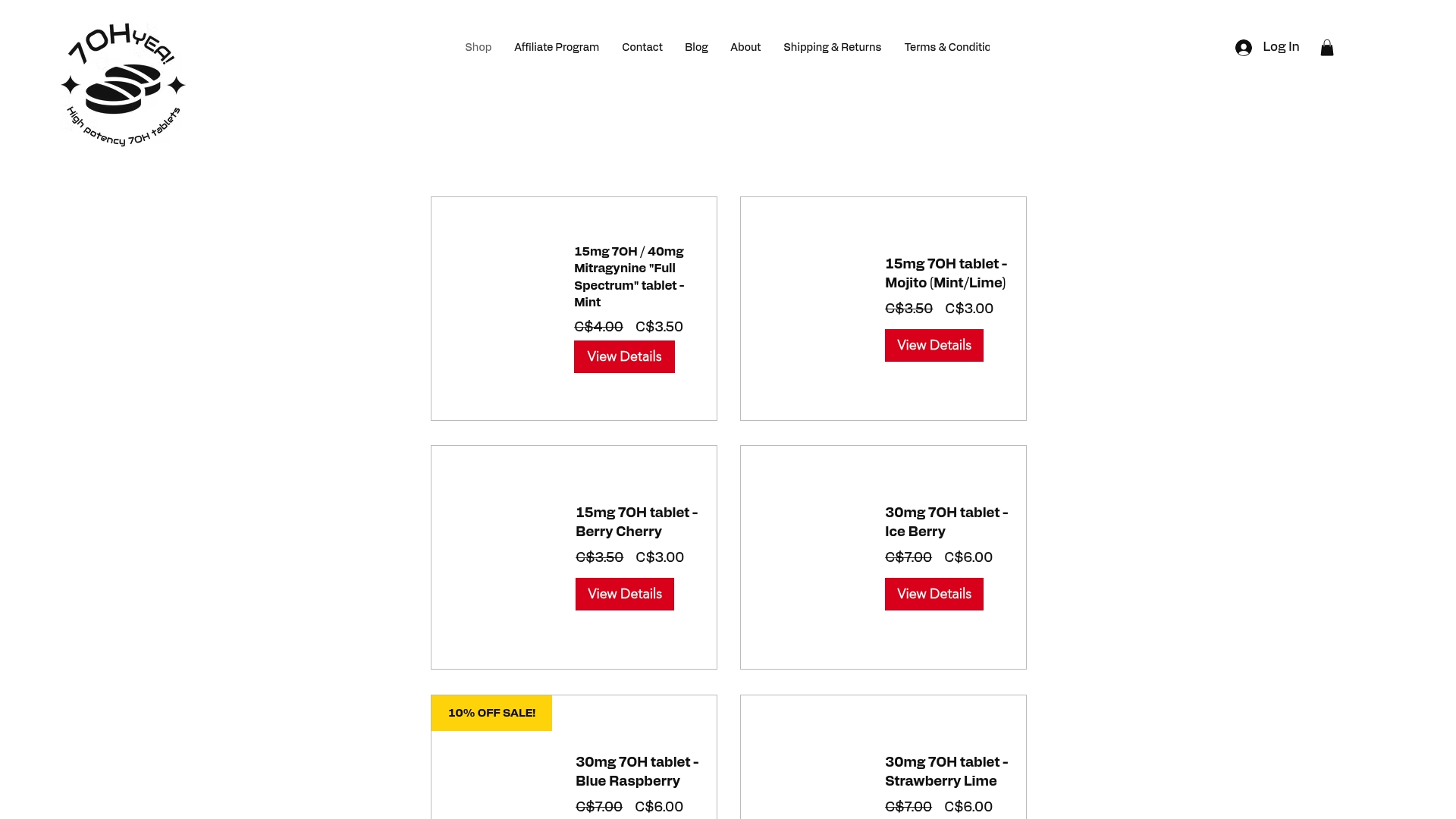
If your lab needs research-grade 7-hydroxymitragynine, mitragynine reference materials or related compounds, our catalogue is organized by product type, and bulk purchasing is available for research teams. Start at the 7OH Canada product range and place your order with a Canadian origin.
For larger programs, our post on bulk alkaloid standards in Canada explains how reference materials and fewer import delays fit together. If you run temperature-sensitive work, see our guide to temperature controlled shipping for research labs.
FAQ
Can you buy 7OH in Canada?
Research-grade 7OH is sold in Canada for laboratory and analytical use only, not for human consumption. Import and scheduling rules are set by federal law, and we don’t give legal advice. For the overview, read our legality page and consult a lawyer about your specific case.
Is kratom legal in Canada in 2026?
Kratom is a separate plant material from concentrated 7OH, and the rules differ in the details. A kratom-industry page from April 2026 describes it as legal to possess but not lawfully sold for human consumption, though that’s a secondary summary rather than an official ruling. Check Health Canada for the current position.
Why does my parcel say “in customs” for days?
Because customs time sits outside the carrier’s published standards. The CBSA may examine shipments to verify admissibility, and incorrectly reported goods can face delays. Clean documentation usually clears fastest.
How long should I plan for a domestic order?
Use Canada Post’s published standards as the frame: 2 to 8 days for Xpresspost nationally between major centres and 4 to 10 for Expedited Parcel, counted in business days. Add handling time and a buffer for remote postal codes or peak periods.
Does a US scheduling notice change my Canadian order?
Not directly. A US notice doesn’t change Canadian law, and the DEA’s July 2026 filing was a notice of intent. Cross-border shipments can still draw more attention when US policy shifts, which is why a domestic origin helps.
So here’s our take, and we’d like yours: should delivery estimates be required to show customs time separately, the way a lab expects a certificate of analysis to show its methods?
7ohyeaQuestions About 7OH Shipping?Email us about research-grade 7OH products and domestic sourcing from British Columbia for your laboratory needs.77ohyea
Email us7ohyea@gmail.comSources
- Canada Post: Parcel Services, U.S. and International, delivery standards
- Canada Post: Delivery standards, October 6, 2025
- Canada Post: How long will it take for my item to arrive?
- Canada Post: Parcel Services delivery guide
- CBSA: Ship and report goods
- CBSA: Memorandum D19-9-1
- Health Canada: Guidance Document on the Import Requirements for Health Products
- Controlled Drugs and Substances Act
- Federal Register: Temporary placement of 7-hydroxymitragynine, notice of intent
- Worst Pills: FDA recommends scheduling 7-OH products
- Ottawa Logistics: US to Canada shipping 2026
- Rollo: US-Canada parcel shipping