How to Store 7OH Tablets: What Canada’s 2026 Debate Means

Seven-OH is back in the headlines. In November 2026, the Medical Toxicology guideline on kratom and 7-OH poisoning was updated, and it says concentrated 7-OH tablets belong in a different risk class from plain kratom leaf. That’s why storage questions are suddenly everywhere. People want to know how long tablets last, what heat does to them, and who can reach them.
Here’s our answer, and it’s a straight one. 7OH tablets from 7OHYEA are research-grade materials for laboratory and analytical work only. They are not for human consumption. Storing them well means treating them like any other reference material: sealed, labelled, cool, dark, documented and locked away.
7ohyea7ohyea.caFind Research-Grade 7OH MaterialsExplore 7OH tablets and powders for laboratory and analytical purposes, with customizable dosage options and domestic sourcing from British Columbia.
VisitTL;DR
- 7-OH is the least stable of the kratom alkaloids tested in a peer-reviewed study. Heat at 40°C and above caused significant loss within 8 hours.
- Keep research tablets in their original labelled container, in a cool, dry, dark place, with the batch certificate of analysis filed alongside.
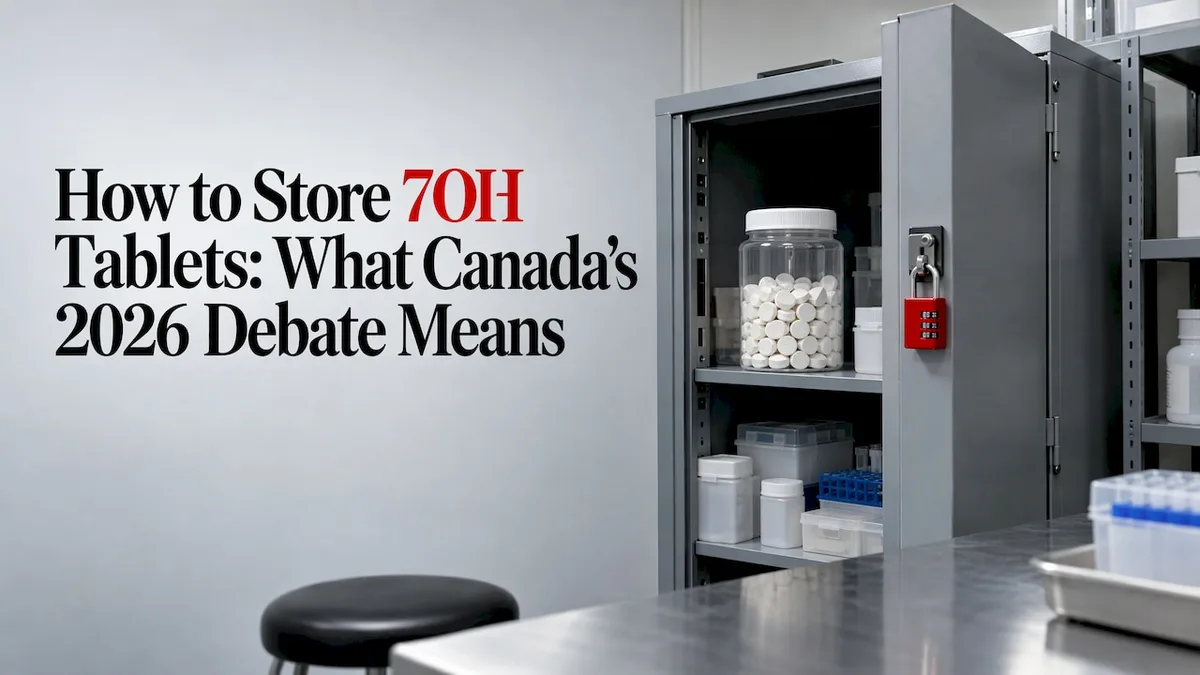
- Lock them away from children and pets. Medical toxicologists say even a lick of a high-potency product by a child needs emergency care.
- Forum advice about freezers and vacuum sealers isn’t a validated protocol. Treat it as hearsay.
- Our products are for research use only, not for human consumption.
Table of Contents
- Quick facts
- Why is everyone suddenly asking about 7OH storage?
- What did the headlines get wrong about shelf life?
- How should a lab store 7OH tablets?
- What does Canadian regulation say about storage and stability?
- Why does locking them up matter so much?
- Is 7OH the same as kratom when it comes to storage?
- What should I look for on the batch paperwork?
- Perspective
- Where can researchers get documented material?
- What does this mean for readers?
- FAQ
- Sources
Quick facts
| Question | Short answer |
|---|---|
| What’s the main storage enemy? | Heat. 7-OH was the most unstable alkaloid in a 2020 temperature study. |
| Where should tablets sit? | Original container, cool, dry, away from light and sun. |
| Who must not reach them? | Children, pets and anyone untrained. Lock them up. |
| Who can use ours? | Laboratories and qualified professionals, for analytical work only. |
| Poison emergency in Ontario? | Ontario Poison Centre, 1-844-764-7669. Call 911 if someone is unconscious or struggling to breathe. |
Why is everyone suddenly asking about 7OH storage?
Because the product category has become a public debate. In the US, regulators and lawmakers have spent 2026 arguing over how to treat concentrated 7-OH. A California Senate committee background paper from February 2026 described how processing and isolation can turn a trace kratom alkaloid into a far more potent product, sold as tablets, shots, gummies and more.
That shift matters for storage. A bag of leaf in a pantry is one thing. A concentrated tablet is another. The more concentrated the material, the more it matters who can reach it and what condition it’s in.
The search results for this keyword show the other side of the story. Most of what ranks is forum threads, with people swapping tips on jars, silica packs and freezers. Some of it is sensible. None of it is a tested protocol for tablets.
What did the headlines get wrong about shelf life?
Myth: a tablet is a tablet, so it keeps forever.
Fact: 7-OH is a fragile molecule. In a peer-reviewed study in the Journal of Analytical Toxicology, researchers compared several kratom alkaloids under different temperatures. 7-OH was the most unstable. It lost a significant amount after just 8 hours at 40°C or above. Mitragynine, the main kratom alkaloid, showed no significant loss at 4, 20 or 40°C.
That’s a lab result, not a promise about any particular tablet. But the direction is clear. A parcel left in a hot vehicle, a sunny windowsill or a warm loading dock is a bad idea.
A second myth: freezing fixes everything. A 2025 toxicology paper in the same journal found that 7-OH in refrigerated biological samples held up for about a week but dropped by more than half after 60 days. Methanol preparations were stable for three months at -20°C. Those were forensic samples and solvent solutions, not tablets, so nobody should read them as a tablet shelf-life number. They do show that time and temperature both matter, and that stability claims need to match the exact material.
If you want the longer lab-side view, we’ve written about 7-hydroxymitragynine stability for analytical teams.
How should a lab store 7OH tablets?
Think of it as sample management. These are the habits that make sense for any sensitive reference material, and they line up with the general storage guidance Canadian health authorities give for substances kept in a workplace or home.
Keep them in the original labelled container
Health Canada’s medication guidance says to keep products in their original containers. The reason carries over to research materials: the label ties the tablet to its batch, and the batch ties it to a certificate of analysis. Decant the tablets into an unmarked jar and you’ve broken that chain.
If you must split a lot between users or projects, label every secondary container with the product name, batch number, date received and who handled it.
Go cool, dry and dark
The same Health Canada page recommends a cool, dry area away from the sun. For a research tablet, that means a temperature-controlled room or cabinet, not a bathroom, a vehicle or a shelf above a heat source.
Moisture is the quiet partner of heat. Labs commonly keep sealed containers alongside a desiccant, a small packet that absorbs humidity. If you use one, keep it in the container and out of direct contact with the tablets, and don’t reuse packets pulled from other products.
Log it like you mean it
A tidy storage record answers most questions later. Write down:
- The date the shipment arrived and the condition of the packaging.
- The batch number and where its certificate of analysis is filed.
- Storage location and the temperature you maintain there.
- Each time the container is opened, and by whom.
That log is also what lets a reviewer trust your results. Our piece on what labs need for tablet testing covers the documentation side in more detail.
Don’t treat forum shelf-life numbers as data
Threads on Reddit and other forums confidently quote months or years. Those are personal anecdotes from people who aren’t measuring anything. Without a stability study on the specific formulation, a number is a guess. Your own analytical re-testing, tied to the batch certificate, is the only trustworthy check.
What does Canadian regulation say about storage and stability?
Here’s where the story gets interesting. Canada’s Natural Health Products Regulations, current to October 2026, require that licensed natural health products be stored under conditions that maintain quality, and that makers set a stability period. That’s the time a product keeps its purity and potency under its recommended storage.
Health Canada’s good manufacturing practices guide, published in September 2025 and effective March 2026, goes further. It says warehouses and storage facilities used by importers and e-commerce sellers of natural health products must meet those standards.
Why does that matter to you? Because it shows what a documented stability period looks like in a regulated setting. Research-grade materials sit outside that system. We’re not offering a health product, and we make no health claims. So a lab can’t borrow a stability date from a licensed product. It has to rely on the batch certificate and its own re-testing.
On the wider legal picture, we keep a plain-language page on whether 7OH is legal in Canada. It isn’t legal advice, and the rules can change, so check official sources for the current position.
Why does locking them up matter so much?
Because the people who find a tablet are not always the people it was bought for.
Provincial public health units say the same thing again and again: keep substances out of sight and out of reach, locked in a cupboard or container, away from food and drink, in original labelled containers. Chatham-Kent Public Health adds child-resistant packaging where possible and never leaving anything unattended where children or pets can find it. Ottawa Public Health (revised August 2025) says to check regularly for expired items and return unused ones to a pharmacy or an Ontario Medication Return Program location.
The poison data backs up the concern. The California Senate paper cited above reports on 53 human 7-OH exposures logged in the US National Poison Data System between February and April 2025. Of 37 single-substance cases, 35% had moderate clinical outcomes. Five of the cases involved children under 18.
That’s a small, early dataset from the US, so it isn’t a full picture. It’s still a good reason to treat a locked cabinet as a baseline, not an extra.

What happens if a child or pet gets into a tablet?
This part isn’t a debate. Act fast.
- In Ontario, call the Ontario Poison Centre at 1-844-764-7669 (1-844-POISON-X), which Chatham-Kent lists as a 24/7 line. Other provinces have their own poison centres.
- Call 911 if the person is unconscious or having trouble breathing.
- For a child, go to the emergency department. The Medical Toxicology guideline says no validated home-triage rule exists for concentrated 7-OH, and recommends sending any child under 18 to the emergency department after any oral contact with a high-potency or uncertain product, even a lick.
- If a pet may have swallowed one, call a vet right away.
Tell the staff exactly what the product was and bring the container with its label. That label and batch number are exactly why we say to keep the original packaging.
Is 7OH the same as kratom when it comes to storage?
No, and the 2026 debate is largely about that gap. 7-OH is a minor alkaloid in the kratom plant, often undetectable in fresh leaf. Mitragynine is the main one. Concentrated 7-OH products are made by processing, and the California paper notes that formats like dissolvable tablets can change how a product behaves.
A recent Phytochemistry study from March 2026 tested commercial 7-OH products and found large gaps between label claims and measured content. It also found that over 98% of 7-OH-labelled products had a semisynthetic origin, meaning they were chemically made from other alkaloids rather than simply extracted. The researchers confirmed that 7-OH can break down into a different compound under simulated stomach conditions.
We’re not going to wade into pharmacology. The takeaway for storage is simpler. Labels don’t prove content, and the Medical Toxicology guideline says exactly that. So a lab should know what’s in its container from a batch-specific certificate of analysis, and then store it as a sensitive, concentrated material, not as a pantry staple.
What should I look for on the batch paperwork?
Our products come with batch-specific certificates of analysis, and they’re made in Canada, which keeps shipping times short. That shortens the window a parcel spends in transit weather, which is one reason domestic supply matters for a heat-sensitive material. Once a parcel lands, check:
- The batch number on the container matches the certificate.
- The packaging is intact and sealed.
- The product name and form match your order.
- Your storage conditions are ready before the parcel arrives, not after.
If you’re planning larger orders, our guides on bulk alkaloid standards in Canada and analytical-use-only orders explain how to plan quantities so you aren’t holding more stock than you can track.
Perspective
We make research-grade alkaloids, and we’ll say plainly what that means for storage. A tablet in a lab is a documented sample. Its batch, its certificate, its container and its location should all be traceable.
The 2026 conversation about 7-OH is noisy, but the research is pointing at something practical. 7-OH is sensitive to heat, labels don’t always match contents, and concentrated materials need real access control. That’s why we ship in Canada from British Columbia, with batch-specific certificates of analysis, so your team starts with a known material and a short transit.
Our tablets are for laboratory and analytical purposes only, and not for human consumption. If your protocol needs a particular form or purity, we’d rather you plan the storage around it from day one.
John
Where can researchers get documented material?
If your lab needs 7-hydroxymitragynine or related alkaloid reference materials, start at the 7OHYEA store. We offer research-grade 7OH tablets and powders, mitragynine, MGM-15 and SR17018 materials, with batch-specific certificates of analysis and bulk options for research teams. Our 81% pure 7OH powder is listed at 50 CAD one-off, our 43% pure mitragynine full spectrum powder at 6.75 CAD one-off, and our 99% pure SR17018 powder at 48 CAD one-off.
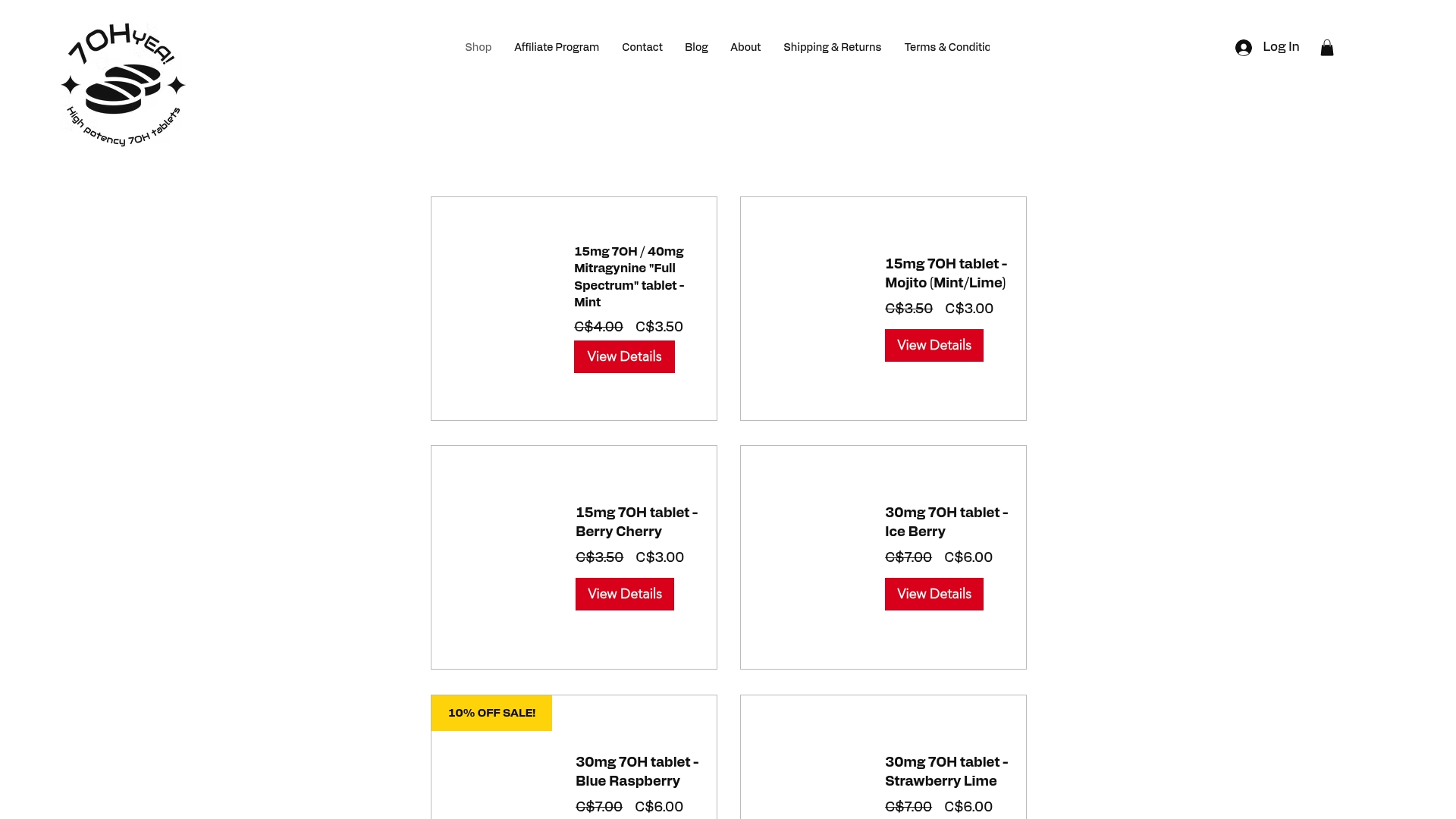
All of it is sold for analytical work in laboratories, and none of it is for human consumption.
What does this mean for readers?
It depends on who you are.
If you’re a researcher or analytical chemist: store the material like a reference standard. Original container, controlled cool temperature, no light, no moisture, a written log. Re-test against the certificate rather than trusting a rule of thumb from a forum.
If you’re a lab manager: build access control into your protocol. Locked storage, named handlers, and a poison-centre number posted where the material is kept.
If you’re reading because of the 7-OH headlines: this is a fast-moving story. US regulators have been active through 2026, and Canadian rules are a separate matter. We can’t tell you how either will turn out, and we don’t give legal advice. Check Health Canada and the relevant provincial authorities for the current position.
If you’re considering this for personal use: our products aren’t made or sold for that, and we won’t advise on it. If you’re worried about your own or someone else’s substance use, talk to a doctor or call your provincial health line.
FAQ
How long do 7OH tablets last in storage?
No one can give a universal number. A peer-reviewed study found 7-OH to be the least stable of the kratom alkaloids it tested, especially in heat. Use the batch certificate and your own analytical re-testing to judge a specific lot.
Should 7OH tablets go in the fridge or freezer?
Cooler storage slows degradation in the lab studies we’ve seen, but those studies used biological samples and solvent solutions, not tablets. Condensation is a risk when sealed containers move between cold and warm. Follow your lab’s own validated procedure for reference materials.
Can I move tablets into a different container?
We recommend keeping them in the original labelled container so the batch information stays attached. If a lot must be split, label each secondary container with the product, batch number and date, and keep the records together.
What should I do if a child or pet gets into a tablet?
Call your poison centre right away. In Ontario that’s 1-844-764-7669, and elsewhere you can use your provincial line. Call 911 if the person is unconscious or has trouble breathing, and take a child to the emergency department. For a pet, call a vet immediately.
Are these tablets legal to store and keep in Canada?
We sell them as research materials for laboratory use only, and we don’t give legal advice. Our legality page explains our position, and Health Canada is the authority for the current rules. So here’s our question for you: should concentrated alkaloids face tougher storage rules, even in labs?
7ohyeaAsk About Research MaterialsEmail with questions about 7OH tablets and powders for laboratory and analytical purposes, including dosage options for research protocols.77ohyea
Email us7ohyea@gmail.comSources
- Kratom and 7-Hydroxymitragynine Poisoning, Medical Toxicology
- Temperature and pH-Dependent Stability of Mitragyna Alkaloids, Journal of Analytical Toxicology
- Postmortem distribution of mitragynine and 7-hydroxymitragynine, Journal of Analytical Toxicology
- Quantitative analysis of 7-hydroxymitragynine in commercial products, Phytochemistry
- Senate Committee on Health background paper on kratom and 7-OH
- Using medications safely, Health Canada
- Natural Health Products Regulations, Justice Laws Website
- Good manufacturing practices guide for natural health products, Health Canada
- Storing Drugs Safely, Chatham-Kent Public Health Unit
- Secure Substances (Drugs) and Medication, Ottawa Public Health