Custom Documentation Requests in Canada: What to Ask For

Paperwork is back in the headlines. On July 6, 2026, the US Drug Enforcement Administration published a notice of intent to issue a temporary order scheduling 7-hydroxymitragynine (7OH) above a specified threshold. A few days earlier, HHS and the FDA publicly backed that move. Canadian labs noticed, because every cross-border conversation about alkaloids now starts with the same question: where’s your paperwork?
That’s what a “custom documentation request” comes down to in Canada. Sometimes you’re asking a government body for records, and sometimes you’re asking a supplier for a document set that matches your protocol. This guide covers both, in plain language. Our products are for research use only, not for human consumption.
7ohyeaResearch Materials for Canadian Labs7OH Canada supplies research-grade 7OH tablets and powders, domestically sourced from British Columbia for analytical purposes.
VisitTL;DR
- A custom documentation request in Canada is either a formal federal access request ($5, 30-day clock) or an informal ask with no fee, no deadline and no appeal.
- Send it to the institution that holds the record, in writing, with a subject and a date range.
- Extensions are common, so file early and keep the scope narrow.
- For lab purchases, ask for batch-specific certificates of analysis, shipping papers and labelling that state the research-only purpose.
- Nothing here is legal advice. Confirm your own situation with a lawyer or the regulator.
Table of Contents
- Quick facts
- Why is everyone suddenly asking for documents?
- What does “custom documentation request” actually mean?
- Formal or informal: which one should you file?
- Who do you send it to?
- What should the request say?
- How long does it take, and what does it cost?
- Is a custom data product different?
- What about documents for the chemicals you buy?
- What did the headlines get wrong?
- What this means for readers
- Why domestic sourcing makes the paperwork simpler
- Our view
- Where to find our research materials
- FAQ
- Sources
Quick facts
| Item | What the sources say |
|---|---|
| Federal application fee | $5, paid when you file |
| Legal response time | 30 calendar days, extendable |
| Complaint window | 60 days after the response, no cost |
| Who can file federally | Canadian citizens, permanent residents, and people or corporations present in Canada |
| Informal requests | No fee, open to anyone, but no deadline and no recourse |
| Product status at 7OHyea | Research use only, not for human consumption |
Why is everyone suddenly asking for documents?
Because the rules around 7OH are moving, and nobody wants to be the lab that can’t prove what it bought.
Here’s what has actually been announced. In the US, the FDA recommended in 2025 that the DEA begin scheduling 7OH above a certain threshold, and the DEA followed with notices of intent in July 2026. A notice of intent isn’t a final rule. Whether and how it lands is still unconfirmed, and we won’t guess.
In Canada, we aren’t aware of a matching federal announcement we can point to with a date and source. Our own page on whether 7OH is legal in Canada tracks the question, and it’s worth a look before you place an order.
The practical result is the same on both sides of the border. Buyers, institutions and couriers want a clean paper trail. That’s the story behind this keyword.
What does “custom documentation request” actually mean?
It’s not one legal term. In Canada, people use the phrase for three different things.
- A formal access to information request. You ask a federal institution for records it controls, under the Access to Information Act.
- An informal request. You ask the same body for existing documents without invoking the Act.
- A custom data or document request. You ask an agency or a supplier to prepare something specific for you.
The first two get most of the search traffic. The third is where lab buyers live.
Formal or informal: which one should you file?
The Treasury Board’s Access to Information Manual draws the line clearly. A formal request is made under the Act for a record under a government institution’s control. It comes with fees, response deadlines and a statutory right to complain to the Information Commissioner. An informal request isn’t made or processed under the Act, so it has none of those.
The National Film Board’s page adds the upside. Informal requests carry no fee and are open to anyone, including people outside Canada. The downside is real: no legal timeframe and nowhere to appeal.
Myth: an informal request is just a faster formal request.
Fact: it’s a different channel. It can be quick when documents already exist and are public-ready. It’s slow and unenforceable when they aren’t.
A sensible rule: start informal if you only need a published document. Go formal if you need a deadline you can enforce.

Who do you send it to?
To the institution that holds the information, and nobody else. The Treasury Board’s Make a request page tells requesters to check the list of institutions and what each one holds. Wrong door, lost weeks.
Under the federal Access to Information Regulations, the request goes in writing to the officer of the institution that controls the record. You use the request form or a written letter with enough detail to identify the record, plus the fee.
The Information Commissioner’s office puts the test simply: the request needs enough detail for an experienced employee to find the record with reasonable effort.
Provinces run their own systems. Public Health Ontario, for instance, asks for a written freedom-of-information request to its Privacy Officer and charges a $5 fee. Its separate data requests are reviewed on legal authority, data type, purpose and sensitivity.

What should the request say?
The Treasury Board’s guidance is practical. Describe the records as specifically as you can, with a subject and a date range. Add how you’d like to receive them (electronic copies, mail or in-person viewing), your full name and address, contact details and the date.
Two habits save time.
- Search first. The same page suggests checking the public summaries of requests already released. Someone may have asked already.
- Narrow it. “All records about alkaloid imports” invites extensions. “Guidance documents on research chemical imports, January 2025 to June 2026” doesn’t.
If your request is vague, the institution has to come back to you. The regulations also require an institution to ask for more information when a request doesn’t establish the requester’s right of access. ATIP coordinators will often help you narrow scope, too.
How long does it take, and what does it cost?
On paper, it’s cheap and quick. In practice, it depends.
The federal basics, per the ATIP Online FAQ:
- $5 application fee, paid by credit card on the portal.
- 30 calendar days to respond.
- Extensions allowed for large volumes, consultations, translation or format conversion.
- Complaints to the Information Commissioner within 60 days of the response, free.
Now the headline-grabbing part: extensions aren’t rare. In its 2024-2025 report, Innovation, Science and Economic Development Canada invoked extensions on 415 of 1,481 new requests, about 28%. Most were for consultations with other institutions or third parties.
A July 2026 explainer from Parliament Audit says the Act sets no fixed maximum on extensions, and that several months is routine. Treat the 30 days as a starting point, not a promise.
Is a custom data product different?
Yes, and it’s a different price tag. Some agencies prepare custom extracts on a cost-recovery basis, and the numbers vary widely.
| Body | How it works |
|---|---|
| Ontario Ministry of Transportation | Custom data products take 6 to 8 weeks. Costs are estimated and approved by email before extraction. |
| Ontario Health | $3,000 administrative fee for new research data requests, plus $130 per analytical hour (updated July 2026). |
| CIHI | Hourly data-preparation rates, with extraction starting only after you approve specifications and the cost estimate. |
The pattern is consistent. You define the specification, the agency quotes, you approve, then work starts. Don’t skip the approval step in your planning.
What about documents for the chemicals you buy?
This is the other half of the keyword, and the half our readers care about most. A lab buying research-grade alkaloids isn’t filing an access request. It’s building an audit file.
The core set most Canadian labs ask a supplier for:
- Certificate of Analysis (CoA): a lab report for a specific batch, so the material in your freezer matches the paper in your binder.
- Shipping documentation: invoices and packing papers that describe the material accurately. Our guide to shipping docs and bilingual WHMIS for Canadian labs walks through the set.
- Labelling that states the purpose: research or analytical use only. See our analytical-use-only labelling guide.
- Packaging records: what arrived, in what condition, when. Our packaging inspection checklist is built for audits.
- Internal compliance notes: who ordered it, for which protocol. The research chemical compliance playbook covers this.
If you’re preparing regulatory filings, the Health Canada GLP documents guide lists five documents that prevent filing delays.
Myth: a CoA is a formality.
Fact: it’s the first thing a reviewer asks for, and a generic one for the wrong batch is as good as none.
What did the headlines get wrong?
Three things keep showing up.
“Scheduling means a ban everywhere.” A US notice of intent applies in the US, and it isn’t final. Canadian rules are separate, and we won’t predict how either will turn out.
“A lab can order anything with a form.” No. Documents describe a lawful purpose. They don’t create one. Anyone who treats paperwork as a loophole misreads this whole topic.
“Foreign suppliers are just as simple.” Cross-border shipments add customs paperwork and possible delays. Our piece on avoiding a 70-day reset explains how a bad order can stall a project.
What this means for readers
Short version: get organised before you need to be.
- If you need government records: pick the right institution, file in writing, keep the scope tight, and expect extensions. Use the formal route when you need a deadline you can enforce.
- If you’re a researcher buying materials: request batch-specific documents with every order and file them with your protocol. Do it before an auditor, a courier or an institution asks.
- If you’re not a researcher: these products are not for you. They’re sold for analytical and laboratory use only, never for human consumption.
- If you’re unsure about legality: talk to a lawyer or to Health Canada. This article isn’t legal advice.
Our procurement guide for Canadian research chemical suppliers is a good next read for building a vendor file.
Why domestic sourcing makes the paperwork simpler
We’ll take a clear position here: fewer borders means fewer documents to chase. Our materials are sourced domestically in British Columbia, which means no border fees and a shorter chain to document. That’s a claim about logistics, not about anything the material does.
It also fits how labs actually work. A reference-standard order that sits in customs while a protocol waits is a cost nobody budgets for. For more on that, see our note on bulk alkaloid standards and fewer import delays.
Our view
Every month we talk to the same kind of buyer: a team that has the science sorted and the paper trail in a mess. The document set is part of the product. If a batch can’t be tied to a certificate of analysis, a clear research-use label and a shipping record, it’s incomplete.
That’s why we supply batch-specific certificates of analysis, keep our sourcing domestic, and label everything for research use only, not for human consumption. When the rules shift, as they are visibly doing right now, teams with clean files adjust quickly and teams without them stall.
Our advice is simple: ask for the documents first, then place the order. Keep them as carefully as the samples.
John
Where to find our research materials
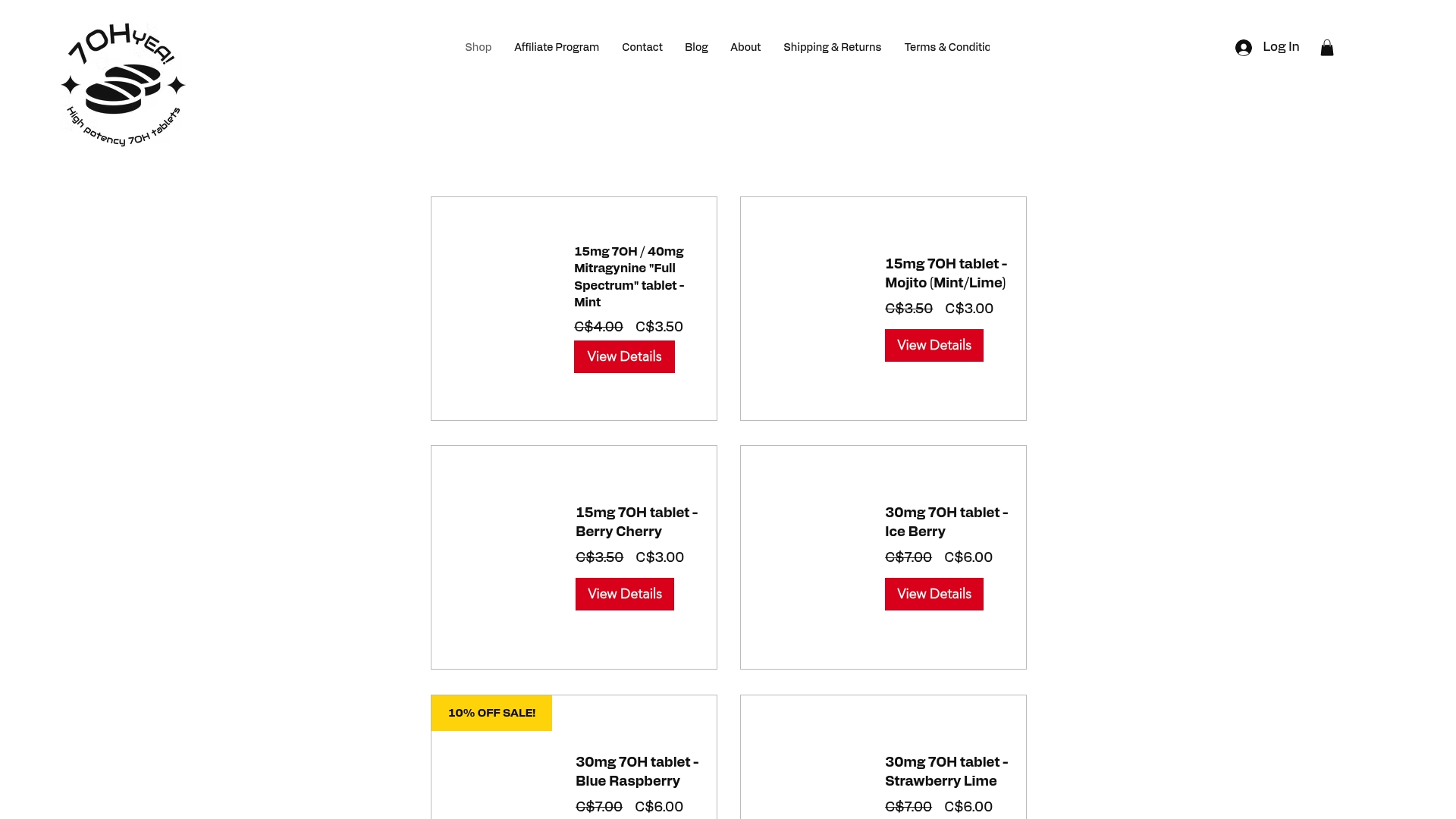
We list research-grade 7OH, mitragynine, MGM-15 and SR17018 materials for laboratory and analytical use only, with batch-specific certificates of analysis and domestic British Columbia sourcing. The 81% pure 7OH powder is listed at $50 CAD, and the 99% pure SR17018 powder at $48 CAD. The full range is on 7ohyea.ca.
These are research chemicals. They are not for human consumption, and we don’t offer guidance on using them that way.
FAQ
Is a custom documentation request the same as an ATIP request?
No. An ATIP request is a formal request under the federal Access to Information Act, with a $5 fee and a 30-day clock. A custom documentation request is a looser term. It can mean an informal ask, a custom data extract or a supplier document set.
How much does a federal access request cost?
The federal application fee is $5, payable when you file. Requests for your own personal information carry no fee. Some institutions, such as ISED, waive the fee for applicants who self-identify as Indigenous.
Can anyone in the world file one?
Formal federal requests are open to Canadian citizens, permanent residents, and individuals and corporations present in Canada. Informal requests are open to anyone, but come with no deadline or appeal.
What documents should a lab ask for with a research chemical order?
Ask for a batch-specific certificate of analysis, accurate shipping documents, research-use labelling and packaging records. Keep them with your protocol file. Your institution’s compliance office may require more.
Where does the 7OH rule story go from here?
Nobody can say for certain. The US process is at the notice stage, and Canadian developments aren’t confirmed. What’s your lab doing now to keep its paper trail audit-ready, and what would you add to the list?
7ohyeaAsk About Research DocumentationEmail your questions about 7OH research materials and documentation to learn more about the products 7OH Canada provides for analytical purposes.77ohyea
Email us7ohyea@gmail.comSources
- Federal Register notice of intent, July 6, 2026
- HHS and FDA statement, July 1, 2026
- Access to Information Manual, Canada.ca
- National Film Board ATIP page
- Make a request, Treasury Board Secretariat
- Access to Information Regulations (SOR/83-507)
- Office of the Information Commissioner: Canada’s access to information system
- ATIP Online Request FAQ
- ISED 2024-2025 Annual Report on the Access to Information Act
- Parliament Audit, July 8, 2026
- Public Health Ontario data requests
- Ontario Ministry of Transportation customized data products
- Ontario Health data requests
- CIHI custom data requests